


Bangladesh is set to give greater priority to labour-intensive industries capable of creating large numbers of jobs without requiring heavy capital investment, as the government seeks to align industrial growth with a rapidly changing skills market.
Industries Minister Khandaker Abdul Muktadir said on Monday that leather, footwear and synthetic leather would be among the sectors receiving increased attention, while government-funded technical training would be expanded to include emerging technologies such as artificial intelligence and robotics.
With Bangladesh facing limited land resources but a large workforce, labour-intensive manufacturing offers a significant opportunity to generate employment and support economic growth, the minister said.
“Industries that can create more employment with less capital investment will receive priority in the coming days,” Muktadir said.
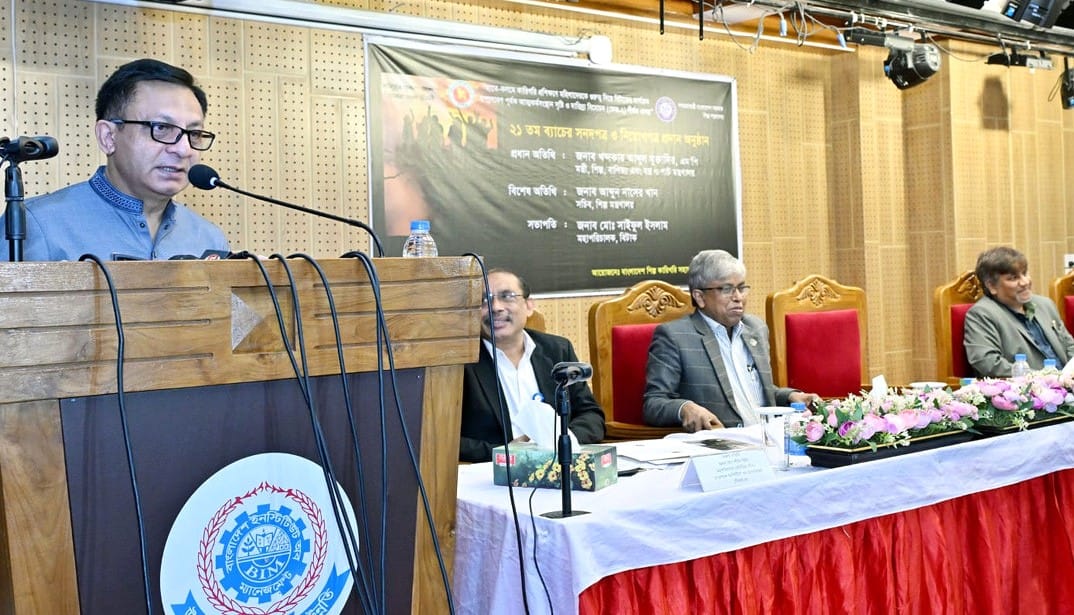
He was speaking at an event organised by the Bangladesh Industrial Technical Assistance Centre (BITAC) at the Bangladesh Institute of Management (BIM) in Dhaka, where certificates and appointment letters were presented to trainees under a BITAC technical training project.
Muktadir said the leather, footwear and non-leather manufacturing industries had considerable potential to generate employment on a large scale and would therefore receive greater government attention.
The expansion of manufacturing is also increasing demand for skilled workers, he said, highlighting BITAC’s role in providing government-funded technical training for industrial employment.
“The real success of the training programme is when trainees get opportunities to work in industries after completing their training,” he said.
The government plans to expand the training project and modernise BITAC to increase its capacity, Muktadir said.
The institute’s training curriculum will also be updated to reflect technological changes in industry, including artificial intelligence and robotics, he added.
Muktadir urged the trainees to regard their three-month course as the beginning of their professional careers and to continue developing and applying their skills in the workplace.
Industries Secretary Abdun Naser Khan said completing a training course should not be regarded as the end of learning, as workers would need to continually update their skills to keep pace with technological change.
Technical and vocational skills should not be viewed as inferior to academic qualifications, he said.
BITAC Director General Md Saiful Islam chaired the event. BIM Director General Md Salim Ullah, Industries Ministry Additional Secretary Md Nuruzzaman, RFL Deputy General Manager Tarek Aziz and Matador Group General Manager HM Al Mamun also addressed the programme.