


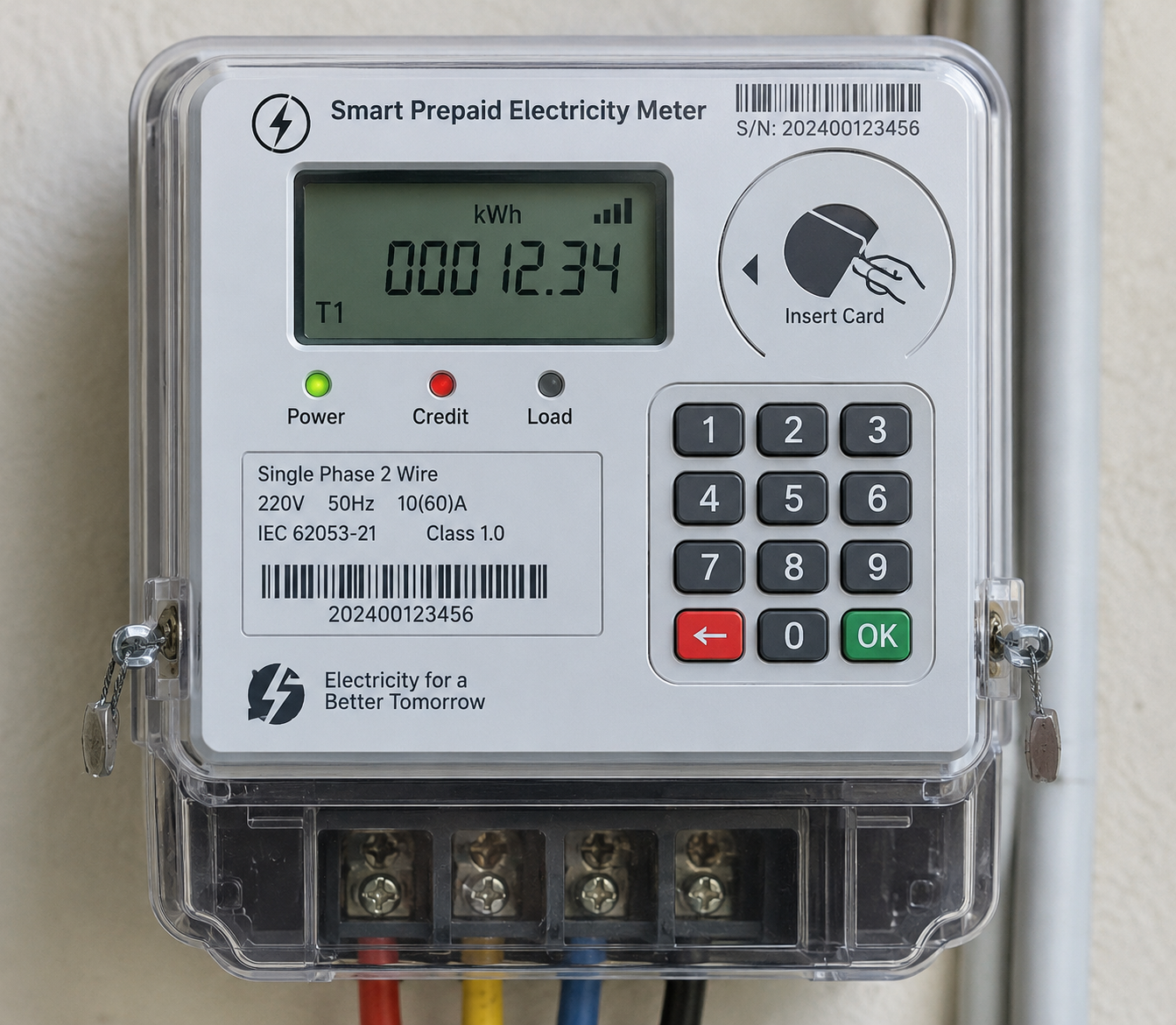
A Tk 761-crore project to install smart prepaid electricity meters across southwestern Bangladesh has spent just 0.5 percent of its budget nearly three years after it began, with repeated tender cancellations holding up the purchase of meters under its main packages.
After inspecting the ‘Smart Prepayment Metering Project (Phase-II) for West Zone Power Distribution Company (WZPDCL) Area’, the Implementation Monitoring and Evaluation Division (IMED) has recommended extending it by two years, until April 2029, without increasing its cost.
The agency has called for urgent procurement, tighter monitoring and measures to prevent further tender failures, warning that the project must be completed within the extended deadline.
By August 2026, the project had spent Tk 3.824 crore against its approved cost of Tk 761.31 crore, according to an IMED inspection report. Reported physical progress stood at 15.31 percent, although contracts for the main meter packages had yet to be signed.
The project was approved by the Executive Committee of the National Economic Council (ECNEC) on February 13, 2024, with a government contribution of Tk 630.53 crore and WZPDCL financing the remaining Tk 130.78 crore. Originally scheduled for completion in April 2027, it now faces a proposed deadline of April 2029.
The procurement process has been repeatedly disrupted by uncertainty over technical specifications and decisions to cancel tenders.
The first tender for 138,811 meters under package GD2 was floated in October 2024. After complaints over prepaid meters, the Power Division formed a committee in January 2025 to standardise specifications. WZPDCL’s board later ordered a re-tender, which was floated in September 2025 but cancelled on April 25, 2026.
A similar setback hit package GD4, covering 51,801 meters. Its first tender was cancelled in June 2025, while the second was scrapped in April 2026. Tenders for five other packages were also cancelled on April 30 that year.
The two major packages together cover 190,612 meters. WZPDCL’s board asked the Power Division to clarify ambiguities in the technical specifications to avoid further procurement problems.
Fresh tenders were subsequently floated for several packages between August 11 and September 10, 2026, but the repeated setbacks have left the project with a tight implementation schedule.
IMED has urged WZPDCL to finalise technical specifications with all relevant parties before inviting tenders. It also wants meters, data concentrator units, handheld devices and the Master Information Centre to be procured and installed in a coordinated manner.
The agency has asked the Power Division to report on corrective measures by November 10. It also called for regular project reviews, annual external audits and timely updates to the government’s electronic Project Management Information System (e-PMIS), noting that project information had not been properly entered into the system.
IMED Deputy Director Ishtiaq Ahmed inspected the project on September 24, visiting WZPDCL’s head office extension site in Khulna and a customer care centre at Phultala.
Construction of the head office extension, which will house the Master Information Centre, was under way. Premium Engineering & Construction Ltd is also building 20 vending stations-cum-customer care centres across the project area.
The project covers 21 districts in the Dhaka and Khulna divisions and comprises 18 packages, including 13 for goods, two for works and three for services.
Under the revised action plan, each package is allowed up to 150 days from tender invitation to contract signing, followed by 365 days for installation. The final phase is scheduled to end in July 2028, nine months before the proposed project deadline.
At its fourth meeting on August 2, the project steering committee called for urgent processing of the extension proposal and prompt re-tendering. At its fifth meeting on September 21, it stressed close monitoring of the head office extension.
The proposed extension would give WZPDCL more time to complete the work without additional funding. But with the main meter procurement still delayed, the agency faces the challenge of turning the revised timetable into actual progress on the ground.