


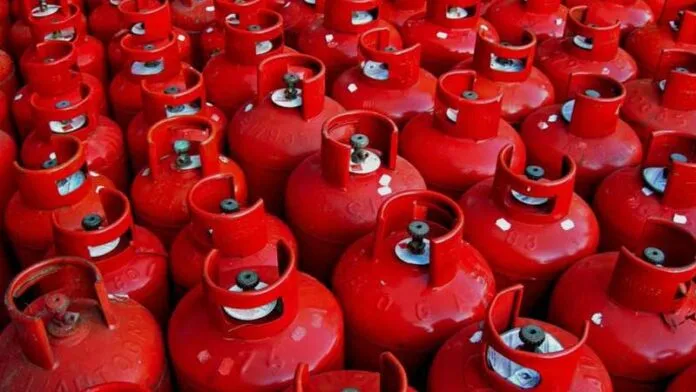
Bangladesh has raised the price of a 12kg liquefied petroleum gas (LPG) cylinder by Tk223 to Tk2,060, citing higher international prices and increased commissions for importers, dealers and retailers, as consumers continue to face prices well above the officially fixed rates.
The Bangladesh Energy Regulatory Commission (BERC) announced the revised price on Monday, with the new rate taking effect from 8pm.
The latest increase comes amid persistent instability in the LPG market, where consumers have been struggling to buy cylinders at regulated prices. Despite the previous official price of Tk1,837, announced after a Tk252 increase in October, retailers in Dhaka have been charging between Tk2,200 and Tk2,300.
BERC has also increased the price of autogas, used as vehicle fuel, from Tk84.62 to Tk91.95 per litre.
Alongside the retail price adjustment, the regulator has raised commissions and charges across the LPG distribution chain.
For a 12kg cylinder, importers’ storage and bottling charges, including transportation from their plants to distributors, have increased from Tk200 to Tk281.76. Dealers’ charges have risen from Tk50 to Tk85, while retailers’ commissions have gone up from Tk45 to Tk70.
Supply concerns amid rising prices
The LPG market has remained volatile since the third week of September, when importers reportedly reduced supplies amid rising international prices.
Cylinders previously priced at Tk1,585 were being sold for between Tk2,200 and Tk2,500 in some areas, according to market reports.
A report by a state intelligence agency alleged that five companies had almost halted sales from 22 September, citing a rise of $64 per tonne in international LPG prices. The companies were reportedly holding thousands of tonnes of stock in anticipation of selling at higher prices.
The report also pointed out that Bangladesh imported 158,000 tonnes of LPG in August and 156,000 tonnes in September, suggesting that the price escalation could not be explained solely by a shortage of imported supplies.
The latest market disruption has renewed questions about the effectiveness of regulatory oversight and the government’s ability to ensure that consumers receive LPG at officially announced prices.
The sector also experienced severe market disorder in December 2025. However, allegations of supply manipulation and excessive pricing have repeatedly surfaced without any notable punitive action against importers, according to industry-related accounts.
Over the years, importers have received several policy concessions, including higher import limits, tax reductions and improved access to letters of credit. Freight allowances were also increased from $108 to $250 per tonne. Importers were subsequently allowed to open letters of credit on credit facilities following their demands.
Despite these measures, the regulator has struggled to maintain discipline in the retail market.
Government LPG prices more than double
In a separate decision, BERC has more than doubled the price of state-owned LPG, bringing it closer to the price of privately imported supplies.
The price of a 12.5kg cylinder supplied by state-owned LP Gas Ltd has been increased from Tk776.93 to Tk1,860, effective from 8pm.
Under the revised pricing formula, the company will receive a higher selling price, while Tk1,004.07 from each 12.5kg cylinder must be deposited into an LPG sector development fund.
The commission has instructed the company to open a separate account to manage the fund.
The adjustment follows a public hearing on LPG pricing held on 29 October, where consumers and industry representatives raised concerns over the substantial gap between government and private-sector prices.
Consumers argued that the unusually low official price of state-owned LPG, compared with privately marketed cylinders, had created opportunities for artificial shortages and black-market trading.
The BERC technical committee and consumer representatives proposed bringing the two prices closer together. LP Gas Ltd, however, raised objections after the hearing, arguing that its product should remain somewhat cheaper than privately supplied LPG to maintain its competitiveness.
The state-owned company had previously sought a price increase, applying in 2025 to raise the price of a 12.5kg cylinder from Tk776.93 to Tk925.
Regulatory pricing system under scrutiny
BERC began fixing private-sector LPG prices on 12 April 2021 following a legal challenge filed by the Consumers Association of Bangladesh (CAB).
Before the intervention, private companies largely determined their own retail prices.
The regulator introduced a monthly pricing mechanism based on Saudi Aramco’s contract price (CP), using it as the benchmark for international LPG costs. Under the original framework, changes in the Saudi CP would be reflected in the base price, while other cost components and commissions were expected to remain unchanged unless revised through a separate public hearing.
However, commissions and other charges have subsequently been adjusted on two occasions.
Unlike private importers, LP Gas Ltd obtains LPG as a by-product from domestic gas fields. Its prices were therefore calculated under a separate cost-based formula designed to prevent both losses and excessive profits.
The state-owned company’s price was initially set at Tk690 for a 12.5kg cylinder.
On 4 May 2025, BERC increased the price without holding a public hearing. The then commission chairman said the adjustment reflected changes in certain pricing parameters and was similar to the monthly price revisions applied to private-sector LPG.
He also cited a previous instance in which the state-owned company’s prices had been revised without a public hearing.
State-owned company’s financial performance
According to LP Gas Ltd’s annual report, the company sold 12,723 tonnes of LPG in the 2023-24 financial year. It also supplied LPG in bulk, including 722 tonnes to the armed forces, while the remaining supplies were largely sold in cylinders.
The company reported a pre-tax profit of Tk10.02 crore during the financial year.
The latest price adjustment is likely to intensify concerns over affordability, particularly for lower-income households that rely on LPG for cooking. It also raises questions about whether higher regulated prices and increased commissions will translate into better supplies and greater compliance in the retail market.