


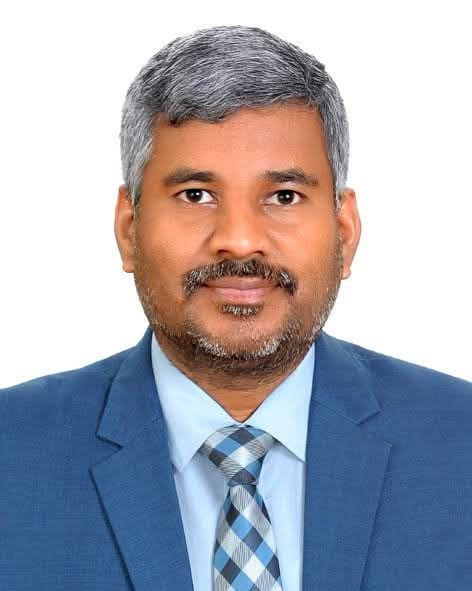
The adverse effects of global climate change are becoming increasingly clear. The impact of climate change is being felt in every region of the world today, but it is hitting low-lying and vulnerable countries like Bangladesh the hardest. Extreme heat waves, rising sea levels, cyclones, heavy rains, floods, river erosion, salinity and drought are now a daily reality, Professor Dr. Ahmad Kamruzzaman Majumder writes for Just Energy News.
Scientists warn that the average temperature of the world is increasing rapidly, and achieving the Paris Agreement’s 1.5°C target is currently in doubt. However, Bangladesh has contributed only about 0.3% of global carbon emissions. Yet, it has to pay one of the biggest prices of climate change. In such a context, the United Nations Climate Change Conference is very important for the world, especially for countries like Bangladesh. The COP30 conference to be held in 2025 is being considered as such a turning point conference, because the decisions taken here can bring big changes in global emission reduction, adaptation measures and damage control.
This is the first time since the Earth Summit in Rio de Janeiro in 1992 that a major conference like COP is being held under the presidency of Brazil. One of the most important agendas of this year’s COP30 will be to create a transparent and binding roadmap for global emission reductions. Many countries have still failed to implement their commitments to achieve the goals of the Paris Agreement.
Despite being the largest emitters, developed nations have been slow to fulfill their commitments. Many still rely heavily on fossil fuels. COP30 must set clear deadlines for large economies, develop sector-specific emission targets, regular evaluation plans, and create a mandatory accountability framenwork. Mere promises are no longer enough – what matters now is implementation.
Another major focus will be the energy transition and the global shift toward renewables. Today, fossil fuels dominate global energy production, while renewable technologies, expertise, and finance remain concentrated in developed countries. This imbalance leaves developing nations at a disadvantage. COP30 must therefore advance the principles of a Just Energy Transition, ensuring technology transfer, capacity building, and low-interest financing to help developing countries adopt clean energy systems. It will never be possible to achieve the goals of the Paris Agreement without reducing global emissions and providing equal opportunities to developing countries in sustainable energy systems.
Loss and Damage Fund: From Promise to Practice
The Loss and Damage Fund, first announced at COP28, remains one of the most pressing issues. Many questions are still unresolved: Who will pay how much? How will funds be allocated? How will loss verification work? Millions in vulnerable nations have already lost homes, farmlands, and livelihoods due to climate-related disasters. Making this fund fast, fair, and accessible is critical for developing countries could be the top achievement of COP30.
In addition, increasing adaptation financing is another central issue. For countries that are at risk of climate change, it is very important to prepare for future disasters. Damage reduction is not possible without developing coastal protection, water conservation, salinity management, green infrastructure, disaster risk reduction systems and climate-resilient agriculture. Therefore, allocating large amounts of money to the Adaptation Fund and the Green Climate Fund, receiving money on easy terms and ensuring structural transparency will be central to the COP30 agenda.
Discussions on carbon markets and technology transfer will also feature prominently. Many countries are getting the opportunity to benefit financially from carbon credit trading, but the lack of transparent policies and evaluations means there is a possibility of risks and irregularities. A transparent and equitable carbon market system – one that benefits developing nations – must be a top priority. At the same time, discussions are also likely to be held on the formulation of international policies on the rapidly increasing food crisis, water shortages and climate refugees due to climate change.
Bangladesh’s Priorities at COP30
COP30 holds special significance in the case of Bangladesh, because even though the country is close to zero in global carbon emissions, it has been bearing the brunt of the damage caused by climate change for almost several decades. Sea level rise, river erosion, coastal salinity, cyclones, tidal surges, floods and droughts are affecting the lives and livelihoods of a large number of people every year.
The terrible effects of climate change are visible in all areas – agriculture, fisheries, water, health and infrastructure. Therefore, Bangladesh’s biggest demand at COP30 will be to ensure fair financing, technology support and compensation for damage.
First, Bangladesh will demand prompt and appropriate funding from the Loss and Damage Fund, because the country’s climate change-related losses are gradually increasing. Villages are being awashed away due to river erosion. A crisis of clean water is emerging in coastal areas, agricultural productivity is falling, and millions are becoming climate refugees.agricultural production is being affected and millions of people are becoming climate refugees. To address these losses, not only commitments are needed, but also sustainable financing and planning.
Second, increasing adaptation financing is one of Bangladesh’s biggest needs. Adequate investment is needed in coastal embankment rehabilitation, construction of cyclone shelters, water treatment plants, discovery of salinity-tolerant crops, agricultural diversification and development of disaster forecasting systems.
Third, Bangladesh will play a strong diplomatic role to ensure international cooperation in renewable energy and technology transfer. The country is gradually moving towards the use of solar power, wind power and other renewable and clean energy, but the lack of investment and technology is now a major obstacle. Bangladesh will seek international support for technology transfer, low-interest loans, and building skilled human resources.
Fourth, international recognition of the climate refugee issue is also very important for Bangladesh. Millions of people have already been displaced in the southern part of the country due to climate change, and there is a risk of millions more being displaced in the future. Therefore, Bangladesh can also raise the demand for the formulation of global policies on the rights, rehabilitation, and social protection of climate refugees at COP30. Bangladesh will also raise the demand for ensuring a transparent and fair carbon market, so that developing countries are not subject to fraud or complications and receive real financial benefits from carbon trading.
A Call for Global Justice
The COP30 negotiations will last for two weeks, where discussions will be held on how to “move away from fossil fuels”, protect forests worldwide, and raise the necessary funds to rescue poor countries from disasters.
The key to the success of this meeting will be to create a transparent path to a future that keeps global temperatures as low as possible.
If countries fail to strengthen their climate commitments, global temperatures could rise 2.5-2.9°C above pre-industrial levels by 2100, triggering even more catastrophic heatwaves, droughts, and floods.
COP30 is not merely a conference, it is a test of fairness, responsibility, and the right to survival. Bangladesh will advocate for justice, financing, and cooperation to safeguard its existence. Developing countries are not responsible for climate change, but they bear the brunt of the damage. The vulnerable countries, including Bangladesh, are expecting that COP30 will establish fairness and open up new horizons for global cooperation based on equality.
(Professor Dr. Ahmad Kamruzzaman Majumder is Dean of the Faculty of Science and Professor in the Department of Environmental Science at Stamford University Bangladesh. He is also the Joint Secretary of Bangladesh Poribesh Andolon (BAPA) and Chairman of the Center for Atmospheric Pollution Studies (CAPS).