


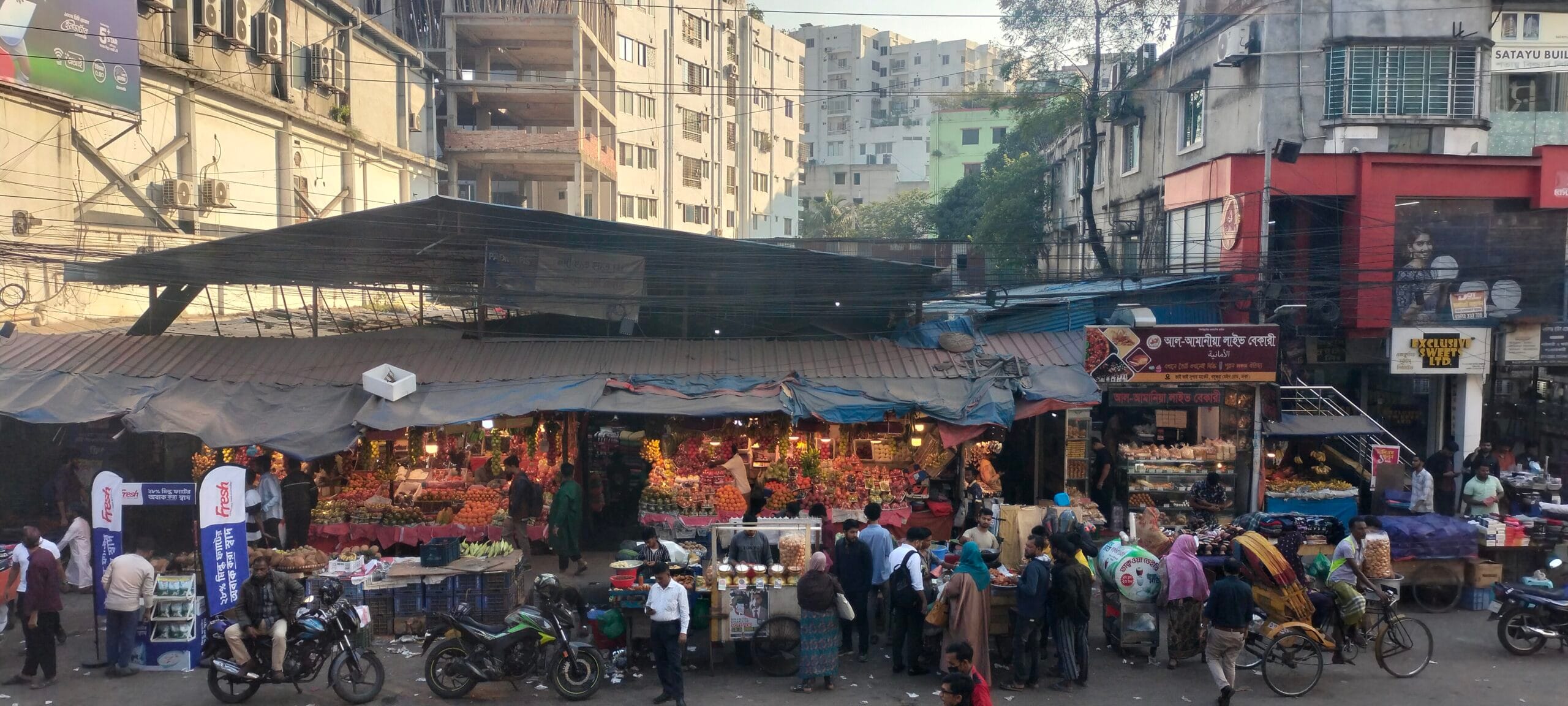
As house rents soar and the prices of essentials and utilities continue to rise, Dhaka’s most vulnerable residents say daily survival is becoming increasingly uncertain.
From elderly beggars and domestic workers to small traders and marginalised communities, low-income groups across the capital describe a city where earnings no longer match the cost of living.
Haider Miah, 70, a disabled man who survives by begging on a hand-driven rickshaw in Pallabi, said the pressure is relentless. “House rent has tripled, and rice and vegetables are extremely costly. Gas and electricity are essential for life, but the prices are unbearable,” he said.
Despite his disability, Haider receives no government allowance. He alleged that officials demanded money when he tried to register for support. “How can a poor, disabled person afford this?” he asked, urging authorities to strictly monitor essential markets and utility prices.
Bilkis Begum, a domestic worker living in Bashundhara Residential Area, said fixed utility costs are draining her limited income. Her house in Sirajganj remains locked for months, yet electricity bills still range between Tk300 and Tk350.
She also complained of irregular gas supply. “We often have to buy two or three LPG cylinders a month. This doubles household costs and makes life very difficult for working families,” she said.
Meanwhile, small traders say price manipulation has made survival difficult. Md Hamidullah, a vegetable seller in Mirpur-10, said syndicates keep prices high year-round. “Even when production increases, prices do not fall,” he said.
Md Yusuf, a fruit seller near Kurmitola General Hospital, said he abandoned vegetable trading in Savar due to debt. “Most of the profit goes to syndicates. End-level vendors earn very little and remain trapped in loans,” he said.
Rising telecom costs add to burden
Rising communication costs are adding pressure on low-income earners. Md Zim, who runs a mobile flexiload and internet shop at Bashundhara Gate, said call charges and data packages are unaffordable.
“A single call cuts Tk3 instantly. Internet packages are designed to push customers toward expensive plans,” he said.
Motorcycle ride-sharer Amit Saha from Tangail said mobile and internet costs have tripled, while food and rent continue to rise. “Even basic livelihoods barely cover expenses now,” he said.
Healthcare out of reach
Affordable healthcare remains elusive for many. Amit Saha said he sought treatment in India, where he received low-cost services at a government hospital in Kolkata.
“I bought a ticket for Rs10 and received treatment and medicines free of cost, despite being a Bangladeshi citizen,” he said, highlighting the contrast with healthcare access at home.
Marginalised communities are particularly struggling.
Josna, a hijra living in Kurmitola of Dhaka, said her community faces mounting pressure from rising rents and food prices. “We do not have regular income. Survival is becoming harder every day,” she said.
CNG driver Mahbubur Rahman from Faridpur echoed similar frustration. “This system benefits a small group of rich people. Common people are left behind,” he said, calling for honest leadership and better governance.
Across Dhaka, residents urged the government to rein in the prices of rice, vegetables, gas, electricity, telecom services, and healthcare. “Without controlling essential costs, survival for common people will become impossible,” Haider Miah said.
The voices from the capital’s margins paint a stark picture of a city strained by inflation, weak regulation, and inadequate social safety nets, leaving its poorest residents struggling to endure.