


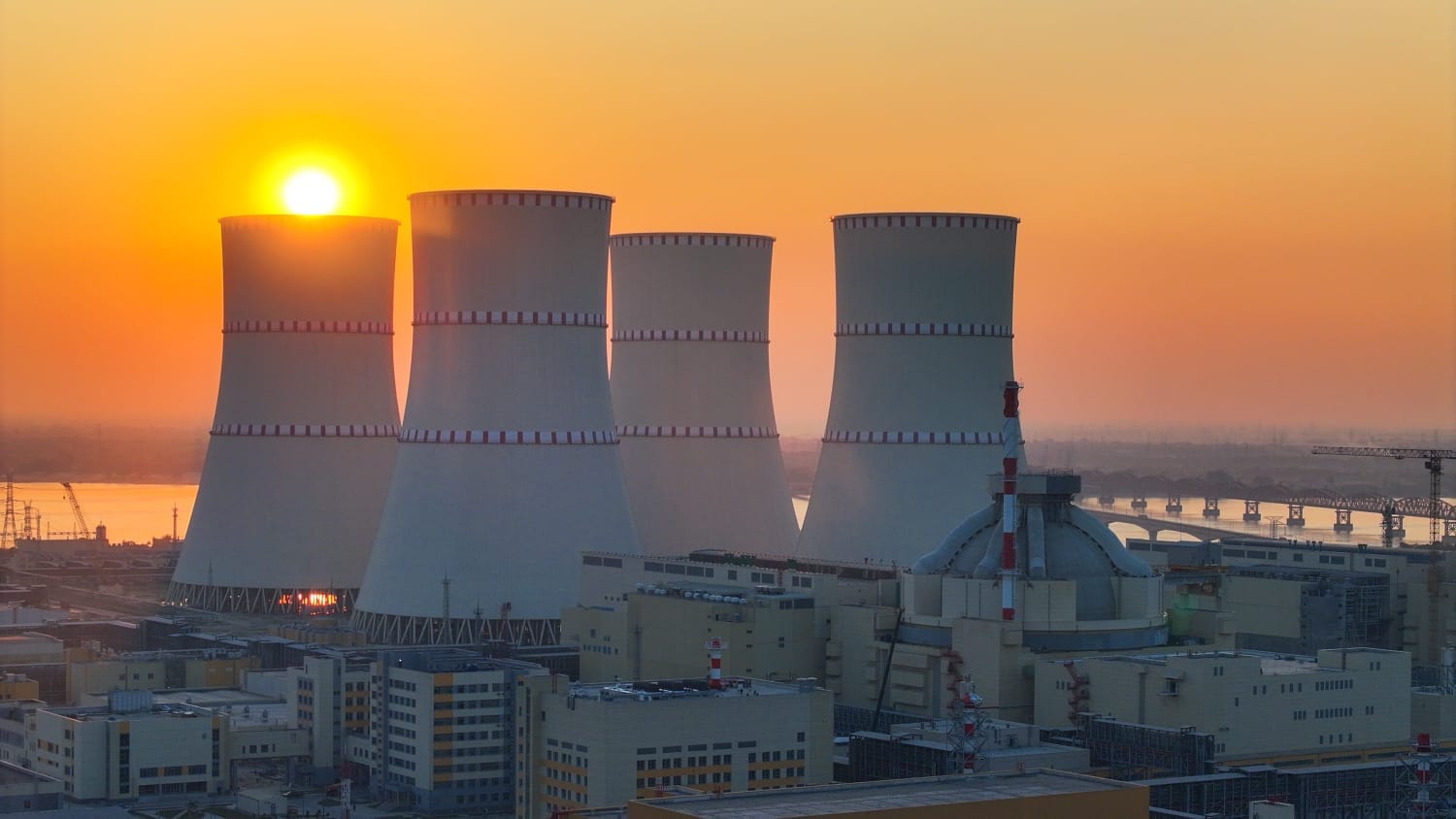
The Power Division has raised serious concerns over delays in finalising the power purchase agreement (PPA) for the Rooppur Nuclear Power Plant, warning that uncertainty over tariffs could trigger another surge in electricity subsidies.
“We have repeatedly sought the draft PPA for the Rooppur Nuclear Power Plant. Either they send the draft or complete the tariff calculation—we are in the dark about the plant’s power price,” Bangladesh Power Development Board (BPDB) Chairman Engr Rezaul Karim told Just Energy News.
Power Division officials said the PPA is critical for assessing future subsidy exposure, particularly as government support to the power sector exceeded Tk 55,000 crore in the last fiscal year.
If Rooppur’s generation cost exceeds the benchmark tariff set by the Bangladesh Energy Regulatory Commission (BERC), the Power Division may refuse to assume financial liability, officials said.
Finance Ministry halts subsidies for projects without PPAs
The concern follows the Finance Ministry’s recent decision to halt subsidies for two other mega power projects—the 1,320MW Bangladesh-China joint venture plant and the 1,320MW Bangladesh-India Rampal Power Project—due to the absence of approved PPAs since May 2025.
Between May and September 2025, subsidies worth Tk 3,995 crore were withheld after the joint venture companies failed to secure purchase committee approval during the previous Awami League government, Power Division Secretary Farzana Momtaz said while discussing the growing backlog of unpaid power bills.
Officials said the Power Division wants to resolve Rooppur’s tariff and PPA issues before the plant’s test run to avoid a similar situation.
Tariff talks underway, but costs remain uncertain
Science and Technology Secretary Md Anwar Hossain said the tariff issue would be resolved “through mutual understanding” between the concerned agencies.
Dr Md Zahedul Hassan, Managing Director of Nuclear Power Plant Company Bangladesh Ltd (NPCBL) and project director of Rooppur, said BPDB had sought additional information but that determining the tariff was not yet possible.
“The tariff depends on loan repayment interest rates, negotiated operation and maintenance costs, and several other components. These issues need joint discussions with BPDB and the Power Division,” he said.
Dr Hassan said the project is currently focused on physical startup activities.
“The hot-run test of the boiler will start within two weeks, followed by fuel loading and then grid synchronisation, which we expect to begin in January,” he said.
Earlier, Rooppur authorities had informed the Power Division that grid synchronisation would begin in December 2025, but delays in achieving expected boiler performance forced a revision of the timeline.
Transmission lines ready, fuel loading by 2027
At a high-level meeting on September 22, 2025—chaired by the science and technology secretary—it was decided that tariff and PPA issues would be settled through discussions involving BPDB and Power Grid Company of Bangladesh (PGCB), alongside the Bangladesh Atomic Energy Commission (BAEC) and NPCBL.
PGCB informed the meeting that three transmission lines—Rooppur–Bogura, Rooppur–Bheramara and Rooppur–Gopalganj—have been completed to evacuate electricity from the plant.
NPCBL has also begun public awareness activities ahead of fuel loading, which is now expected to be completed by January 2027.
Cost revision pushes project to Tk 1.39 lakh crore
Meanwhile, the Ministry of Science and Technology has proposed a fresh revision that would increase the project cost by Tk 26,181 crore and extend the deadline by another three years to June 2028.
If approved, the total cost will rise to Tk 1,39,274 crore, about 23% higher than the original estimate approved in 2016—making Rooppur Bangladesh’s most expensive energy project.
Planning Commission officials said both units will miss their earlier generation timelines. A first revised proposal submitted in early November sought an additional Tk 13,386 crore, but inaccurate foreign currency calculations prompted the Planning Commission to seek resubmission. A corrected proposal was submitted on November 27.
Taka depreciation drives cost surge
Although Russia’s $11.38 billion loan remains unchanged, depreciation of the taka has sharply inflated its value to Tk 1,16,799 crore, up from Tk 91,040 crore at approval.
The revised calculation uses an exchange rate of Tk 95.28 per dollar until June 2025 and Tk 122 per dollar for payments through 2028, based on Bangladesh Bank’s November 16 reference rate.
Under the Bangladesh–Russia agreement, Atomstroyexport is building two 1,200MW reactors at Rooppur. While Unit-1 was earlier expected to be commercially operational by 2026, the revised timeline pushes generation further into the decade.
Financial risks mount
The Planning Commission warned that errors in foreign currency costing could distort per-unit generation costs, long-term planning and overall project viability.
So far, Bangladesh has received $7.70 billion of the Russian loan, while $3.68 billion awaits approval under a draft protocol expected by December 2026. Loan repayment will begin in March 2029 over 20 years, with penalties applying for delays beyond 30 days.
Fuel loading for Unit-1 is expected to start in December, but commissioning phases—including criticality tests and full-load operation—could take several months. Partial generation may begin by March, while full output could take up to 10 more months, officials said.
An IMED review has flagged uncertainty in the updated production schedule and noted that the project office has yet to submit a complete list of unfinished work.
Experts warn of rising economic and security risks
Dr Md Shafiqul Islam, senior professor of nuclear engineering at Dhaka University, said per-unit generation costs have increased by nearly 50% from initial estimates due to delays and currency depreciation.
“If the project had started on time, dependence on fossil fuel imports would have eased. Instead, prolonged delays are increasing financial pressure, shortening equipment life and raising operational risks,” he said.