


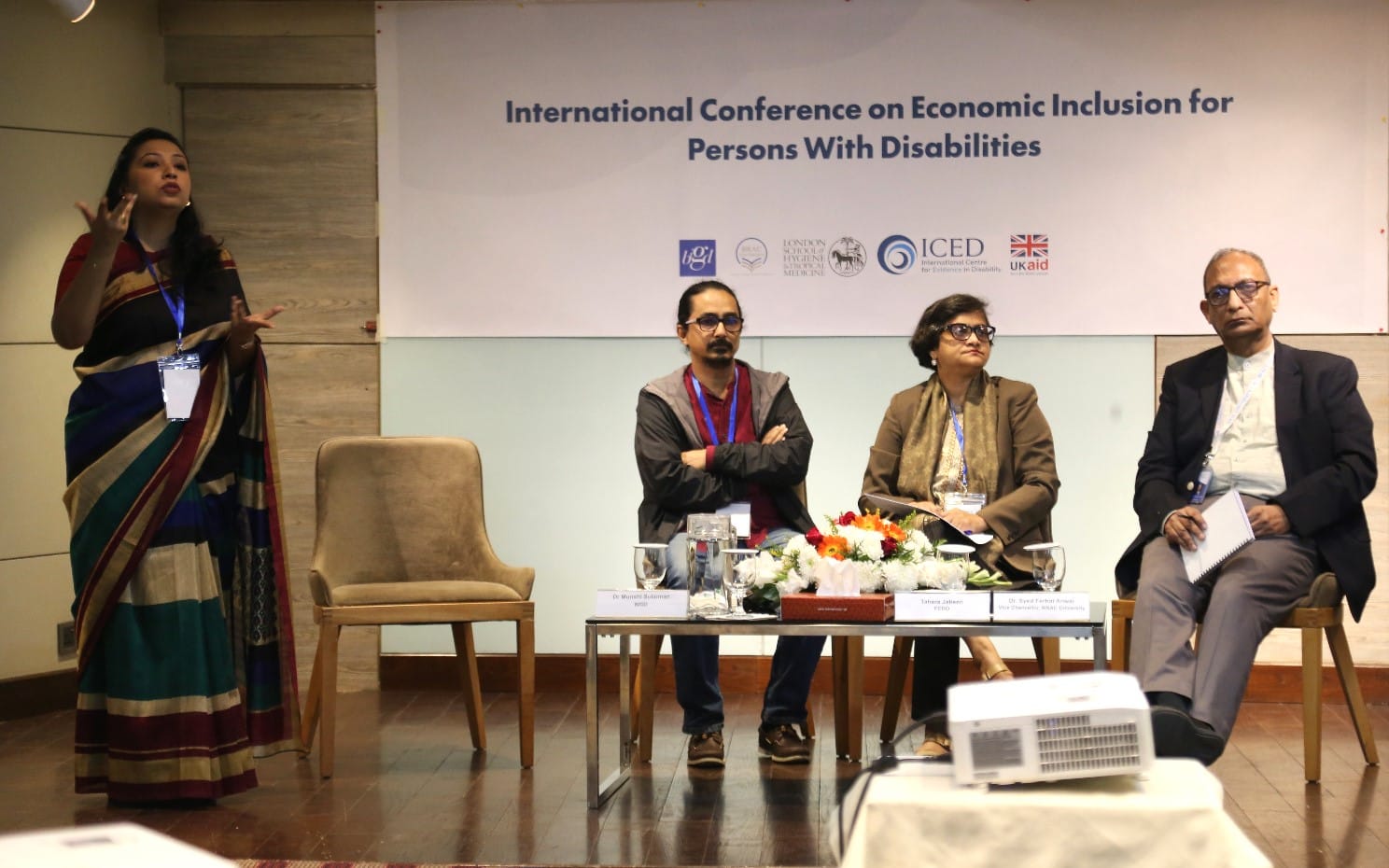
Building high-quality evidence on what works to reduce poverty among people with disabilities is essential for advancing their economic inclusion and strengthening overall economic growth, speakers said at an international conference in Dhaka on Sunday.
Worldwide, about 1.3 billion people live with disabilities and are significantly more likely to experience both monetary and multidimensional poverty. They face systemic exclusion from education and decent employment and bear additional disability-related costs that are often inadequately covered by social protection programmes.
The issue was highlighted on the opening day of the two-day International Conference on Economic Inclusion of Persons with Disabilities, jointly organised by the BRAC Institute of Governance and Development (BIGD), the London School of Hygiene and Tropical Medicine (LSHTM), and the Programme for Evidence to Inform Disability Action (PENDA).
Speakers and discussants stressed that a lack of reliable, context-specific evidence—particularly from low- and middle-income countries—continues to hinder effective policymaking and investment in disability inclusion.
Delivering the keynote address, Dr Morgon Banks, Associate Professor of Disability Research at the International Centre for Evidence in Disability (ICED) at LSHTM, said excluding adults with disabilities from the labour force results in economic losses of between 1 and 8 percent of GDP across 12 countries studied.
In Bangladesh, youth with disabilities are five times more likely to be out of school and employment than those without disabilities, she said, adding that evidence on interventions that improve employment outcomes remains extremely limited both nationally and globally.
Dr Banks highlighted the role of targeted research and skills-development programmes in expanding economic opportunities for disadvantaged youth with disabilities. Citing findings from BRAC’s STAR+ programme, she said participation increased the likelihood of employment among young people with disabilities by 22 percent.
Without access to robust evidence, speakers warned, government initiatives and donor-funded programmes are less likely to achieve meaningful or cost-effective impact, underscoring the need to rethink how economic inclusion is designed and implemented.
“Inclusivity is not about defining people by what they lack; it is about recognising where they can contribute,” said Dr Syed Ferhat Anwar, Vice Chancellor of BRAC University. He added that addressing barriers allows people with disabilities to contribute more productively to society and the economy.
Tahera Jabeen, Social Development Adviser at the British High Commission, said the UK remains committed to global leadership in disability-inclusive development. Through PENDA, she said, the UK is investing in high-quality evidence to help policymakers strengthen access to education, skills, and livelihoods for persons with disabilities in Bangladesh and beyond.
The conference has brought together academics, development practitioners, policymakers, donors, and organisations representing people with disabilities to share evidence-based strategies for improving livelihoods, reducing poverty, and strengthening cross-sector collaboration at national and international levels.