


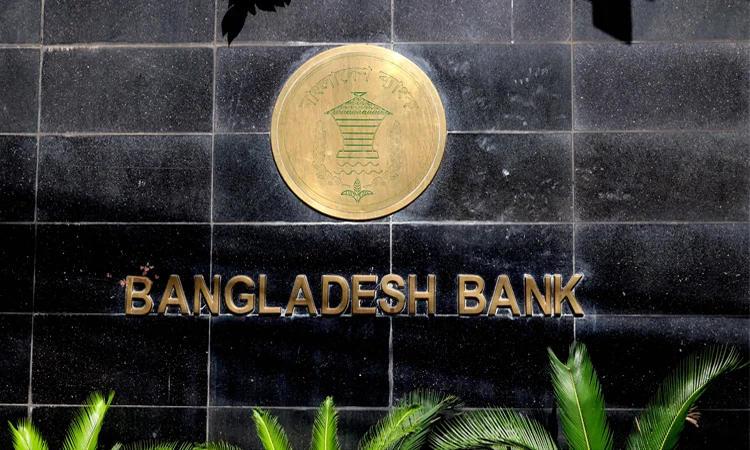
Bangladesh Bank (BB) Governor Dr Ahsan H. Mansur on Monday expressed strong confidence in the country’s macroeconomic outlook, saying foreign exchange reserves are on course to meet—and potentially surpass—US$35 billion by the end of the current fiscal year 2025–26.
“Reaching the $35 billion mark would put the economy at a very comfortable level,” the governor said while speaking at a seminar on Systematic Efforts to Understand Economic Pulse: Importance of Purchasing Managers’ Index (PMI)at the Metropolitan Chamber of Commerce and Industry (MCCI) in the capital. The event was jointly organised by MCCI and Policy Exchange Bangladesh (PEB).
Dr Mansur said the reserve target would be achieved without relying on funds from the International Monetary Fund, noting that any additional external financing would be “icing on the cake” rather than a prerequisite.
Highlighting improvements in the balance of payments and the external sector, the governor acknowledged that exports remain a weak spot amid global headwinds.
However, he pointed to favourable terms-of-trade gains driven by sharply lower energy prices and generally stable or declining global commodity prices.
“Take petroleum prices, for example—the average decline is about 30 per cent,” he said, adding that the drop represents a direct gain for the economy.
As a result, while import payments have risen by about 5–6 per cent this year, the actual volume of imports has increased much more significantly. Data from Chattogram Port, he said, show strong growth in both cargo tonnage and container traffic.
The governor also reflected on the severe liquidity stress the banking sector had faced following a foreign exchange crunch, which forced the central bank to clear around $3.5 billion in accumulated arrears. He said a sharp fall in reserves—from $48 billion to $20 billion—had triggered a massive contraction in money supply as trillions of taka left the system.
This led to a sharp slowdown in deposit growth, which stood at just 6.4 per cent in December 2024, constraining private sector credit. Recent data, however, show a recovery, with deposit growth rebounding to 11 per cent.
“With total deposits now at around Tk 20 trillion, this growth means an additional Tk 2.2 trillion has entered the system,” he said.
Emphasising the role of high-frequency data in policymaking, Dr Mansur said authorities rely on real-time indicators such as daily exchange rates, interbank interest rates and remittance flows.
He noted that daily remittance inflows had recently crossed $170 million, while monthly inflows were tracking at about 70 per cent of the previous month’s total at the time of his speech.
Welcoming the launch of the PMI, the governor described it as a valuable new tool for policymakers and thanked MCCI and Policy Exchange for the initiative.
Deputy High Commissioner and Development Director of the British High Commission to Bangladesh James Goldman attended the seminar as special guest. MCCI President Kamran T. Rahman delivered the welcome address, while PEB Chairman and CEO Dr M. Masrur Reaz presented the keynote. Issam Mosaddeq, Head of Prosperity and Economic Growth at the UK’s FCDO, outlined the contextual background of the PMI.