


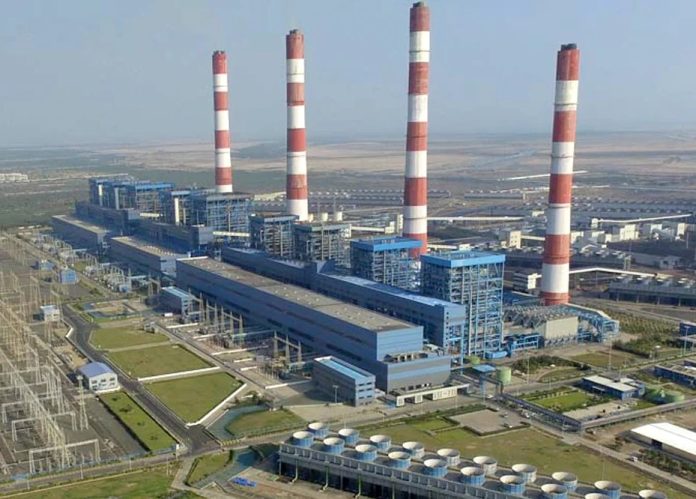
A national review committee in Bangladesh is expected to recommend the cancellation of electricity imports from India’s Adani Power, citing alleged corruption and irregularities in the controversial cross-border energy deal.
The National Review Committee, chaired by retired High Court judge Moinul Islam Chowdhury, is due to submit its report on Tuesday afternoon to the Ministry of Power, Energy and Mineral Resources.
The committee has been examining the 2017 agreement under which Bangladesh imports electricity from Adani (Jharkhand) Power Plant, India under Power Purchase Agreement (PPA).
Power and Energy Adviser Muhammad Fouzul Kabir Khan said he would review the report before briefing the media. “I will receive the report on Tuesday, review it and then disseminate it to the media,” he told Just Energy News, adding that no immediate press conference will be planned.
The committee has already instructed the Bangladesh Power Development Board (BPDB) to halt payments to Adani Power.
According to official sources, Adani has received payments up to September 2025, including a confirmed US$62 million that month. Adani claims outstanding dues of about US$609 million, while BPDB estimates arrears at US$339 million.
Allegations of corruption and high costs
The review follows earlier statements by the committee pointing to “massive governance failure” and “massive corruption” in Bangladesh’s power sector during the tenure of the previous Sheikh Hasina-led government.
Last November, Moinul Islam Chowdhury said the committee found widespread irregularities, collusion and illegalities in several power purchase agreements, including the Adani deal.
Under the 2017 contract, Adani Power’s 1,400-megawatt Godda plant supplies 100 per cent of its electricity output to Bangladesh for 25 years. Even when electricity is not drawn, BPDB is required to pay substantial capacity charges.
Bangladesh officials say the deal has imposed a heavy financial burden. BPDB estimates its total losses from imported electricity at Tk 21,114 crore, with around Tk 14,000 crore attributed solely to purchases from Adani. The utility pays more than Tk 450 crore per month in capacity charges, regardless of actual power usage.
Electricity imported from Adani costs Bangladesh Tk 14.86 per unit, significantly higher than power generated at domestic plants or imported from other Indian suppliers and Nepal. BPDB data show that the average cost of Adani’s electricity this year stands at 12.16 US cents per unit, compared with 11.30 cents for other coal-based plants.
Between January 2024 and September 2025, Adani charged an average of US$76.91 per tonne, compared with US$71.76 per tonne paid by other coal-based plants. Adani sources coal from its own Australian mines, using international indices that BPDB disputes. The disagreement has already led Adani to seek arbitration in Singapore.
Legal and geopolitical risks
One committee member cautioned that cancelling contracts with foreign companies involves legal complexities and could expose Bangladesh to heavy penalties. Prominent jurist Shahdeen Malik has warned that international arbitration could result in claims of up to US$5 billion if the contract is scrapped without due process.
Despite the controversy, Adani currently supplies around 1,400 megawatts to Bangladesh, a fraction of the country’s total installed capacity of more than 28,500 megawatts. However, BPDB calculates that capacity charges alone will cost Bangladesh about US$331.66 million annually, totalling US$8.62 billion over the life of the contract—more than double the cost of building the Padma Bridge, the country’s flagship infrastructure project.
Managing supply without Adani
BPDB officials say Bangladesh will continue importing electricity from Adani through the upcoming summer while legal disputes are addressed. At the same time, state-owned utilities have been instructed to prepare alternative sources, including the Rooppur nuclear power plant and large domestic coal-fired stations, to manage any disruption.
BPDB is already under financial strain, with outstanding dues of Tk 37,070 crore to public and private entities. Of this, Tk 21,303 crore is owed to independent power producers, while gas arrears to Petrobangla stand at Tk 11,025 crore.
Last November, Power and Energy Adviser Mr Khan said the government would not hesitate to cancel existing contracts with the Adani Group if corruption or serious irregularities were proven. The committee’s report, expected later today, is likely to be a decisive moment in determining the future of one of South Asia’s most contentious power deals.
Adani Letter to BPDB
In a letter sent to BPDB chairman, signed by Adani Power (Jharkhand) Limited vice president Avinash Anurag, on January 17, 2026 has requested to pay $151.91 million as an immediate step to avoid disruption in regular operation within seven days.
The letter stated that the total unpaid amount as on date is $609 million, including $339 million that is undisputed based on BPDB’s acknowledgements for power supplied up to December 2025.
“Prompt settlement is critical to ensure uninterrupted power supply to Bangladesh, completion of scheduled maintenance and other timely payments,” according to the letter.
The Adani Power infirmed that the late payment surcharge (LPS) stands $68.86 up to June 2025.
According to official sources, the national review committee has prepared two separate reports—one recommending the cancellation of the Adani deal and the other proposing renegotiation of the agreement. However, the committee remains divided over whether to cancel the deal or renegotiate the tariff, despite massive irregularities surrounding the agreement.