


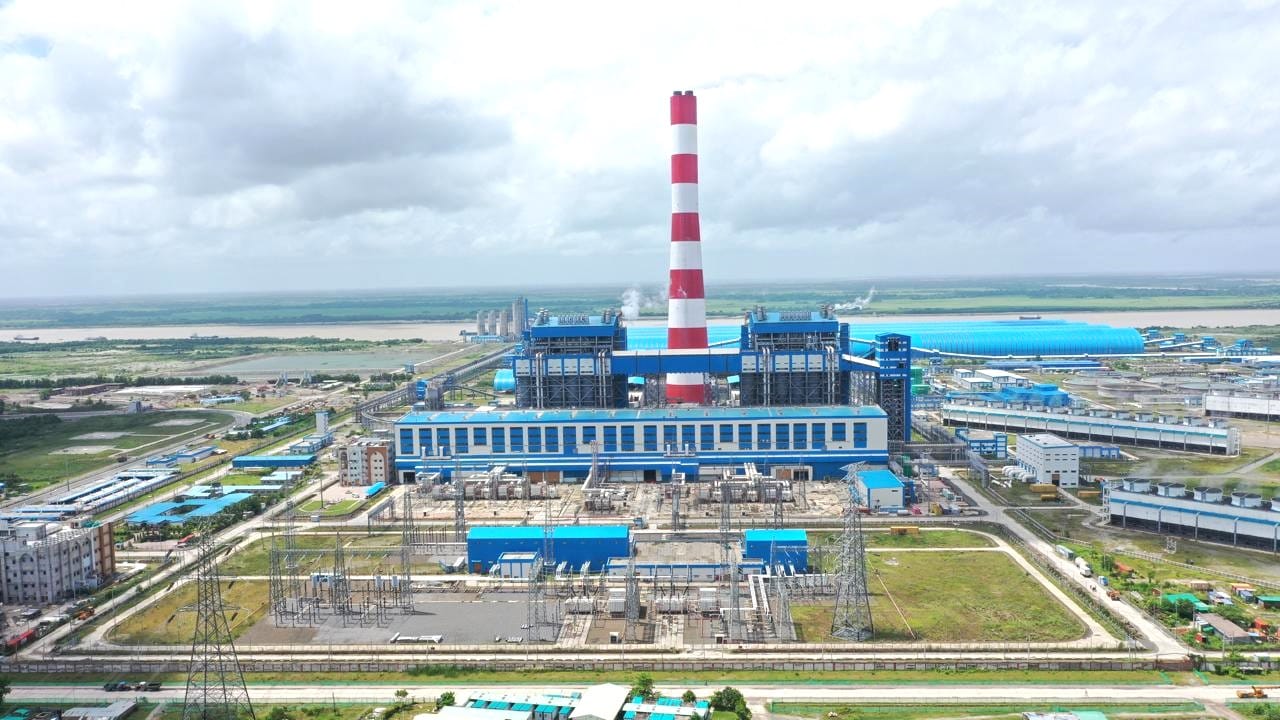
Bangladesh’s power sector was systematically looted over the past 16 years under the former Awami League government, with politically connected figures and vested interests siphoning off hundreds of billions of taka through corrupt and irregular contracts, according to a final report by a national review committee.
The committee, formed to examine corruption and irregularities in the electricity and energy sector, has described the Adani Power agreement as an “anti-national deal” and recommended taking tough decisions over it, sources said.
The final report was submitted to the Power and Energy Adviser on Tuesday by the committee, headed by Justice Moinul Islam Chowdhury. However, the government has not yet made the document public.
According to the report, large-scale corruption became entrenched during the previous government’s tenure, with special laws allegedly abused to grant extraordinary benefits to selected private companies. A powerful nexus is said to have pocketed thousands of crores of taka through inflated and opaque power purchase agreements.
The report contains detailed analysis of controversial contracts, including those involving Adani Group’s power plant and other independent power producers. Despite the significance of the findings, officials said the report has not yet been disclosed due to “confidentiality considerations”.
After submitting the report, Justice Chowdhury declined to comment, saying it was now up to the government to decide on the next steps. Another committee member, senior energy expert Dr Shahdin Malik, also refrained from making any public remarks, stating that the committee’s mandate had ended with the submission of the final report.
Earlier, on 2 November, the committee had submitted a preliminary report, alleging that a small group had forced the Bangladesh Power Development Board (BPDB) into costly contracts for private power plants, draining public funds. The committee claimed that special laws in the power and energy sector were widely misused, compelling BPDB to buy electricity at inflated prices.
One committee member said the review covered the Adani agreement, around 50 power purchase agreements signed under special laws, capacity charge provisions and other contractual clauses, uncovering extensive evidence of corruption. The committee was formed in late 2024.
The Adani deal received the most scrutiny. The committee noted that Bangladesh had never before signed a power agreement of such a “state-adverse” nature. It found that electricity prices under the Adani contract were set at unusually high levels.
According to the report, the full contract file was examined, revealing that former power secretary Ahmed Kaykaus approved the project without following due government procedures, allowing Adani to build a power plant in India dedicated to supplying electricity to Bangladesh—an act the committee said violated existing laws.
The committee also identified serious irregularities in the power purchase agreement (PPA) with Adani. Unlike other power producers, Adani was granted exceptionally stringent and one-sided terms. Under the contract, Bangladesh is required to pay capacity charges even if it does not take electricity. Additionally, the government must pay for 35 per cent of projected electricity generation even if no power is supplied, and any payment arrears accrue interest at 1.5 per cent.
However, the committee stopped short of explicitly recommending an immediate termination of electricity purchases from Adani. Some members pointed out that the agreement is an international contract, making cancellation or suspension legally complex. Others suggested renegotiation as a possible option.
Meanwhile, following the preliminary findings, the power division asked BPDB three weeks ago to assess whether electricity generation from alternative sources could be increased in place of Adani. BPDB reportedly responded that Bangladesh remains heavily dependent on India for power imports—about 1,600 megawatts from Adani alone, in addition to 1,200 megawatts from other Indian suppliers. Officials warned that halting Adani imports could disrupt cross-border power trade, making an immediate shutdown difficult.
The government has kept the preliminary report confidential, with officials claiming it has been treated as a classified document. However, a committee member, speaking on condition of anonymity, said the report should be made public as soon as possible and legal action taken against those responsible.
“The findings are serious,” the member said. “If there is political will, accountability must follow.”