


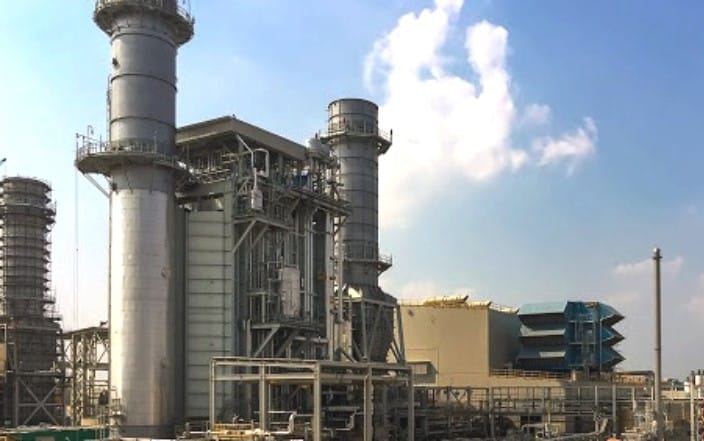
Bangladesh’s interim government has moved to revive a long-stalled irrigation initiative that would reuse hot cooling water from the Ashuganj and Ghorashal thermal power plants to expand surface-water irrigation for agriculture.
The Bangladesh Agricultural Development Corporation (BADC) has proposed a new Tk 470 crore (£34m approx) scheme titled the Ashuganj–Palash Green Project, which is set to be placed before the Executive Committee of the National Economic Council (Ecnec) for approval at its meeting scheduled for Sunday, Planning Commission sources said.
BADC first introduced two pilot projects in 1978–79 to facilitate irrigation in the Ashuganj and Palash areas of Brahmanbaria and Narsingdi districts using discharge water from thermal power plants. These initiatives were later merged into a single scheme—the Ashuganj–Palash Agro Irrigation Project—which was originally scheduled for implementation between 1990 and 1995 but ultimately concluded in June 2020 after five phases.
The project faced major disruptions following the construction of the Ashuganj river port–Akhaura land port four-lane highway, which impeded water flow. Despite this, the scheme had enabled irrigation across 24,860 acres of land, producing around 108,762 tonnes of crops. Irrigation operations were suspended in January 2021 after the Bangladesh Power Development Board (BPDB) filled the cooling water reservoir.
The latest proposal was first placed before Ecnec on 23 December 2024 but was sent back by the Prof Muhammad Yunus-led interim government for further scrutiny, particularly on environmental and financial grounds.
“The Planning Commission has now recommended the project for Ecnec approval as BADC has complied with the instructions issued at the December 2024 meeting,” said Md Mustafizur Rahman, a member of the Agriculture, Water Resources and Rural Institutions Division of the Planning Commission.
He said the three-and-a-half-year project would help produce an estimated 105,050 tonnes of food grains by providing irrigation to 21,010 hectares of land during the period from January 2026 to June 2029.
Under the proposal, a total of 1,900 cusecs of used hot water would be drawn from the two power plants—1,100 cusecs from Ashuganj and 800 cusecs from Ghorashal. The irrigation network would cover seven upazilas across Brahmanbaria and Narsingdi districts in the Chattogram and Dhaka divisions.
The plan also includes the construction of a new cooling water reservoir with a capacity of 10,046.88 cubic metres. For this purpose, around 6,000 square metres of land—currently a BPDB-owned pond—would be acquired.
Infrastructure works would include 9.78km of reinforced concrete cement (RCC) main canals, 8km of secondary and tertiary canals, and a 3.4km double-barrel box conduit, along with 20 small and medium hydraulic structures such as water passes, cattle crossings, footbridges and culverts.
“A key objective of the new project is to revive the earlier scheme and establish a permanent and sustainable irrigation system through optimal use of surface water,” a senior Planning Commission official said.
The project will be fully funded by the government as a grant to BADC. Ashuganj Power Station Company Ltd (APSCL) managing director Sayeed Akram Ullah told Just Energy News that BADC had previously collected hot water from the company’s discharge channel. “If they are interested in collecting water for irrigation from the new power units, we would welcome the initiative,” he said.
However, APSCL executive director A Majid noted that five units of the Ashuganj power plant had historically discharged around 200,000 tonnes of water per hour since 1970 under the Sabuj (Green) Bangla Project, supervised by BADC. At present, only two units are operational, releasing about 72,000 tonnes per hour due to gas shortages and unit shutdowns.