


For more than a decade, Bangladesh’s power sector was governed not by competition or regulation, but by emergency law.
What began as a short-term response to blackouts in 2010 evolved into a procurement regime that, according to a government-appointed national review committee headed by Justice Moinul Islam Chowdhury, enabled systematic overpricing, excess capacity and the transfer of billions of dollars from the public to a small group of private power producers.
The findings are laid out in stark terms in the Final Report of the National Review Committee (NRC), published on 25 January 2026. Commissioned by Bangladesh’s interim government, the 152 pages report concludes that the country’s electricity crisis is not the result of global fuel shocks or poor demand forecasting, but of deliberate policy choices that dismantled oversight and concentrated power in the executive.
“These wrong decisions are not mistakes,” the report states. “They suggest systematic collusion between businesses, politicians and bureaucrats to deliberately create huge excess profits (rents).”
An emergency that never ended
The legal foundation of the system was the Quick Enhancement of Electricity and Energy Supply (Special Provisions) Act, 2010, enacted at a time when Bangladesh was struggling with daily power cuts. The law allowed the government to bypass competitive bidding, weaken regulatory scrutiny and shield decisions from judicial challenge.
Although designed as a temporary measure, the Act remained in force for more than 14 years. In practice, it became the dominant framework for power-sector contracting, covering hundreds of power purchase agreements (PPAs) signed without open tender.
According to the NRC, this created a “parallel governance system” in which discretion replaced rules and accountability was structurally disabled. Regulatory oversight by the Bangladesh Energy Regulatory Commission (BERC) was marginalised, while courts were prevented from reviewing contracts approved under the Act.
Contracts designed for profit, not power
The corruption documented by the committee is not limited to bribery or individual misconduct. Instead, it is embedded in the design of the contracts themselves.
Many PPAs guaranteed payments to plant owners regardless of whether electricity was actually produced. “Take-or-pay” clauses ensured revenues even when plants sat idle. Fuel costs were passed directly to the buyer, removing incentives for efficiency, while foreign-currency indexation shifted exchange-rate risk entirely onto the public. In many cases, the government also provided sovereign guarantees, socialising commercial risk.
Taken together — and awarded without competition — these terms created what the report describes as risk-free excess profits, paid indefinitely by the state-owned Bangladesh Power Development Board (BPDB) and, ultimately, by taxpayers and consumers.
Pricing far above global benchmarks
The NRC backs its conclusions with detailed bench marking. It found that tariffs agreed under the emergency regime were consistently far above cost-reflective levels at the time of signing.
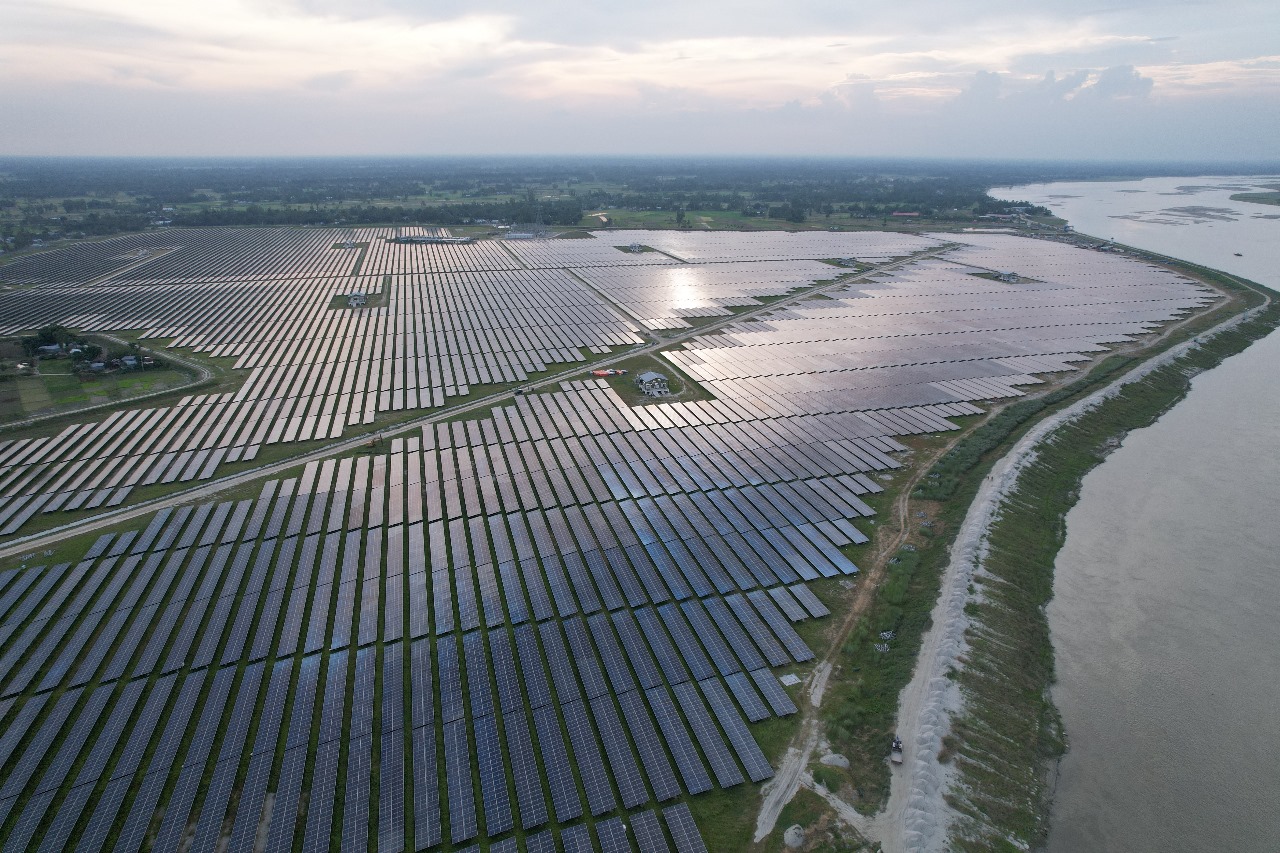
Solar power contracts were priced 70–80 per cent above international benchmarks, heavy fuel oil plants 40–50 per cent higher, and unsolicited gas-based projects carried premiums of around 45 per cent. Even by regional standards, the prices were extreme.
The Adani deal
The agreement with India’s Adani Power to import electricity from the Godda coal plant is described by the NRC as the most striking example of institutional failure.
The plant is located entirely outside Bangladesh, with coal sourcing, transport and taxation beyond the country’s control. Yet the contract allows for the full pass-through of Indian taxes and includes clauses exposing Bangladesh to regulatory or political decisions taken in India. The tariff is the highest among comparable cross-border power imports.
The committee estimates the price to be 4–5 US cents per kilowatt-hour above market levels, a difference that could cost Bangladesh billions of dollars over the life of the contract.
The deal was unsolicited, non-competitive and approved without a transparent value-for-money assessment — conditions the NRC identifies as hallmarks of systemic corruption rather than commercial necessity.
Paying for power that is never used
Perhaps the clearest evidence that the system rewarded rent extraction rather than energy security lies in the scale of unused capacity.
Bangladesh now has between 7,700 and 9,500 megawatts of idle or stranded power capacity, while overall utilisation has fallen to 40–50 percent. Despite this, BPDB pays an estimated $0.9–1.5bn a year in capacity charges for plants that generate little or no electricity.
The report rejects the idea that this was accidental overbuilding. Instead, it finds that demand projections were repeatedly inflated to justify new contracts, even as existing capacity remained underused. Because idle plants continued to earn guaranteed payments, over investment itself became profitable.
A utility in permanent deficit
The financial consequences have been severe. BPDB’s annual losses rose from Tk 5,468 crore to Tk 50,565 crore, while government subsidies reached Tk 59,600 crore. Outstanding arrears exceeded Tk 55,000 crore.
The NRC concludes that BPDB no longer functions as a commercial buyer of electricity. It has become a pass-through entity, legally bound to honour inflated contracts regardless of demand or fiscal capacity — a mechanism through which losses are transferred directly to the national budget.
Repeal without reckoning
In November 2024, the government repealed the emergency law. But the NRC warns that repeal alone does not dismantle the system it created. Most PPAs remain legally binding for 20 to 25 years, locking in above-market payments unless contracts are renegotiated or cancelled.
The committee’s recommendations are unusually blunt: contracts with evidence of corruption should be scrapped, overpriced agreements renegotiated, and an independent energy oversight commission established. It also calls for the full publication of all PPAs and payment data.
“These are not technocratic adjustments,” one committee member notes in the report. “They are anti-corruption measures.”
A governance crisis, not an energy one
The NRC’s findings leave little room for ambiguity. Bangladesh’s power-sector crisis is not primarily about electricity supply. It is about governance.
Emergency powers, the report shows, were transformed into a permanent instrument for extracting rents. Excess capacity became a business model. Public risk was systematically exchanged for private profit. Unless the contracts at the heart of the system are confronted, the cost of those decisions will be borne by consumers and taxpayers for decades to come.