


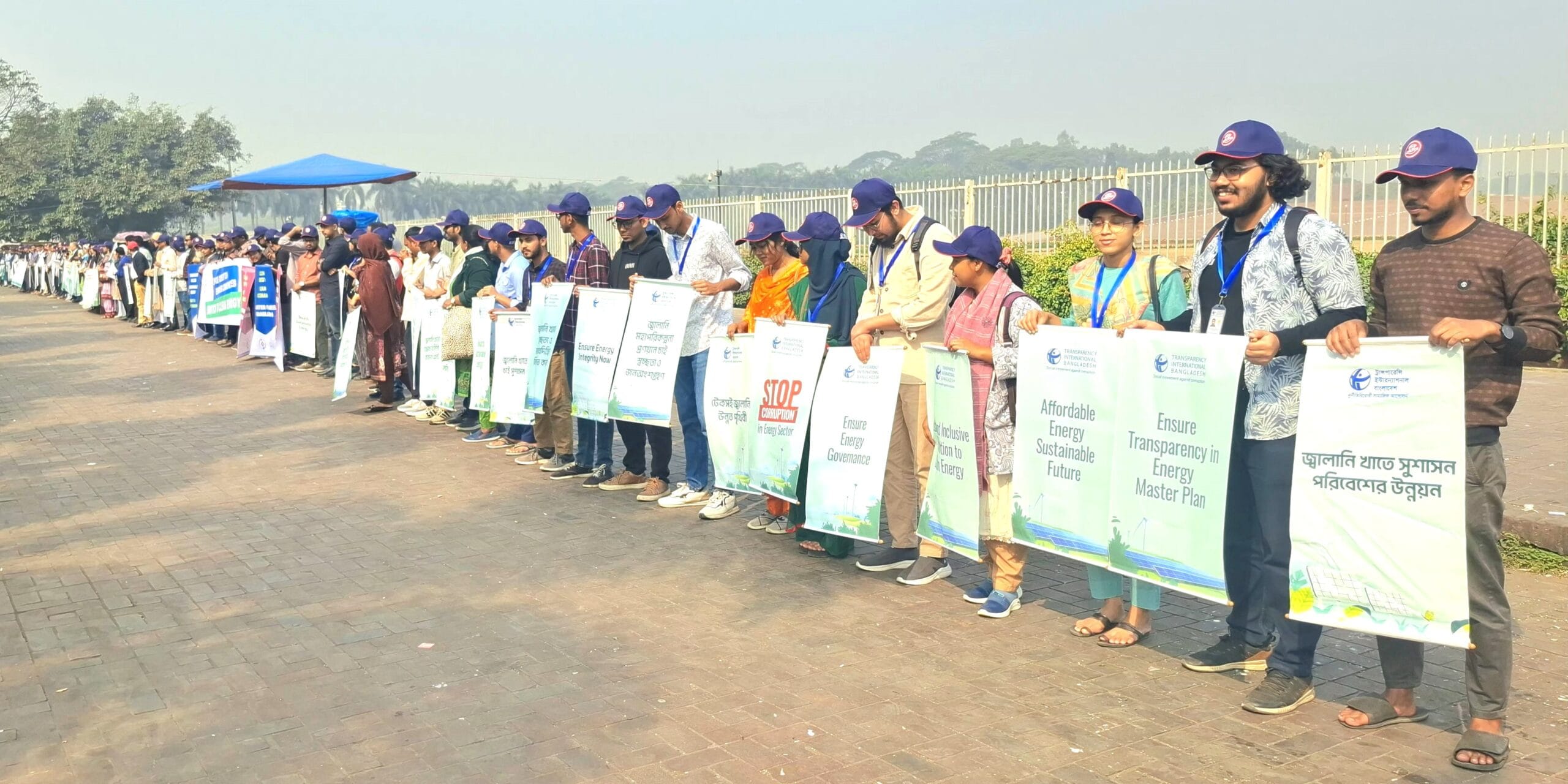
Transparency International Bangladesh (TIB) and a coalition of civil society organisations on Monday expressed strong dissatisfaction over what they described as the interim government’s failure to lay the foundation for a transition to renewable and clean energy.
It also urged political parties contesting the upcoming national election to overhaul the draft Energy and Power Sector Master Plan (EPSMP) 2025 through a participatory process.
The call came from a human chain organised in front of the National Parliament at Manik Mia Avenue to mark the International Day of Clean Energy 2026, according to a release.
Speaking at the programme, TIB Executive Director Dr Iftekharuzzaman said the interim government had missed a critical opportunity to initiate a shift away from fossil fuels that could have been carried forward by an elected government.
“The interim government has failed to take any initiative to create the foundation for transitioning the country’s energy system to renewable or clean energy. The government must explain why this did not happen,” he said.
He also urged the government to publish a white paper outlining what has been achieved in line with the interim chief adviser’s globally promoted “Three Zero” initiative—zero poverty, zero unemployment and zero carbon emissions.
Dr Iftekharuzzaman criticised the draft EPSMP 2025 for remaining heavily dependent on fossil fuels and being prepared without stakeholder engagement. He warned that the approach risks further institutionalising governance deficits in the energy sector, including policy capture favouring fossil fuels, conflicts of interest, abuse of power and corruption.
“Such neglect is unacceptable, as this is a question of national existence. Climate change driven by carbon pollution poses serious risks to the security and survival of the people of this country,” he said, calling on future elected governments to restructure the master plan by prioritising clean energy and adopting a clear action plan toward zero carbon emissions.
A concept paper on the importance of renewable energy and good governance in the energy sector was presented by Ashna Islam, assistant coordinator of TIB’s Energy Governance division. The event was moderated by Newazul Moula, coordinator of the same division.
The human chain was joined by representatives of numerous organisations, including Waterkeepers Bangladesh, ActionAid Bangladesh, Manusher Jonno Foundation, CPD, CAB, BAPA, BSREA, BGEF, ETI Bangladesh, DHORA and others.
TIB noted that it first observed the International Day of Clean Energy in Bangladesh last year and has expanded activities in 2026. At the local level, its Committees of Concerned Citizens (CCC), Active Citizens Groups (ACG) and Youth Engagement and Support (YES) groups are holding awareness campaigns, rallies and discussions in 45 districts and upazilas.
To ensure good governance and accelerate the renewable energy transition, TIB placed several recommendations, including adopting a realistic and unified roadmap for renewable electricity generation across all policies, creating an investment-friendly framework for clean energy production and technology, ensuring transparency in environmental clearances, and disclosing all energy project proposals and contracts.
Other recommendations included simplifying net-metered solar installations, introducing feed-in tariffs, providing incentives for renewable energy, and ensuring that approvals and contracts remain free from conflicts of interest.