


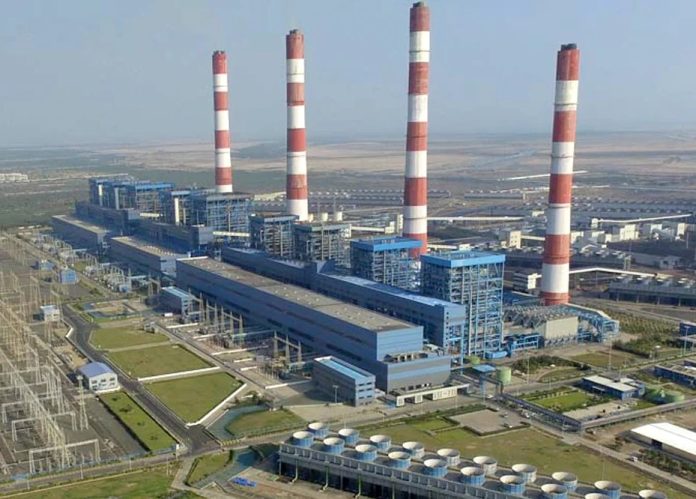
The Bangladesh Power Development Board (BPDB) has appointed a two-member panel to negotiate a long-running dispute with India’s Adani Power over the tariff charged for electricity supplied from its coal-fired power plant in Jharkhand, with proceedings under way at the Singapore International Arbitration Centre (SIAC).
The Bangladesh Interim government formed National Review Committee on the tariff for power imported from Adani Power’s 1,600-megawatt (MW) Godda plant, which the committee estimate is costing Bangladesh an additional $400m–$500m a year.
Adani initiated arbitration at SIAC last year, seeking payment of around $485m in outstanding dues related to the contested coal tariff.
The BPDB’s negotiating panel comprises barrister Ahsan Siddique and Rezwan Khan, chairman of the Power Grid Company of Bangladesh.
SIAC, established in 1991, is a leading independent, not-for-profit institution specialising in international arbitration in Asia.
Bangladesh has been paying an additional 4–5 US cents per kilowatt-hour for electricity supplied by Adani Power compared with comparable imports from India’s grid, according to a government-appointed review committee. The committee has described the power purchase agreement (PPA) as “unfair”, estimating that excess payments could total nearly $10 billion over the 25-year duration of the contract.
Presenting its final report at a press briefing at Bidyut Bhaban in Dhaka on Sunday, committee members said they had uncovered evidence that could allow the government to cancel the agreement and seek compensation.
“We have found substantial documentary evidence on the basis of which the government can lawfully cancel the PPA with Adani,” committee members said.
The committee said its findings were based on contractual documents, transaction timelines and foreign travel records of officials involved in approving the deal. It also cited whistleblower testimony alleging that the agreement was signed under direct instructions from the office of then prime minister Sheikh Hasina.
While the panel said it had not identified any direct bank transfers linked to the deal into Sheikh Hasina’s personal accounts, it argued that the available evidence raised serious concerns about the integrity of the contracting process.
According to the report, when electricity imported from India’s grid was priced at 4.46 US cents per kilowatt-hour, the tariff approved for Adani Power was set at 8.61 cents, rising to 14.87 cents by 2025. The increase was attributed to what the committee described as an unusual tariff indexation formula embedded in the contract.
The panel said Adani’s tariff had been benchmarked against SS Power, a coal-fired plant owned by the S Alam Group—an agreement it described as controversial. After adding the cost of constructing transmission lines to Bangladesh and incorporating Indian taxes, Adani’s final tariff exceeded even that benchmark.
The report noted that no explanation was found as to why coal-fired power prices in India or other countries were not used as comparative benchmarks.
As a result, Bangladesh is paying at least 40–50% more per unit for electricity supplied by Adani than comparable alternatives, translating into annual excess costs of $400m–$500m, the committee said.
The committee was formed by the interim administration following last year’s student-led mass uprising that led to the collapse of the previous government. Its work forms part of a broader review of power sector contracts approved under emergency legislation.
Committee members alleged that bribes amounting to several million US dollars were paid to secure approval for the Adani agreement and that senior government officials were involved in the decision-making process. They said an early call for whistleblowers had resulted in a large volume of documentary evidence being submitted by insider sources abroad.
According to the panel, the power division has engaged a legal team comprising internationally recognised UK-based King’s Counsel specialists in corruption litigation, alongside Bangladeshi lawyers, to assess and verify the evidence. Relevant material has also been shared with Bangladesh’s Anti-Corruption Commission.
London-based legal experts involved in the review reportedly described the quality of the evidence as exceptional, noting that such comprehensive documentation is rare in international corruption cases.
The committee recommended that the government formally notify Adani of the allegations and seek its response before deciding whether to pursue arbitration in Singapore, warning that procedural delays could weaken Bangladesh’s legal position.
It also cautioned that cancelling or legally challenging major contracts could result in short-term electricity shortages, including severe load-shedding, should Adani suspend supplies. Public support would therefore be essential, the panel said, to withstand temporary hardship in pursuit of long-term benefits.
Losses at BPDB have risen sharply, reaching around Tk 500bn in 2025, compared with about Tk 55bn in 2009—a surge the committee attributed to systemic irregularities in power sector contracting.
The Adani agreement has become the most prominent symbol of alleged corruption in the sector, the report said. Although the Godda plant was constructed adjacent to domestic coal reserves, restrictions on exporting electricity generated from locally mined coal have resulted in fuel being imported from Australia, shipped by sea and transported across India by rail—costs borne entirely by Bangladeshi consumers.
Bangladesh is also paying Indian transmission charges and taxes levied on Adani, which the committee described as “irrational and unjustifiable”.
Despite a fourfold increase in installed generation capacity over the past 14 years, payments to private power producers have risen elevenfold, the report said. Capacity payments—fees paid even when plants remain idle—have increased twentyfold, costing BPDB up to $1.5bn annually. Around 9,500MW of capacity remains unused because of fuel shortages and infrastructure constraints.
The committee recommended cancelling contracts where corruption is proven, renegotiating high-cost PPAs, mandating competitive bidding for future projects and establishing an independent energy regulator to improve transparency.
“The corruption was massive and wholly unacceptable,” said the committee’s chair, Moinul Islam Chowdhury, a retired High Court judge.
The five-member committee, formed on 5 September last year, reviewed power sector agreements signed between 2008 and 2024 under the now-defunct Quick Enhancement of Electricity and Energy Supply (Special Provision) Act 2010, which allowed contracts to be awarded without competitive bidding and granted legal indemnity to officials.
Other members include Dr Zahid Hussain, former lead economist at the World Bank’s Dhaka office, chartered accountant Ali Ashfaq, and Prof Moshtaq Hossain Khan of the University of London.
Adani’s legal panel
Adani Power’s negotiating team includes Prof Lawrence Boo and Lucy Reed of The Arbitration Chambers, and Toby Landau and Prof V.K. Rajah of Duxton Hill Chambers, Singapore. The panel was appointed by Adani’s chief executive under Section 19 of the PPA, which governs dispute resolution.