


With a deepening global crisis and weakening macroeconomic stability at home, the new government must follow a ‘hard budget constraint’ rule when preparing the upcoming budget, according to the Citizen’s Platform for SDGs, Bangladesh.
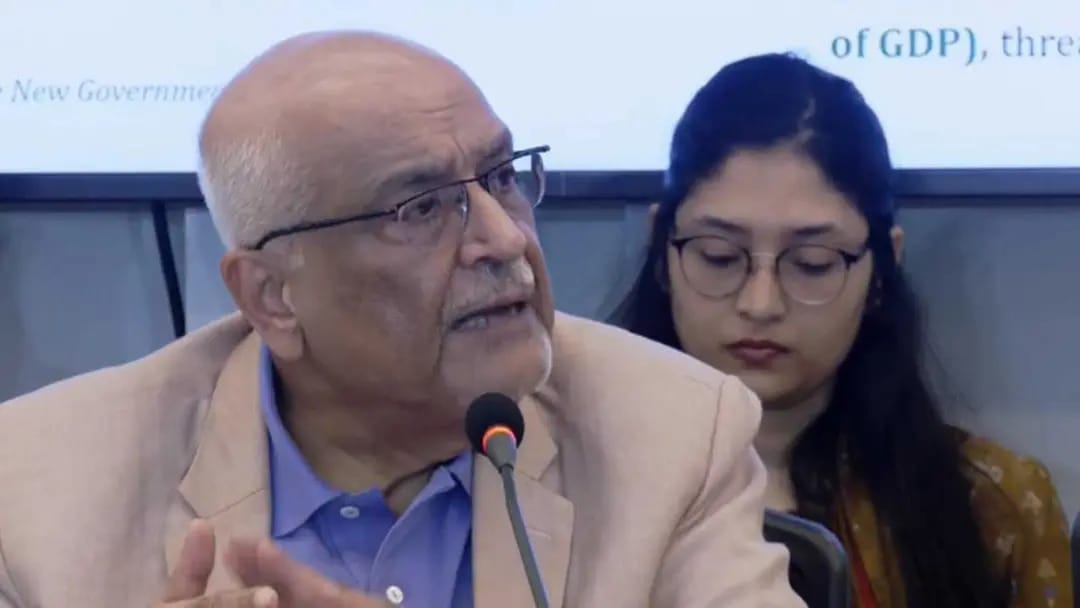
“The new government is going to formulate a new budget at a time when fiscal and policy spaces are very limited,” said Dr Debapriya Bhattacharya, convener of the platform, at a media briefing on Tuesday.
“The new global crisis has amplified the existing weakness. Balance of payment is going to be strained as well. So, we’re going towards a hard budget constraint,” he added.
Debapriya suggested that the government must formulate a roadmap for three or four months to immediately address the situation, while reinstating the mid-term budgetary framework (MTBF) to bring the economy back on track within three years.
“At the moment, public financial management has become the heart of the economy,” he pointed out.
Bangladesh has now fallen into a “geostrategic compulsion” as geopolitics has been intertwined with economy after the signing of the trade pact with the US, the economist noted.
In the next budget, the BNP government should think about phasing out tax exemptions, and introduction of inheritance tax along with imposing property and wealth tax.
At the same time, the process of bifurcation of the National Board of Revenue (NBR) must be expedited for an efficient tax administration, Debapriya said.
On expenditure side, the government must rationalize subsidies and gradually phase out cash incentives given on remittances and exports and initiate public sector wage and pension reform.
Dr Debapriya also suggested forming an Annual Development Programme (ADP) review taskforce to scrap unnecessary development projects and streamline public expenditure to spend more on key areas like health and education.
He urged that the process be completed within one to one-and-a-half months. “The ADP must be cleaned up. Continuing it in the same way will not improve the situation,” he cautioned.
Emphasising the need for realism in fiscal planning, Bhattacharya warned against setting overly ambitious revenue targets.
He noted that even the National Board of Revenue is aware that such targets often go unmet. Instead, he urged the government to adopt achievable revenue goals, even if it results in a smaller overall budget.
Apart from reducing tax exemptions, efforts should focus on expanding the tax base, improving compliance, and accelerating digitalisation in tax administration. Introducing taxes on wealth could also help boost revenue, he said.
Other speakers at the briefing included Towfiqul Islam Khan, Research Director at CPD, and senior research associate Nagiba Mohammad Altaf, among others.