


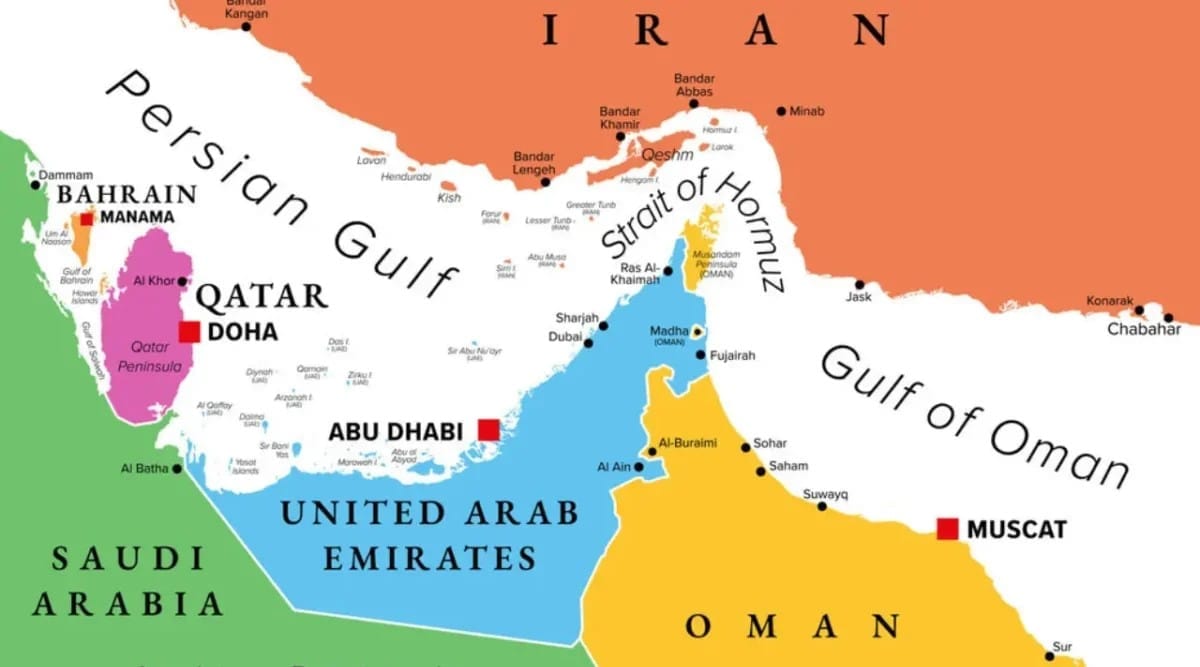
Bangladesh is facing fresh disruptions to its liquefied natural gas (LNG) supply, even as Iran has eased restrictions on vessel movements through the Strait of Hormuz for friendly nations.
State-owned Petrobangla said five LNG cargoes scheduled for delivery by mid-May under long-term contracts have been affected after suppliers invoked force majeure.
The disruption follows declarations by Oman Trading International (OQT) and QatarEnergy, citing geopolitical instability linked to the Iran-Israel conflict. Petrobangla Chairman Md Arfanul Hoque said formal notices were received from both suppliers late last month.
The affected shipments were part of a broader procurement plan that included five long-term cargoes and six spot market purchases for May.
Prices surge amid uncertainty
The supply disruption has sharply increased LNG import costs. Before the conflict, Bangladesh was purchasing LNG at around $10.18 per MMBtu.
Prices jumped to an average of $21.77 per MMBtu between March and April, according to Petrobangla Director (Finance) A K M Mizanur Rahman.
However, there are early signs of easing, with two recent cargoes priced at $19.82 and $19.19 per MMBtu.
To manage rising costs, Petrobangla has sought Tk4,500 crore in additional funding from the Ministry of Finance for April, along with Tk1,661 crore for March. The government had earlier released Tk1,000 crore to support LNG imports.
Officials warned that financial pressure could intensify if the conflict persists. Bangladesh has already sought Tk20,000 crore in budgetary support for the current fiscal year, compared to an initial allocation of Tk6,000 crore for gas subsidies.
Supply crunch and rationing
The country is experiencing widespread gas rationing across industries and power plants due to supply shortages. Earlier, seven LNG cargoes were disrupted in March and April following force majeure declarations and temporary shipping restrictions.
Bangladesh had not planned spot LNG purchases during that period, worsening the impact of the disruptions.
In response, Bangladesh is diversifying LNG imports, securing shipments from Australia, Angola, Mozambique, Nigeria, and the United States. Petrobangla said these alternative arrangements are aimed at safeguarding energy security.
Strategic risks persist
Around 20% of global LNG exports, much of it from Qatar, passes through the Strait of Hormuz, making it a critical chokepoint. While some shipments have managed to transit, ongoing instability continues to pose risks to supply chains.
Bangladesh is currently receiving $391.77 million in financing from the International Islamic Trade Finance Corporation (ITFC) to support LNG imports, though outstanding arrears have reached $142 million, according to officials.
Meanwhile, US energy giant ExxonMobil has recently held discussions with Petrobangla officials and is showing renewed interest in Bangladesh’s offshore bidding round. Another major firm, Chevron, is also expected to send senior representatives soon.
ExxonMobil had earlier expressed interest in acquiring 10 offshore blocks in Bangladesh, signalling growing international attention despite ongoing energy sector challenges.