


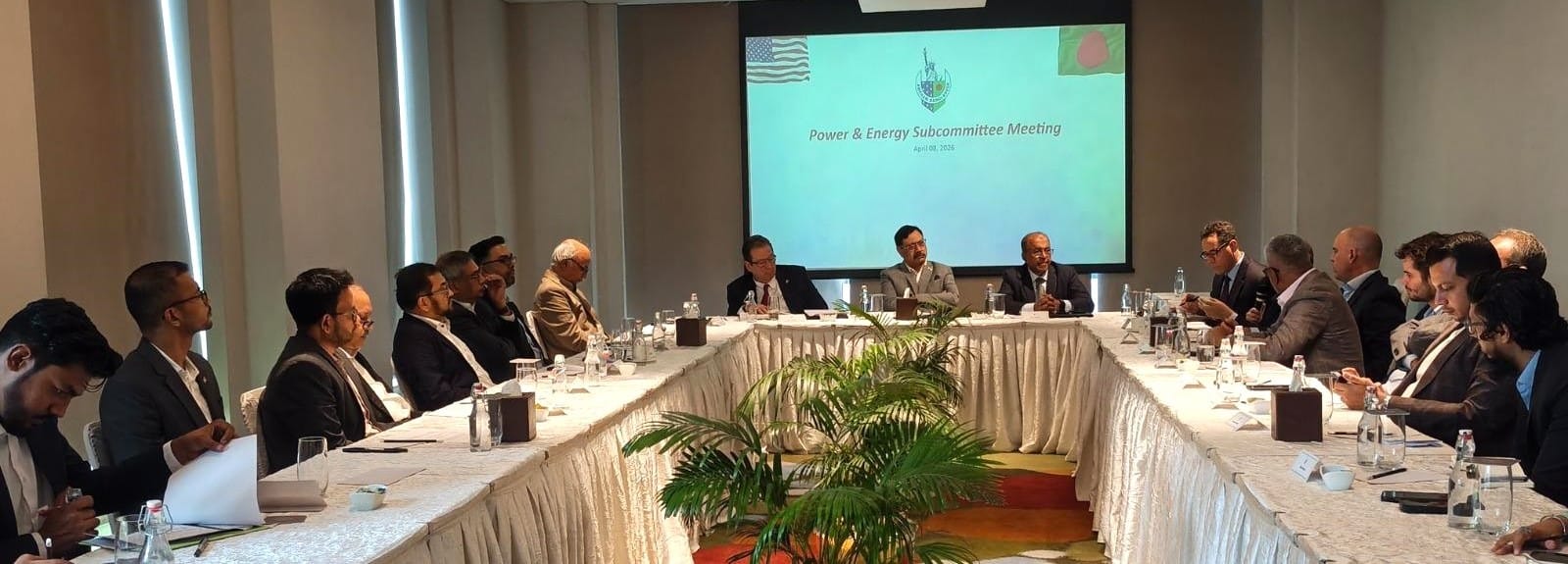
Bangladesh stands at a critical energy crossroads, and urgent action is needed to prevent a looming crisis, industry leaders have warned at a high-level roundtable of the American Chamber of Commerce in Bangladesh (AmCham).
The trade body brought together top energy and power stakeholders at the event at a city hotel on Wednesday to discuss strategies for ensuring sustainable growth while meeting rapidly rising demand, according to a release.
Syed Ershad Ahmed, AmCham President, opened the discussion by stressing that Bangladesh must adopt coordinated short-, medium-, and long-term strategies.
“The energy choices we make today will determine the economic future of the country,” he said, noting that AmCham will submit a set of recommendations to relevant ministries after consolidating stakeholder feedback.
Eric Walker, Vice President of AmCham and President of Chevron, warned that energy demand could double or triple over the next 15–20 years.
He urged a diversified energy approach, calling for additional LNG terminals, expanded onshore and offshore exploration, and a major push into solar energy, emphasizing stronger collaboration between government and industry to implement long-term solutions.
Habib Bhuyian highlighted the risks of prolonged reliance on high-priced spot LNG and recommended measures to reduce peak demand, including standardized e-rickshaws, a mandatory solar battery program, staggered office hours, and incentives for energy-efficient appliances. He urged the industry to present a unified voice to guide policymakers.
Professor M. Tamim emphasized the need to maximize domestic energy output, noting that existing gas fields could take 2–5 years to reach optimal production, while new exploration would take longer.
He recommended engaging international reservoir management firms, reviewing domestic coal policy, and rapidly expanding renewable energy, including 3,000 MW of new solar capacity and 2,000 MW of rooftop systems by 2030.
Dr. Sebastian Groh called for policy reforms to boost renewable energy adoption, rationalize import duties on solar technologies, ensure green finance reaches projects, and formalize electric three-wheelers to support grid stability as distributed energy storage. He highlighted how existing duty disparities limit sector growth and scalability.
Participants collectively called for modernizing the grid, diversifying energy sources, strengthening transmission and distribution, accelerating EV and solar integration, and enabling industrial decarbonization through targeted financing.
They emphasized the need for immediate and long-term planning, balancing short-term mitigation with strategic investments.
Leading companies represented included Chevron Bangladesh, Excelerate Energy, SOLshare, Delta LPG, Energypac Power Generation, GE Vernova, IDCOL, Omera Petroleum, and United Power. Experts from LightCastle Partners and PwC Bangladesh, former industry leaders, and representatives from the US Embassy, including Commercial Counselor Paul Frost, also participated.
The roundtable concluded with a unified call for urgent, coordinated action to secure Bangladesh’s energy future while maintaining economic growth and industrial competitiveness.