


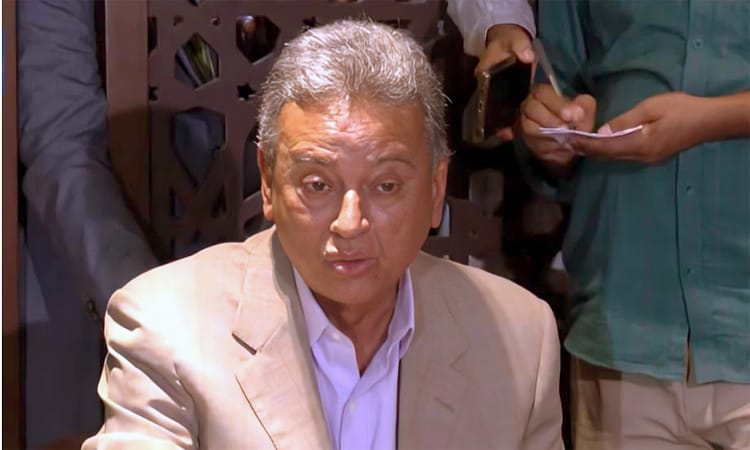
Finance Minister Amir Khosru Mahmud Chowdhury has said Bangladesh’s economy will require a special “push on” over the next two years to regain strong momentum, expressing optimism that normal growth will resume by the third year.
Speaking at the 46th meeting of the advisory committee of the National Board of Revenue (NBR) on Wednesday, he said the same message has been conveyed to the World Bank and the International Monetary Fund.
The meeting, jointly organised by the NBR and the Federation of Bangladesh Chambers of Commerce and Industry, was held at a hotel in the capital, with participation from business leaders across sectors.
The finance minister acknowledged that the government has been in office for only two months but has already engaged in discussions with stakeholders.
Emphasising that the private sector is the main driver of the economy, he said the government is prioritising resolving business challenges and creating a supportive environment.
He noted that while the ready-made garment sector continues to perform well, other sectors are lagging behind and will be closely reviewed.
He also highlighted that large businesses are facing a shortage of capital, an issue raised with global lenders.
Chowdhury assured that efforts are underway to improve the ease of doing business and gradually remove all barriers affecting trade and investment.
He also said promising export sectors would be given incentives similar to those enjoyed by the garment industry.
At the same event, the minister told business leaders that if they identify specific obstacles, the government would work to resolve them within three months.
“Inform us where doing business is being hindered and what is increasing costs—we will address those issues promptly,” he said.
However, he cautioned that sweeping tax relief in the upcoming budget may not be feasible due to current economic constraints, despite the government’s willingness to offer support.
Raising concerns over reported increases in port costs, the minister questioned claims of a 40% hike, saying there was no logical basis for such increases.
He added that any inefficiency or corruption at ports would be addressed.
The minister also stressed the need to boost revenue collection, noting that without higher revenues, it would be difficult to extend further support to businesses.
He announced plans to introduce a nationwide “One Citizen, One Card, One Wallet” system to bring all financial transactions under monitoring, aiming to reduce tax evasion and curb corruption. The initiative has already received cabinet approval.
Chowdhury further revealed that around Tk 40,000 crore in outstanding dues in the power sector, left by the previous government, is continuing to put pressure on the economy.
The meeting was chaired by NBR Chairman Md Abdur Rahman Khan and attended by FBCCI Administrator Md Abdur Rahim Khan, along with business representatives from various sectors.