


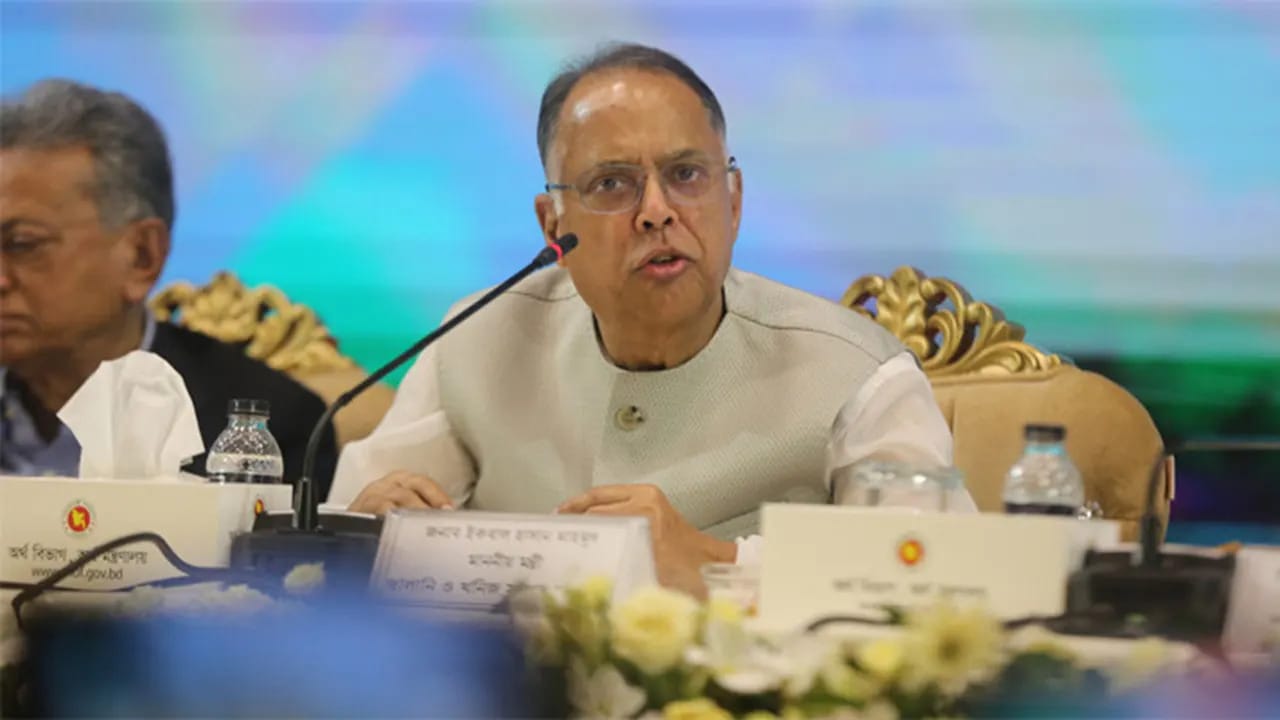
The government is grappling with mounting financial pressure in the power sector due to capacity payments, unfavourable contracts with private power producers, and past irregularities, State Minister for Power, Energy and Mineral Resources Iqbal Hasan Mahmud said on Friday, says BSS report.
Speaking at a post-budget press conference at the Osmani Memorial Auditorium, the minister said decisions taken in previous years have left the current administration facing a “difficult situation”.
Capacity payments were introduced earlier by guaranteeing returns to investors to attract private investment, making projects bankable and enabling rapid expansion of power generation capacity, he said. However, many of the agreements were structured in a way that primarily protected investors’ interests, offering little flexibility for the government.
“Now we are bearing the burden of those decisions,” he said, adding that efforts are underway to review the capacity charge mechanism.
The government has already held discussions with investors, including Chinese companies, but they have refused to withdraw from such benefits, citing loan obligations with banks. “If capacity payments are scrapped, banks may demand immediate repayment, which could disrupt power generation,” the minister said.
He added that unilateral cancellation could trigger fresh electricity shortages. The government has sought legal opinion on the issue and may pursue legal measures if favourable advice is received.
Rising liabilities, weak management
The minister said the power sector has accumulated outstanding dues of around Tk 56,000 crore, largely due to heavy reliance on costly private generation while state-owned plants remained underutilised due to poor maintenance.
Highlighting irregularities, he cited the purchase of 500,000 digital meters by the Rural Electrification Board (REB), of which only 65 were installed over three years after 250,000 units were delivered, leaving the rest unused in warehouses.
He said the remaining meters were also ordered for shipment before the current government took office, making cancellation legally risky. “If cancelled, the supplier may win in court as the shipping order was issued by REB itself,” he said, alleging that such arrangements facilitated capital outflows.
Project anomalies under scrutiny
Referring to a Dhaka Power Distribution Company (DPDC) project, the minister said a long-term plan to install underground cables and substations by 2040 has seen limited progress, with only 38 substations completed so far despite the project nearing its deadline this November.
He also alleged that facilities such as a swimming pool and gym are being built under the project in Shahbag, outside its original scope, even though DPDC remains a loss-making entity dependent on government subsidies.
Reviewing ongoing projects, the government has found completion rates ranging from 30 to 60 percent. “Stopping them now would risk wasting huge public funds, but continuing them also poses challenges,” he said.
“We assumed office only a few months ago. The consequences of past mismanagement are now being handled by us,” the minister added.
Move to cut import dependence
Addressing the energy sector, Iqbal Hasan Mahmud said the government is moving to revive the state-owned Bangladesh Petroleum Exploration and Production Company (Bapex) to reduce reliance on imported fuel.
He said gas exploration efforts remained largely inactive over the past 17 years despite Bapex’s track record, pushing the country towards import dependence.
To strengthen the company, the government plans to procure five additional rigs and expand its operational capacity.
He noted that although neighbouring countries have advanced gas exploration in offshore areas following maritime boundary settlements, Bangladesh has made limited progress. Fresh tenders have been floated inviting international oil and gas companies to explore offshore blocks, with allocations expected after the bidding process concludes next month.
Given Bapex’s lack of experience in deep-sea exploration, partnerships with foreign firms will be necessary, he added.
Global risks and supply pressure
The minister said geopolitical tensions in the Middle East and instability in the Strait of Hormuz have created “force majeure” situations in some supply contracts with Qatar and Saudi Arabia, forcing Bangladesh to seek alternative energy sources.
Despite global disruptions, the government has managed to maintain stable fuel supply by importing oil worth around $2.5 billion, he said.
However, he acknowledged that purchasing electricity at high cost from private producers and selling it at subsidised rates has created a significant fiscal burden.
Upon taking office, the government had to address outstanding payments of Tk 56,000 crore to private power plants, along with ongoing liabilities, adding pressure on the economy.
Renewables gain priority
To ease costs, the government is prioritising renewable energy, setting a target to generate 5,000MW of solar power by 2030, with potential to exceed that level.
The minister said global market requirements, particularly in Europe, are increasingly linking exports—especially in the garment sector—to environmental compliance. Failure to ensure at least 30 percent renewable energy use could lead to higher tariffs or restrictions.
He also highlighted plans to expand battery-based solar systems to ensure uninterrupted power supply. The proposed budget includes tax and duty waivers on solar equipment, including batteries.
“We have been in office for only a few months. Visible improvements will take time, but we expect progress within the next two to two-and-a-half years,” he said.