


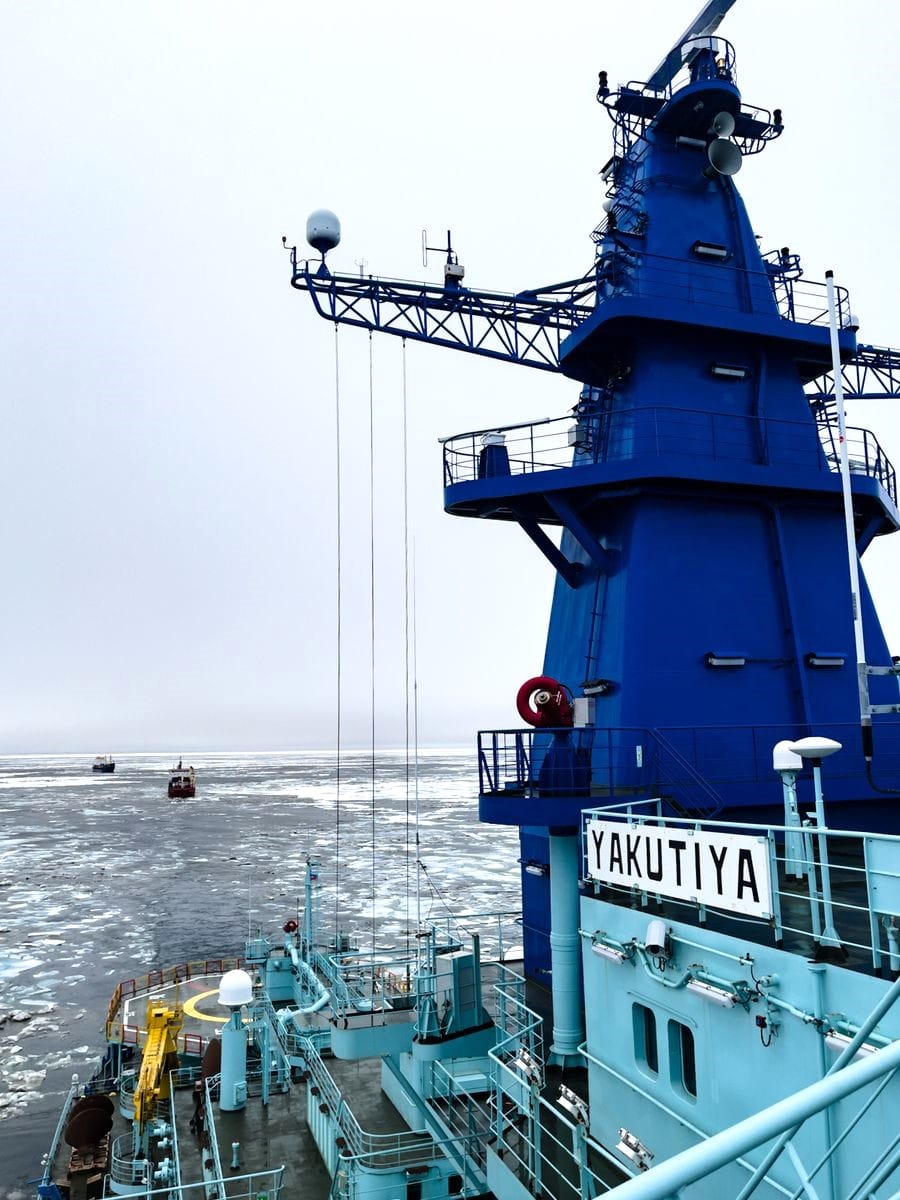
Russia’s newest nuclear-powered icebreaker has completed its first escort mission of the 2026 Arctic shipping season, guiding a convoy carrying essential supplies through difficult ice conditions to the country’s far northeastern region.
The Yakutia, one of Russia’s latest universal nuclear-powered icebreakers, escorted two cargo vessels to the Arctic port of Pevek in the Chukotka region via the Northern Sea Route (NSR). The ships delivered food, construction equipment and containers needed for communities and infrastructure projects in the remote territory.
Operated by state-owned nuclear corporation Rosatom’s icebreaker subsidiary, FSUE Atomflot, the convoy travelled around 1,700 nautical miles over 12 days from west to east.
According to Atomflot, the voyage encountered particularly challenging conditions in the eastern Kara Sea, where strong northwesterly winds in late June created heavy ice and significant ice compression.
Further east, dense sea ice north of the New Siberian Islands blocked the usual shipping channel, forcing the convoy to take a more northerly route under the guidance of the nuclear-powered vessel.
Yakov Antonov, Director General of FSUE Atomflot, said the operation was aimed at ensuring residents of Chukotka received food and other essential goods on schedule while supporting ongoing construction projects with equipment and materials.
He said changing weather conditions had required adjustments to the planned route but credited the crew of the Yakutia and coordination with Russia’s Arctic marine operations authorities for enabling the convoy to complete its journey safely and on time.
The Northern Sea Route, which runs along Russia’s Arctic coastline, is increasingly viewed by Moscow as a strategic shipping corridor linking Europe and the Asia-Pacific region.
At around 5,600 kilometres in length, it provides a shorter alternative to traditional routes through the Suez Canal for some voyages, although its commercial use remains heavily dependent on seasonal ice conditions and specialised icebreaker support.
The route includes six major Arctic ports: Sabetta, Dikson, Dudinka, Khatanga, Tiksi and Pevek.
Last year, Rosatom was appointed the sole maritime operator of Russia’s Northern Delivery System, expanding the state nuclear corporation’s role in managing transport and logistics across the country’s Arctic regions.