


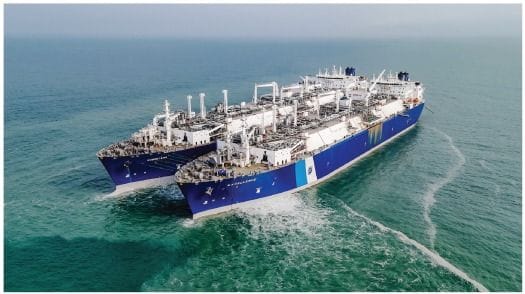
Amid growing energy demand and declining production from domestic gas fields, Bangladesh decided nine years ago, in 2017, to import liquefied natural gas (LNG) to meet energy demand in key export-earning and production sectors such as ready-made garments (RMG), power generation, and fertilizer production.
Now, nearly a decade later, with its growing reliance on LNG, the South Asian nation of 170 million people faces a dual challenge: massive import bills and an increasing inability to afford the energy it depends on.
Instead of resolving the gas crisis in the industrial sector and among other consumers, LNG has become a trap for both the energy sector and industry, placing a heavy burden on the economy.
Once self-sufficient and free from government subsidies, Bangladesh’s gas sector has incurred Tk51,366 crore in subsidies over just eight years.
Meanwhile, many textile and apparel factories have shut down operations after failing to retain even a minimum profit margin following payment of gas bills and other operational expenses, while many more are on the verge of closure.
To safeguard the country’s export-earning sector, industry owners are increasingly shifting toward solar energy and urging the authorities to facilitate this alternative instead of relying on expensive LNG.
LNG drives gas price hikes in Bangladesh
Historically, Bangladesh enjoyed relatively cheap energy because it produced most of its natural gas from domestic fields until 2018. This enabled the country’s textile and apparel industry to thrive in the global clothing market by competing effectively with regional peers.
However, once the country entered the volatile LNG market in April 2018, the situation changed dramatically.
Since then, gas prices in Bangladesh have risen sharply, reaching an unprecedented increase of as much as 179% in 2023.
Over the past eight years, industrial gas prices have increased by 415%. The price per unit of gas, which stood at $0.063 (Tk7.76) in 2018, has now risen to $0.32 (Tk40).
This increase followed seven separate tariff adjustments over the years.
With such a steep rise in the cost of primary fuel, factories have been struggling continuously to keep their businesses afloat.
“If a factory with a 50-tonne dyeing capacity paid $81,236 (Tk1 crore) per month for primary energy in 2018, it now has to pay $0.32 million (Tk4 crore) each month because of the higher gas price,” said Mohammad Hatem, president of the Bangladesh Knitwear Manufacturers and Exporters Association (BKMEA), the country’s apex trade body representing the knitwear sector.
“Due to this cost escalation, many companies fail to pay their monthly energy bills and are forced to shut down operations after utility suppliers disconnect their gas connections,” Hatem added.
Factory owners have seen a huge increase in production costs due to expensive energy. At the same time, they are unable to secure higher prices from foreign buyers that reflect their increased manufacturing costs.
“Because of higher production costs, we are losing clients in the global market as our regional competitors can offer more competitive prices. We are struggling to sustain our businesses at the prices buyers are willing to pay,” Hatem said.
“As a result, factory owners are shutting down their mills,” he added.
Not only industrial gas prices, but gas prices for other consumers, including households, power plants, and fertilizer producers, have also increased significantly since LNG imports began.
A domestic consumer who used to pay $6.50 (Tk800) per month for cooking gas now pays $8.77 (Tk1,080) per month.
Around 500 industrial units shut down amid mounting operational costs
Unique Washing & Dyeing Ltd and Unique Designers Ltd announced their permanent closure on 22 June, 2026.
The 36-year-old textile manufacturer, located in Gazipur, the country’s industrial hub, shut down its operations due to mounting production costs driven by high gas prices and lower prices offered by buyers.
Unique Washing & Dyeing Ltd is not an isolated case. More than 450 textile and apparel companies have shut down operations over the past two years, mainly because of rising primary energy costs, shrinking work orders, lower prices offered by buyers, and owners’ financial constraints.
Factory owners also allege that they often fail to receive an adequate gas supply despite paying higher tariffs. This has forced them to switch to more expensive diesel or furnace oil to meet delivery deadlines committed to buyers.
At a recent press conference on the proposed budget, BTMA President Showkat Aziz Russell said that 234 textile factories have closed since 2019, including five of his own.
Financial pressure on the economy
Bangladesh now relies on LNG to meet about 30% of its daily gas supply, but this comes at a significant financial cost.
LNG imports from the spot market require substantial foreign currency outflows, particularly US dollars, putting additional pressure on the country’s foreign exchange reserves, especially during periods of global inflation.
In the 2024-25 fiscal year, Bangladesh spent $4.38 billion (Tk53,946 crore) on LNG imports and regasification facilities to secure this 30% share of gas supply. In contrast, the remaining 70% supplied from domestic gas fields cost only $565 million (Tk6,956 crore).
To continue LNG imports, the government has repeatedly increased gas prices, passing much of the financial burden on to consumers.
However, these tariff hikes have provided little relief, as the government continues to provide budgetary support through subsidies to bridge the gap between the actual cost of LNG and retail gas prices.
In the most recent fiscal year, the government provided $721 million (Tk8,900 crore) in subsidies, up from $486 million (Tk6,000 crore) in the previous fiscal year.
The subsidy requirement is estimated to have reached nearly $1.34 billion for the outgoing 2025-26 fiscal year following the fallout from the conflict in the Middle East, which forced Bangladesh to rely more heavily on expensive spot-market LNG purchases.
Before entering the LNG import era, Bangladesh’s gas production and supply sector had consistently been profitable. There were no instances of government subsidies for the gas sector before 2018.
Possible way forward
To reduce operational costs, keep businesses competitive, and attract more foreign investment, Bangladesh should explore alternative energy options, including domestic gas exploration and greater investment in renewable energy, Hatem said.
“The transition to LNG has been viewed as an unavoidable option for energy-hungry Bangladesh, but that is not true. There are many alternatives to costly LNG, such as domestic gas exploration and the expansion of industrial rooftop solar on a priority basis,” Hatem said.
He added that if rooftop solar is prioritized through supportive policies and incentives, factory owners would receive significant relief from high grid electricity costs and disruptions in gas supply for captive power generation.
Despite existing tax barriers and other limitations, factory owners are gradually adopting rooftop solar because of declining installation costs and its ability to produce low-cost electricity.
Pacific Jeans, one of Bangladesh’s leading premium jeans manufacturers, previously relied entirely on grid electricity and gas to operate its factories.
However, the company installed a 7MW rooftop solar system four years ago to reduce its dependence on unstable grid electricity and unreliable gas supplies. It now meets about 12% of its electricity demand through solar power, helping reduce its monthly electricity bills.
Pacific Jeans is not an isolated example. Bangladesh’s industrial sector has seen a broader shift toward rooftop solar in recent years to protect production from gas shortages, grid instability, and rising energy costs.
Factories across Bangladesh have now installed more than 500MW of rooftop solar capacity, while another 500MW is under implementation.
Rooftop solar helps cut energy costs
In a recent report, US-based think tank the Institute for Energy Economics and Financial Analysis (IEEFA) also suggested that Bangladesh should pursue an alternative energy pathway focused on renewable energy and domestic gas to avoid excessive dependence on imported LNG.
IEEFA’s Lead Energy Analyst for Bangladesh, Shafiqul Alam, said factory owners could save about $0.057 (Tk7) per unit of electricity during off-peak hours by adopting rooftop solar.
Under the latest power tariff, industries pay $0.094 (Tk11.56) per unit for grid electricity during off-peak hours, which are generally during the daytime. Generating electricity through captive power plants using gas or liquid fuel also costs roughly the same.
“Factory owners can generate electricity at only $0.037 (Tk4.50) per unit through rooftop solar under the CAPEX investment model,” Alam said, adding that Bangladesh has an estimated rooftop solar potential of 4,000MW to 5,000MW across existing industrial buildings.
Climate finance expert and Chief Executive of Change Initiative, M Zakir Hossain Khan, said Bangladesh could ensure long-term energy security only if its energy inputs are secure. From that perspective, renewable energy sources such as solar, wind, and hydropower offer the greatest long-term security.
“The ongoing crisis in the Strait of Hormuz will not be the world’s last disruption in upstream energy supply. Such crises may occur repeatedly. But solar and wind energy will always be available as long as the Earth exists,” Zakir Hossain Khan said.
“With the implementation of rooftop solar, factory owners can reduce their energy costs by 40% to 60%,” he added.
(Eyamin Sajid is the Fact-Check Editor at Agence France-Presse (AFP), based in its Dhaka bureau.He writes articles for Just Energy News)