


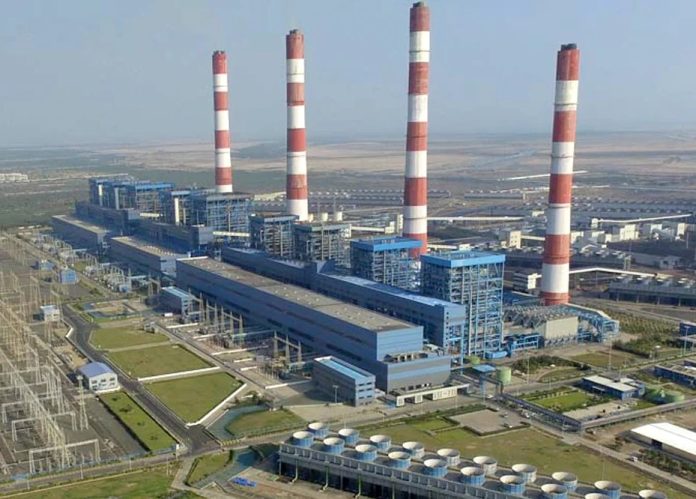
The interim government’s National Review Committee has identified 12 bureaucrats and officials from the Power Division, the Bangladesh Power Development Board (BPDB), the Power Grid Company of Bangladesh and the Power Cell for alleged involvement in suspicious financial transactions linked to the implementation of the 1,600-megawatt Adani Power (Jharkhand) project, according to committee findings.
“We have found unusual fund transfers into their bank accounts,” a member of the committee told Just Energy News, speaking on condition of anonymity.
Asked about the findings, committee convenor and former justice Moinul Islam said the panel plans to make the investigation report public, following a disclosure process similar to that used by the Gum Commission.
“You will get everything at Sunday’s press conference,” he said.
Those named include former principal secretaries to ex-prime minister Sheikh Hasina — Abul Kalam Azad and Dr Ahmad Kaikaus; former BPDB chairmen Khaled Mahmud and Md Mahabubur Rahman; Power Grid Company of Bangladesh Managing Director Golam Kibria; and several officials from the Power Division, BPDB and the Power Cell.
According to the committee, the officials acted with mala fide intention in implementing the project for personal financial gain, at the expense of national interest.
Following the findings, the Anti-Corruption Commission (ACC) sought service records and residential addresses of 11 former Power Division and BPDB officials to probe alleged misconduct and unusual fund transfers.
The request, dated December 30, 2025, was sent to the Power Division secretary and the BPDB chairman, ACC sources said.
Those listed include former principal secretary Dr Ahmad Kaikaus; former additional secretary Md Alauddin; former joint secretary Sheikh Faizul Amin; former BPDB chairmen Khaled Mahmud and Md Mahabubur Rahman; former Power Cell director (commercial) Amzad Hossain; former Power Grid Company of Managing Director Golam Kibria; former BPDB member (company affairs) Minhaz Uddin Ahmed; BPDB secretaries Mina Maudduzaman and Md Salim Reza; and former senior assistant secretary Pranab Kumar Ghosh.
Just Energy News attempted to contact several of the officials, including Dr Kaikaus, but received no response.
BPDB sources said Bangladesh incurs additional losses of around $1 billion annually due solely to disputes over coal pricing under the Adani Jharkhand power supply agreement.
Officials familiar with the matter said the interim government has approved public release of the Adani Jharkhand Power Plant review report, in a manner similar to the Gum Commission disclosures.
The interim government may make the report public but leave the final decision on whether to pursue a legal battle to scrap the deal to the next elected government if the company refuses to renegotiate in line with a court order, sources said.
Coal pricing dispute
In a letter sent last year, BPDB said the HBA-2 index closely aligns with the reference calorific value of 4,600 kcal/kg (GAR) specified in the Power Purchase Agreement (PPA).
“However, your claim invoices are based on the HBA index instead of HBA-2,” the letter, signed by BPDB Secretary Md Rashedul Hoque Prodhan, said.
“Due to changes in the HBA index that have created ambiguity in determining coal prices, we find it inappropriate to use it as the basis for indexation,” BPDB said, proposing an alternative index under Section 13.1(e) of the PPA.
Adani Power (Jharkhand) Ltd rejected the move, saying BPDB’s approval of monthly bills using HBA-2 violates Section 13.1(c)(2) of the agreement.
“No indexation adjustment shall be made until an alternative index is agreed to by both parties,” the company said, demanding immediate refund of deductions with interest.
“We do not accept BPDB’s view that the existing FOB coal price formula in the PPA is inaccurate,” said M R Krishna Rao, president and member of the joint coordination committee, adding that BPDB’s proposal to use IC13 and IC14 indices was “unacceptable”.
Earlier findings
On November 2, the committee submitted a preliminary report alleging that a small group forced BPDB into costly private power contracts, including the Adani deal, draining public funds.
It said special laws in the power and energy sector were misused to compel BPDB to buy electricity at inflated prices.
One committee member said the review covered the Adani agreement, around 50 power purchase agreements signed under special laws, capacity charge provisions and other contractual clauses, uncovering extensive evidence of corruption. The committee was formed in late 2024.
The Adani deal received the most scrutiny. The committee said Bangladesh had never before signed a power agreement of such a “state-adverse” nature, with electricity prices set at unusually high levels.
According to the report, former power secretary Ahmed Kaykaus approved the project without following due procedures, allowing Adani to build a power plant in India exclusively to supply Bangladesh, an act the committee said violated existing laws.
The committee also flagged one-sided contractual terms, including mandatory capacity charges even when no electricity is taken, payment obligations for 35 per cent of projected generation regardless of supply, and interest of 1.5% on payment arrears.
Financial burden
Under the 2017 contract, Adani Power’s 1,400-megawatt Godda plant supplies all of its electricity to Bangladesh for 25 years. Even when power is not drawn, BPDB must pay substantial capacity charges.
BPDB estimates total losses from imported electricity at Tk21,114 crore, with around Tk14,000 crore attributed to Adani alone. The utility pays more than Tk450 crore per month in capacity charges.
Electricity imported from Adani costs Tk14.86 per unit, significantly higher than domestic generation or imports from other regional suppliers.
BPDB data show the average cost this year at 12.16 US cents per unit, compared with 11.30 cents for other coal-based plants.
Between January 2024 and September 2025, Adani charged an average of $76.91 per tonne for coal, compared with $71.76 paid by other coal-based plants. The dispute has led Adani to initiate arbitration proceedings in Singapore.
Legal risks and next steps
Committee members cautioned that cancelling contracts with foreign companies carries legal risks and potential penalties.
Adani currently supplies around 1,400 megawatts — only a fraction of Bangladesh’s installed capacity of more than 28,500 megawatts — but BPDB calculates that capacity charges alone will cost about $331.66 million annually, or $8.62 billion over the contract’s life.
Sources said the interim government may publish the report but leave any final decision on legal action to the next elected government.
BPDB officials said electricity imports from Adani will continue through the upcoming summer while alternative sources, including the Rooppur nuclear plant and domestic coal-fired stations, are prepared.
BPDB is already under strain, with outstanding dues of Tk37,070 crore, including Tk21,303 crore owed to independent power producers and Tk11,025 crore in gas arrears to Petrobangla.
Last November, Power and Energy Adviser Muaahmmad Fouzul Kabir Khan Khan said the government would not hesitate to cancel Adani contracts if corruption or serious irregularities were proven.
Adani payment demand
In a January 17, 2026 letter to the BPDB chairman, Adani Power (Jharkhand) Limited vice-president Avinash Anurag sought immediate payment of $151.91 million within seven days to avoid operational disruptions.
The company said total unpaid dues stand at $609 million, including $339 million acknowledged by BPDB for power supplied up to December 2025. Late payment surcharge amounted to $68.86 million up to June 2025.