


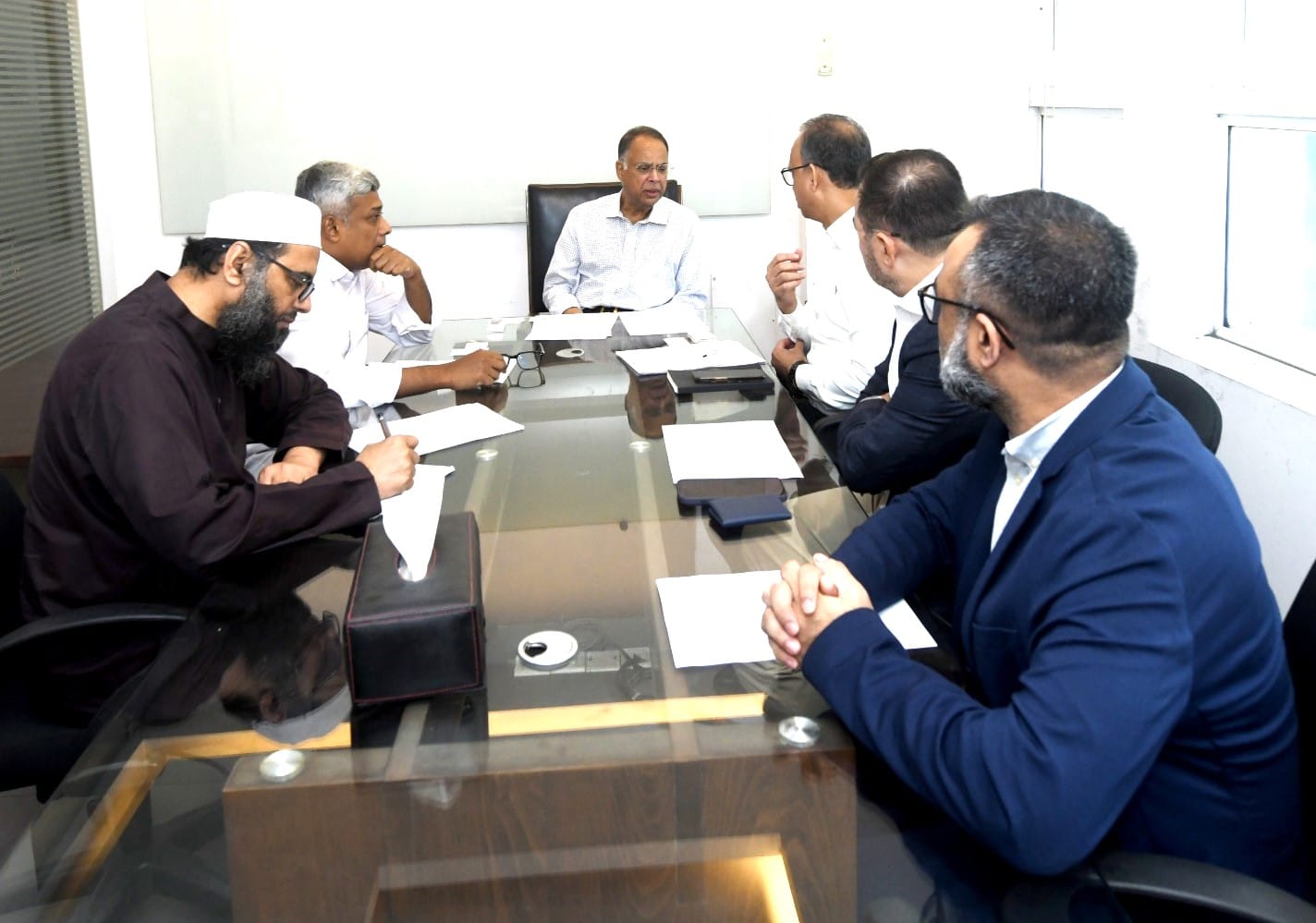
Leaders of the Bangladesh Garment Manufacturers and Exporters Association (BGMEA) have urged the government to ensure an uninterrupted power and energy supply to sustain production in the country’s vital ready-made garment (RMG) sector.
The call was made during a meeting between a BGMEA delegation and Power and Energy Minister Iqbal Hassan Mahmood and State Minister Aninda Islam Amit at the ministry.
The delegation, led by BGMEA President Mahmud Hasan Khan, included senior leaders of the association. Energy and Mineral Resources Division Secretary Mohammad Saiful Islam was also present.
During the meeting, BGMEA leaders said buyer confidence had begun to recover following the recent general election, but fresh uncertainties stemming from the ongoing Middle East conflict were weighing on global demand.
Mahmud Hasan Khan warned that Bangladesh’s garment sector is becoming increasingly vulnerable due to energy shortages, particularly as competing countries enjoy more stable energy supplies.
He said inadequate gas and electricity supply has already reduced factory output by an estimated 25–30 per cent, putting pressure on export commitments.
To address the crisis, BGMEA put forward a series of proposals. These included ensuring emergency diesel supply to factories through nearby filling stations under special arrangements and expediting gas connections — especially for small and medium-sized industries — while ensuring equitable distribution across industrial zones around Dhaka.
The association also called for accelerated infrastructure development, including the installation of at least two additional Floating Storage Regasification Units (FSRUs), and simplifying procedures for installing EVC meters in factories.
To ease cost pressures, BGMEA urged the government to withdraw import duties and consumer-level taxes on fuel, arguing that such measures would reduce production costs while lowering the subsidy burden.
The delegation further highlighted the need to promote renewable energy in the sector. It proposed significant tariff reductions on imported solar equipment — including panels, inverters, cables and battery storage systems — suggesting duties be cut to 1 per cent from the current range of nearly 29 to 62 per cent.
The ministers assured the delegation that the proposals would be carefully considered, acknowledging the RMG sector’s critical role in the national economy.
They also welcomed BGMEA’s proposed framework for facilitating emergency diesel supply to factories.