


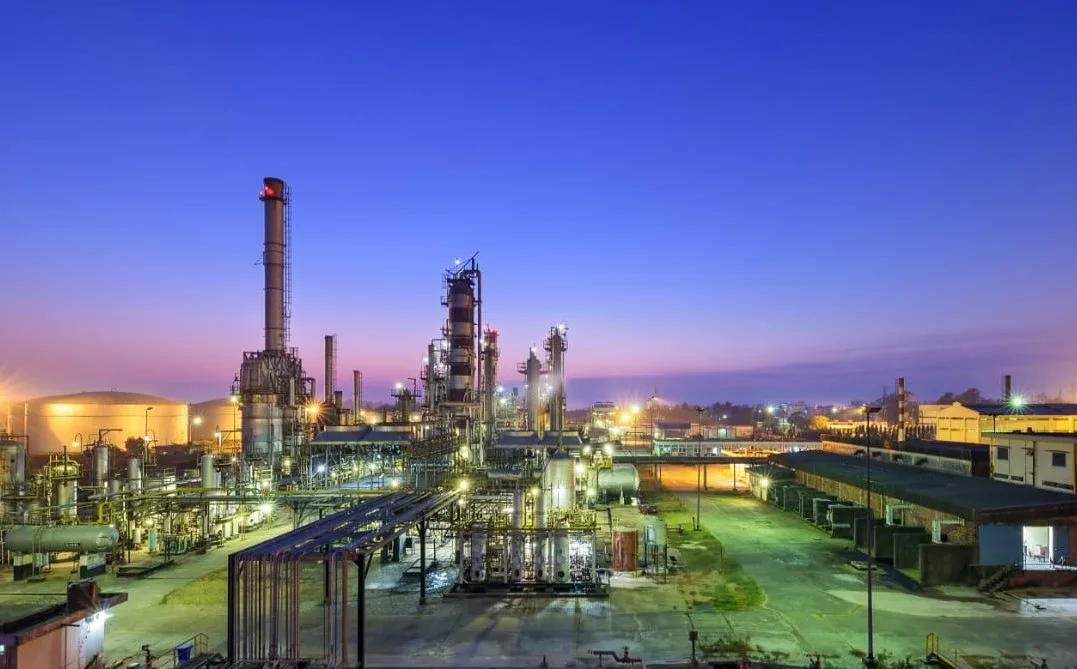
After years of delay, the government is finally set to move ahead with the second unit of Eastern Refinery Limited (ERL-2), opting largely for self-financing to cut dependence on imported refined fuel and bolster energy security.
The proposed ERL-2 unit will have a modern crude oil refining capacity of 3 million tonnes a year. Once operational, it will raise the total capacity of the country’s only state-run refinery to 4.5 million tonnes annually from the current 1.5 million tonnes. This would allow ERL to meet about 45-50% of domestic demand for refined fuel, up from roughly 20% now.
The five-year project, titled Modernisation and Expansion of Eastern Refinery Limited (ERL), was proposed by the Bangladesh Petroleum Corporation (BPC) and is expected to receive final approval at the Executive Committee of the National Economic Council (ECNEC) meeting scheduled for December 23, according to Planning Commission sources.
The project has remained stalled for more than a decade due to financing challenges, bureaucratic hurdles and procedural delays. It was first conceived in 2010 following recommendations from a feasibility study conducted in June 2009.
An initial attempt in 2013 to implement the project at a cost of Tk13,000 crore failed. A renewed initiative by BPC in 2022, with government funding estimated at Tk23,000 crore, also did not progress.
In 2024, S Alam Group proposed to build ERL-2 at a cost of Tk25,000 crore, and the Energy Division approved the proposal on July 9.
However, the initiative stalled again following the fall of the Sheikh Hasina government amid a mass uprising.
The interim government later revived the project and explored foreign financing options. In February this year, the Energy Division estimated the project cost at Tk36,410 crore, including Tk25,500.77 crore in foreign loans, but efforts to secure funding, particularly from Saudi Arabia and other Middle Eastern countries, failed.
Planning Commission officials said the government was ultimately compelled to pursue self-financing after repeated failures to mobilise foreign or private funds, noting that the project could have been implemented at a significantly lower cost had it moved forward earlier.
The initial cost was estimated at Tk42,973.70 crore, comprising Tk30,499.80 crore in government funds and Tk12,473.90 crore from BPC. After scrutiny, the Planning Commission revised the estimate downward.
In late November, the Project Evaluation Committee (PEC) gave preliminary approval for implementation between December 2025 and November 2030 at an estimated cost of Tk35,465 crore.
Of this, Tk21,278 crore will come from the government and nearly Tk14,188 crore from BPC. The revised proposal is expected to receive final approval at the upcoming ECNEC meeting, to be chaired by Chief Adviser Muhammad Yunus.
BPC Chairman Md Amin Ul Ahsan said financing would not pose a major challenge. “BPC will bear around 40% of the project cost, while the remaining funds will be provided by the government as budget support,” he told Just Energy News, adding that BPC has already set aside Tk14,188 crore for the project.
Energy Adviser Muhammad Fouzul Kabir Khan recently said the government would seek budget support from overseas development partners. Unlike project-based foreign loans, such support can be used flexibly in line with government priorities.
Economic Relations Department sources said the government has approached an international lender for $1.5 billion in budget support for the current fiscal year.
A request under the Climate Policy-Based Budget Support Programme was submitted on August 13, and preliminary assurances have been received.
Established in 1968 in Chattogram under the supervision of French contractor Technip, Eastern Refinery Limited currently refines 1.5 million tonnes of crude oil annually against national demand of around 7.5 million tonnes. As a result, Bangladesh spends substantial foreign exchange on importing refined petroleum products, adding to subsidy pressures.
Beyond reducing import dependence and subsidy burdens, the new ERL unit will ensure the supply of environmentally friendly fuel by producing Euro-5 standard gasoline, diesel, motor spirit and octane. It will also upgrade the existing unit’s output to Euro-5 standards.
BPC has already installed a single-point mooring (SPM) system with a double pipeline to enable direct transportation of 4.5 million tonnes of crude oil from mother vessels to onshore refinery units.
The project scope includes site preparation, detailed engineering, procurement, civil and mechanical construction, installation of 20 processing units and 18 utility and offsite units, as well as electricity and gas connections.
“If implemented, the project will enable refining of 3 million tonnes of crude oil annually and help meet 45-50% of the country’s petroleum demand at a lower cost,” said Md Mokhles ur Rahman, member (Industry and Energy Division) of the Planning Commission. “It will enhance energy security, increase storage capacity and save foreign exchange.”