


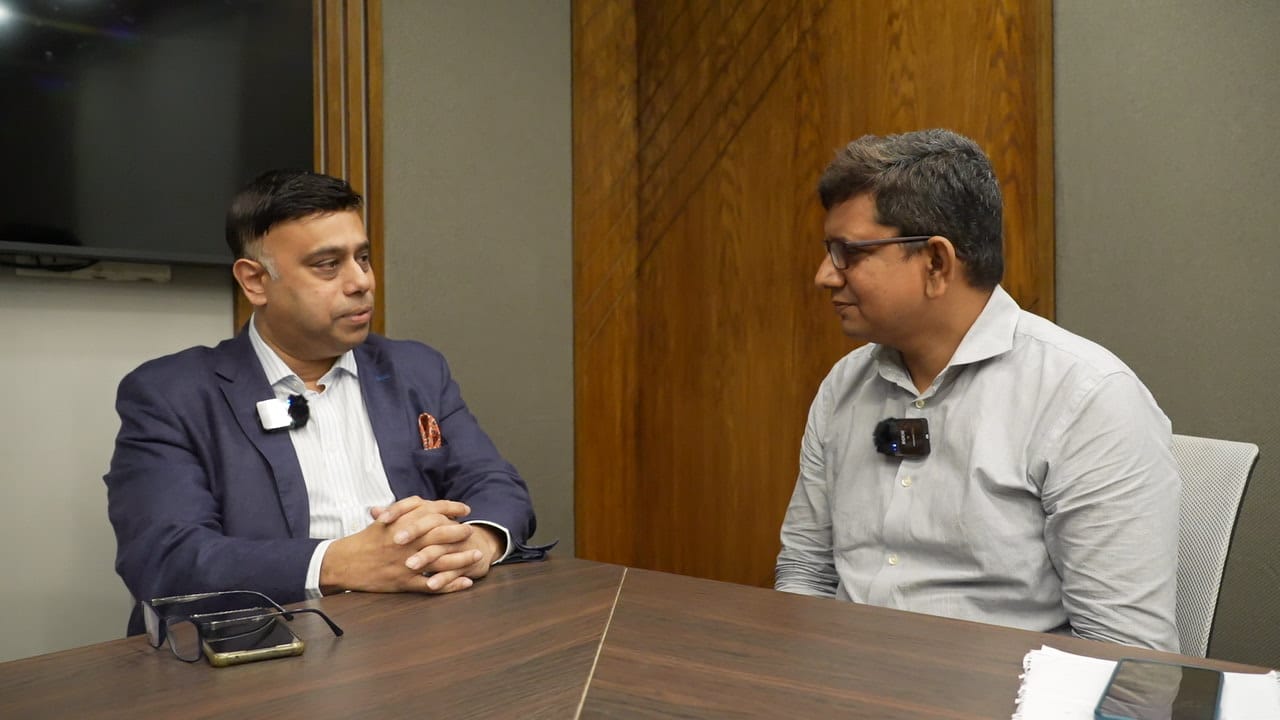
M. Masrur Reaz, chairman of Policy Exchange Bangladesh and a leading economist and public policy expert, speaks with Just Energy News Editor Md Shamim Jahangir about the state of Bangladesh’s energy sector. In the interview, he discusses the country’s widening energy security challenges and the policy shifts needed to address them.
Md Shamim Jahangir: You work extensively on public policy. How would you describe Bangladesh’s current energy security situation?
Masrur Reaz: Bangladesh’s energy security is vulnerable, and getting worse.
Despite being one of the fastest-growing economies, we are failing to supply the energy required to sustain that growth.
On paper, we have enough power generation capacity: 27,000 MW against a peak demand of 17,000 MW. But uninterrupted supply remains elusive due to severe inefficiencies, weak transmission and distribution systems, and inadequate primary energy.
Our real crisis is gas. The country needs 3,200-3,300 mmcfd, while domestic production is stuck at around 1,900 mmcfd, plus a limited amount of LNG. For more than a decade, since FY2011-12, there has been no major initiative to explore new domestic gas fields — onshore or offshore.
This policy inaction forced a heavy dependence on LNG, which is expensive and volatile. In FY2022-23, spot prices spiked four to five times, triggering a macroeconomic shock we are still recovering from.
We also cannot import much more LNG because our two FSRUs have limited capacity. As a result, the country lives with an ongoing 1,000 mmcfd gas deficit — a gap that may widen. Unless urgent action is taken, this mismatch between demand and supply will continue to weaken growth, investment, exports, and industrial competitiveness.
Md Shamim Jahangir: Bangladesh already spends $11 billion annually on imported energy, and the figure may grow. How can this pressure be reduced?
Masrur Reaz: We cannot eliminate imports, but we must keep them within the economy’s capacity.
The only durable solutions are accelerated domestic gas exploration — both onshore and offshore, scaling up renewable energy — which will require significant foreign investment, and strengthening the investment climate — through stable policies, regulatory clarity, and infrastructure upgrades.
Import dependence will continue, but it must be managed, not allowed to overwhelm the economy.
FSRU debate: BOO vs BOOT — What should Bangladesh choose?
Md Shamim Jahangir: There is public criticism over using a Build-Own-Operate (BOO) model for new LNG FSRUs instead of BOOT. What is your assessment?
Masrur Reaz: FSRUs are capital-intensive and technologically complex, so foreign partnerships are essential. A BOO model may appear cheaper upfront, but it essentially means renting the asset. After 12-15 years: the contract ends, Bangladesh owns nothing, and we must start all over again at a higher cost.
By contrast, under a BOOT arrangement the asset eventually transfers to Bangladesh, retaining long-term economic value. BOOT is the wiser, more strategic choice.
IMF’s demand for zero energy subsidies
Md Shamim Jahangir: The IMF wants Bangladesh to cut energy subsidies to zero within three years. Is this achievable?
Masrur Reaz: Realistically, no. Even reducing subsidies to $3 billion in the short term is difficult. We cannot raise electricity prices enough to fully recover costs without severely damaging industrial competitiveness.
There were discussions that full cost recovery would push electricity prices to Tk70 per unit. Many industries say even Tk35-40 would be unviable. So the government faces two choices: sharply raise tariffs to save money, risking business closures and unemployment, and use subsidies strategically to sustain industries, exports, employment, and foreign exchange earnings. I support the second option. The government should prioritise economic stability over rigid subsidy cuts. The IMF can be negotiated with, if we present the realities clearly.
Tariff settlement with the US and rising energy demand
Md Shamim Jahangir: Bangladesh recently concluded a favourable tariff negotiation with the US, which is expected to boost energy demand by 20%. How do you assess this?
Masrur Reaz: Demand will increase not only because of the US tariff settlement but also due to broader shifts. Bangladesh is becoming a strategic destination under the “China Plus One” sourcing strategy. Low- and mid-value manufacturing is moving out of China, and Bangladesh is positioned to capture a significant share.
India is a competitor, but as long as the US maintains a tariff advantage of around 50% in our favour, Bangladesh will attract orders that might otherwise go to India. Japan is also investing heavily in South Asia’s energy and industrial connectivity through the BIG-B and Asia Energy Transformation initiatives. All these trends point to significantly higher future demand for power and energy, but only if Bangladesh prepares adequately.
Policy sirection: what Bangladesh must do now
Md Shamim Jahangir: What policy direction should Bangladesh adopt to capitalise on these opportunities?
Masrur Reaz: Bangladesh must pursue a coordinated, sustainable energy security strategy. Key steps include:
A comprehensive, data-driven master plan: Demand projections, investment needs, infrastructure gaps, and partnership opportunities must be mapped clearly.
A stronger role for the private sector: Private firms already contribute over 50% of power generation. Their involvement should expand to refineries, petrochemicals, and crude processing.
Prioritising domestic resources: Domestic gas exploration must be accelerated. Coal can be used where necessary, with modern technology and strict environmental safeguards.
Leveraging the regional market: Nepal’s hydropower, India’s transmission network, and regional trading platforms offer significant potential. Politics is complex, but economic interests can overcome political discomforts.
Bangladesh must emphasise mutual benefits and push for sustainable, cross-border cooperation.
Macro-economic recovery and investment: Where energy fits in
Md Shamim Jahangir: Some say the economy has slowed, while others say it has rebounded. What is your view?
Masrur Reaz: The economy has stabilised from the deep downturn of mid-2022 to late-2024. Inflation has fallen from 12.5-13% to around 8.5%, reserves have stopped declining, and the exchange rate has stabilised.
But stability is not growth. Investment remains weak, job creation has slowed, and several hundred thousand people are unemployed. Without a recovery in investment, growth cannot rise above 4.8%. Energy shortages are a major reason behind the weak investment climate, especially for textiles, apparel, cement, and steel.
Outlook for a new government
Md Shamim Jahangir: What challenges will the next government face, particularly regarding energy?
Masrur Reaz: The economy will be the biggest challenge. If inflation rises and the taka depreciates, import costs will surge. Since we rely heavily on imported energy, any fall in LNG imports will quickly translate into lower power generation.
A government that fails to ensure reliable electricity and energy supply risks rapid public dissatisfaction. The new government must prioritise: energy security and sustainability, export and investment recovery, tax reforms, and restoring investor confidence through predictable policies and stable governance.
Bangladesh has stabilised, but the foundation is fragile. Without strong economic management, conditions can deteriorate quickly.
Md Shamim Jahangir: Thank you, Masrur Reaz, for joining us. We hope to have you again on the Just Energy News.
Masrur Reaz: Thank you.