


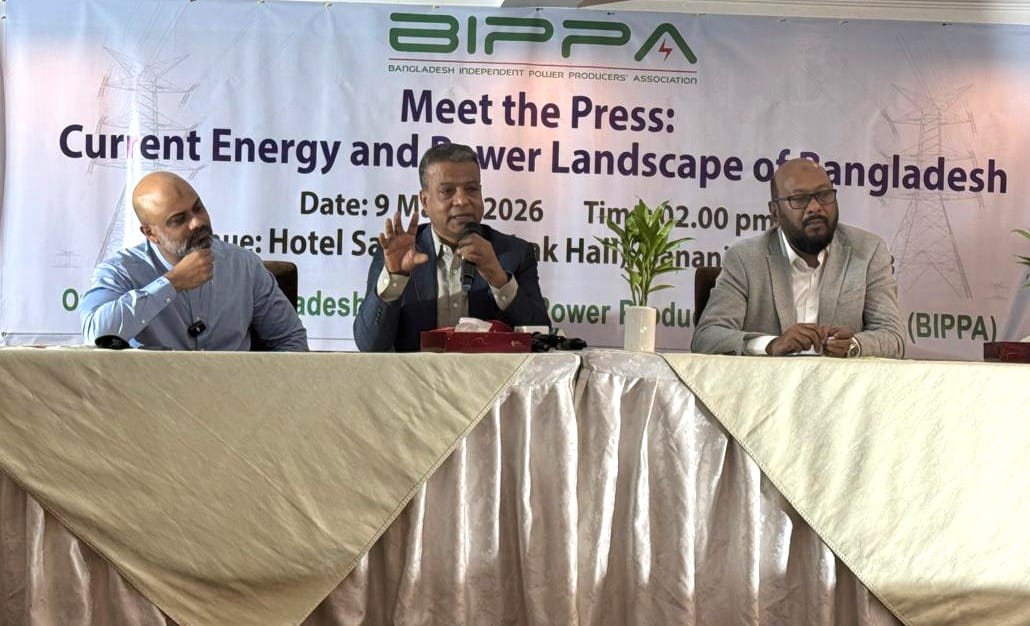
Oil-fired power plants in private sector here have enough fuel in reserve to continue electricity generation until around 10 April at most, according to the Bangladesh Independent Power Producers’ Association (BIPPA), which warned that managing the country’s power supply would be difficult without these plants.
Speaking at a press conference in the capital on Monday, BIPPA president David Hasnat and former president Imran Karim said oil-based plants are currently playing a major role in electricity generation.
If these plants are forced to shut down due to fuel shortages, the power supply situation could become difficult to manage, they said.
Karim said that, as of about a week ago, private-sector power plants had roughly 130,000 tonnes of fuel oil in stock. Of that amount, around 55,000 tonnes are held by just two or three companies, with the rest distributed among several others.
Because oil-fired power plants are scattered across different parts of the country, fuel reserves are unevenly distributed, he said. As a result, some plants may have enough fuel to operate until mid-April, while others could face shortages in early April.
On average, however, current reserves are expected to support operations until between 7 and 10 April, Karim added, cautioning that certain areas could face shortages sooner due to the uneven distribution of fuel.
Private-sector plants currently account for about 45–49% of Bangladesh’s total electricity generation, he said, stressing that regular fuel supply and timely payment of bills are essential to keep them operating.
Karim also expressed concern about delays in payments to power producers. In many cases, bills are being settled six to nine months late, creating significant pressure on operators trying to finance fuel imports and operating costs. Outstanding dues have already exceeded Tk140bn, he said.
Although contracts allow plants to shut down if payments are not made on time, domestic power producers have so far refrained from doing so.
BIPPA president Hasnat said Bangladesh’s power sector is at a critical juncture. “Without both short-term and long-term planning, the country could face serious risks to its electricity supply in the future.” He added that stronger coordination between the government and the private sector, along with clear long-term policy direction, is essential to sustain investment in the power sector.