


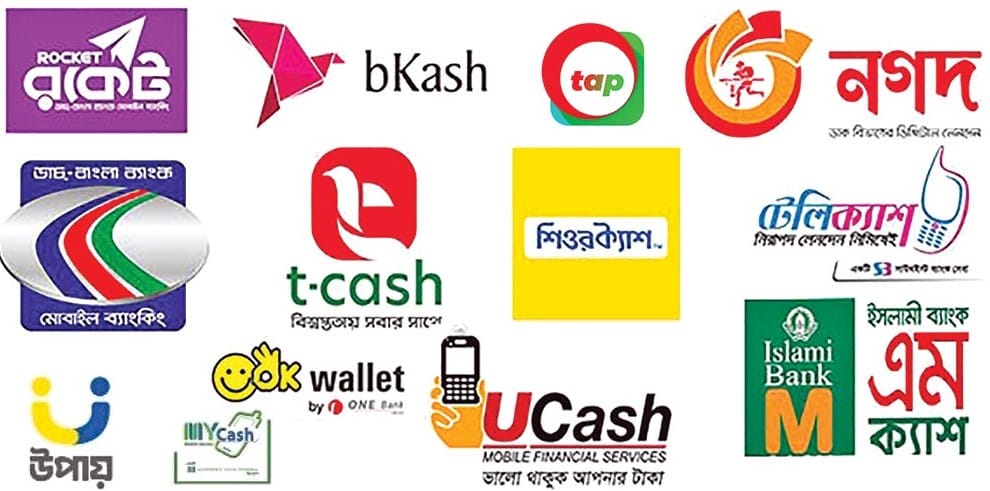
Bangladesh’s central bank has imposed sweeping restrictions on mobile financial services (MFS) and person-to-person internet banking transactions ahead of the country’s 13th parliamentary election, triggering widespread disruption for millions of citizens reliant on digital payments.
The measures, announced by Bangladesh Bank late on February 8 and enforced within hours, will remain in place from 12:00am on February 9 until 11:59pm on February 12. While officials say the curbs are designed to prevent the misuse of funds during the election period, poor and middle-income households appear to be bearing the brunt.
Field visits in Dhaka and several districts on Monday found most mobile banking outlets closed, with agents reporting confusion and frustration among customers unable to transfer or withdraw money.
Livelihoods Hit
Thousands of mobile banking agents and small traders depend on uninterrupted transactions for their daily income. Many say the abrupt restrictions have left them without earnings for several days.
Abdur Rahman, a mobile banking agent in the capital, said his shop had been closed since Monday.
“Customers are desperate to send money for hospital treatment and tuition fees, but we cannot do anything. For us, every day without transactions means income lost,” he said.
According to industry data, bKash — the country’s largest MFS provider — has more than 330,000 agents nationwide. Nagad, another major operator, has around 360,000 agents and processes an average of Tk 1,500 crore (£110m approx.) in daily transactions. In January alone, Nagad recorded transactions worth Tk 41,000 crore.
An official at a private bank, speaking on condition of anonymity, said the timing of the circular had compounded the disruption.
“People did not get time to arrange alternative sources of funds. The circular was issued in the evening and enforced within hours,” he said.
Medical Payments Disrupted
Families with critically ill relatives say the restrictions have had serious consequences.
Sajib Ahmed, a student from Kushtia, said his father’s cancer treatment had been delayed because funds could not be transferred.
“My family sold a small piece of land to collect Tk 4 lakh for my father’s treatment. They cannot send it to me because mobile banking is blocked. His treatment cannot wait,” he said.
Agents in regional towns report similar distress. Akhtar Hossain, a mobile banking agent in Pabna, said the halt in transactions had dealt a fresh financial blow to his household.
Education, Rent and Bills
Urban families, many of whom rely on mobile platforms to pay school fees, rent and utility bills, say they are now at risk of penalties and late charges.
Abu Bakar, a teacher in Mirpur, said: “We have no interest in politics. If tuition fees are delayed, families will face extra pressure. Why should ordinary citizens suffer for this?”
Salaried workers have also been affected. Md Haider Ali, a Dhaka-based employee, said he had planned to pay his credit card bill via bKash.
“I had Tk 10,000 ready in my account, but suddenly I could not transfer or withdraw the money. Now I may face a fine for no fault of mine,” he said.
Under the circular, person-to-person MFS transactions are capped at Tk 1,000 per transaction, with a maximum of 10 transactions per day. Person-to-person internet banking transfers via IBFT have been temporarily suspended. Merchant payments and utility bills remain operational, though access to funds remains limited for many users.
Limited Official Response
Repeated attempts to contact Bangladesh Bank for comment were unsuccessful. A phone number listed on the bank’s website was unreachable. A senior official attached to the finance adviser of the interim government said the matter fell under the central bank’s jurisdiction.
Bangladesh Bank has instructed financial institutions to monitor transactions closely, report suspicious activity to law enforcement and establish quick response cells to handle complaints during the election period.
Balancing Security and Access
Mobile banking agents and industry insiders acknowledge the authorities’ stated objective of preventing vote-buying and financial irregularities. However, they argue that the immediate implementation, without advance notice, has left vulnerable citizens without alternatives.
An official at a state-owned bank compared the measure to “cutting off the head to cure a headache,” suggesting the response was disproportionate.
As Bangladesh heads into a crucial national vote, the episode highlights the country’s deep reliance on digital finance infrastructure — and the risks when access is suddenly curtailed. For many of the poorest households, four days without mobile banking has proven more than an inconvenience; it has become a financial emergency.