


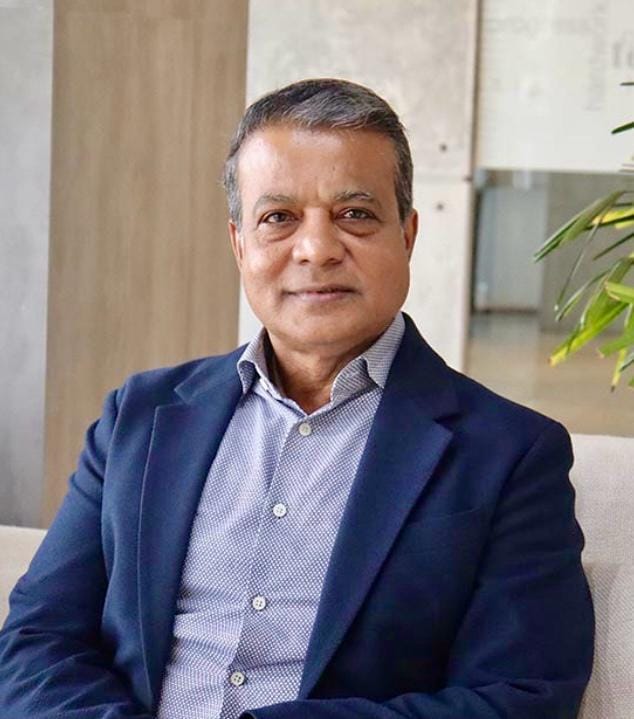
Bangladesh Independent Power Producers Association (BIPPA) President David Hasanat has said months of payment delays, fuel constraints and policy uncertainty are pushing private power plants toward shutdown, risking supply disruptions. He spoke with Just News Energy Edit Md Shamim Jahangir in an exclusive interview.
Md Shamim Jahangir: Assalamu Alaikum. Welcome David Hasanat, president of the Bangladesh Independent Power Producers Association (BIPPA), to Just Energy News. Thank you for speaking with us.
You have said that private power generation in Bangladesh is facing significant barriers. Could you elaborate on these challenges and explain why full capacity is not being utilised?
David Hasanat: Thank you. One of the most pressing challenges is the accumulation of unpaid bills. Payments for electricity supplied over the past 7 to 8 months remain outstanding, which has placed us in a difficult financial position.
We rely on bank financing for working capital, fuel imports and power generation. When payments are delayed, we struggle to service loans and maintain operations. If this situation continues, some plants may be forced to shut down.
Md Shamim Jahangir: There is a perception that the government lacks confidence in private power producers. Do you agree?
David Hasanat: It is still too early to make a definitive assessment of the new government’s stance. However, the sector has been facing fuel supply challenges, partly due to geopolitical tensions such as the Iran-Israel conflict.
I believe the new administration will take a constructive approach. At the same time, some unresolved issues appear to have been carried over from the previous government, which has added to the current pressures.
Md Shamim Jahangir: What steps should the government take to address these issues?
David Hasanat: The government should engage directly with stakeholders, including private power producers. We are key contributors to the energy supply chain, and our input is essential.
A collaborative approach, bringing all stakeholders together to identify problems and develop practical solutions, has worked in the past. The current government should adopt a similar strategy.
Md Shamim Jahangir: Bangladesh is facing a gas crisis, partly due to the cancellation of the Summit FSRU project and limited exploration. What is your perspective?
David Hasanat: At present, imported gas volumes are relatively low, so the absence of additional storage infrastructure is not immediately critical. However, if imports increase, the lack of facilities such as an FSRU will become a major constraint.
Increasing domestic gas production would help, but the extent to which this is feasible remains uncertain.
Md Shamim Jahangir: You have expressed frustration and even suggested exiting the power sector. What is driving this sentiment?
David Hasanat: Returns in the power sector are relatively modest compared to other industries. Despite this, there is a widespread perception that private power producers earn excessive or illicit profits.
While there may be isolated cases of wrongdoing, it is unfair to generalise. Businesses deserve respect. If an industry is consistently viewed with suspicion, it becomes difficult to justify continued investment.
Md Shamim Jahangir: The interim government’s review committee has raised concerns about private power agreements. Would you be open to revisiting these deals?
David Hasanat: Absolutely. We are open to discussions with the government at any time. Any review should be conducted transparently, within the legal framework, and in a cooperative manner.
If adjustments to tariffs or terms are necessary, we are willing to engage constructively.
Md Shamim Jahangir: What is the current contribution of the private sector to Bangladesh’s power generation?
David Hasanat: The private sector accounts for about 55% of total installed capacity. However, only around 30% of that capacity is currently being utilised.
Md Shamim Jahangir: Why is such a large portion of capacity underutilised?
David Hasanat: There are regulatory limitations, particularly on oil-fired plants, which are restricted to generating around 2,000-2,500 MW.
At the same time, government-owned capacity is already under pressure, so greater reliance on private sector generation is inevitable.
Md Shamim Jahangir: If payment delays persist, how long can private producers continue operations?
David Hasanat: Based on current fuel reserves, operations can continue until around mid-April. Demand will remain relatively low during the Eid holidays, which provides a short buffer.
However, beyond that, it will be difficult to continue without financial support. Even if payments are made immediately, it takes at least 40 days to import fuel. This gap could lead to supply shortages and increased load shedding.
Md Shamim Jahangir: Given ongoing geopolitical tensions, will fuel imports remain viable?
David Hasanat:b To an extent, yes. Fuel is typically sourced through international trading hubs such as Singapore. While some shipments pass through the Strait of Hormuz, alternative routes and suppliers, including Malaysia, are used to mitigate risks.
Md Shamim Jahangir: Frequent policy changes are often cited as a concern. How do they affect investor confidence?
David Hasanat: Policy inconsistency creates uncertainty. Businesses need stability to plan and invest. Frequent or abrupt changes undermine confidence and discourage both local and foreign investment.
Md Shamim Jahangir: Have policy uncertainties affected foreign participation in the sector?
David Hasanat: Yes. For instance, tenders for 37 solar projects with a combined capacity of 5,000 MW attracted limited foreign interest. Only about 900 MW was awarded, mostly to local firms.
Foreign investors tend to be cautious in uncertain environments. While local stakeholders may continue to take risks, international investors are less inclined to do so.
Md Shamim Jahangir: Finally, what are your expectations from the new government?
David Hasanat: The government should focus on building a structured and disciplined power sector. Engaging stakeholders is critical.
We are ready to contribute to a long-term roadmap, spanning five, 10 or even 15 years, to ensure sustainable energy development in Bangladesh.
Md Shamim Jahangir: Thank you for your time and insights.