


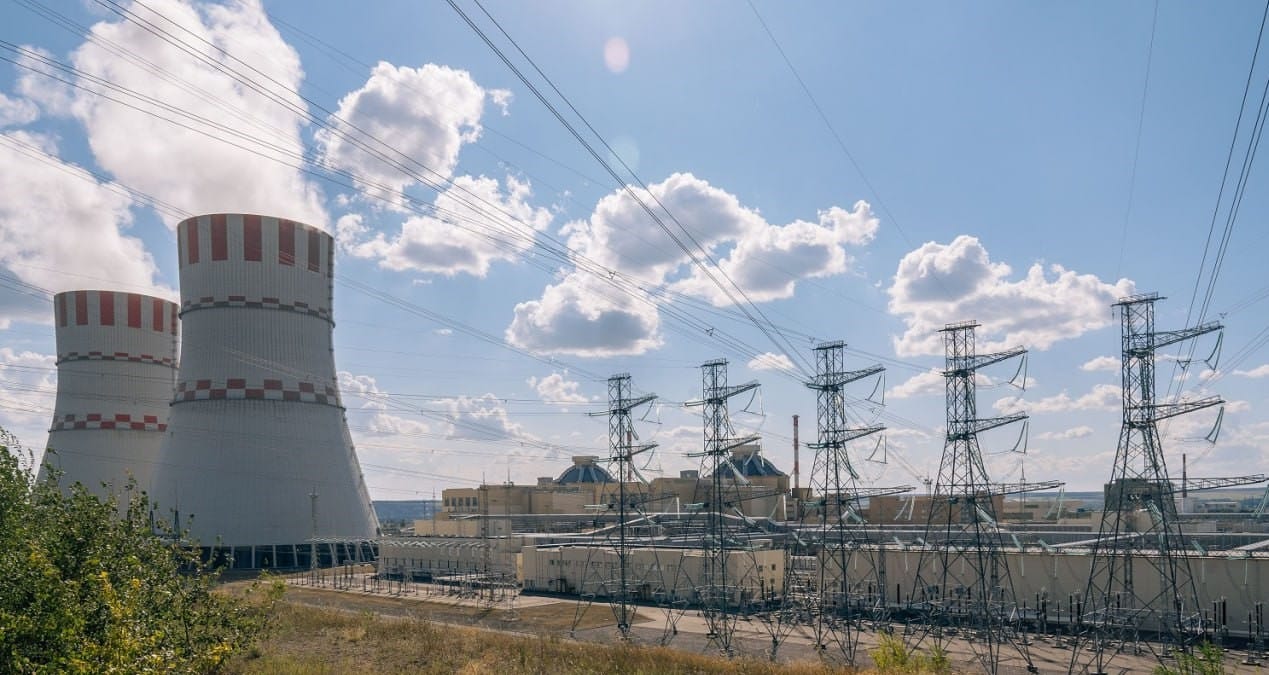
The cost of the Rooppur Nuclear Power Plant is set to rise by Tk 26,181 crore, with the project deadline pushed back by three more years to June 2028, according to a fresh proposal from the Ministry of Science and Technology. The revision marks another major setback for Bangladesh’s most expensive energy project.
If approved, the revised project cost will climb to Tk 1,39,274 crore—around 23% higher than the original estimate approved in 2016. The delay also means electricity generation from both units will be pushed back, Planning Commission officials confirmed.
Major Delays for Both Units
The first unit, previously scheduled to begin power generation in December, will miss that deadline. The second unit is also unlikely to meet its earlier timeline.
A first revised proposal submitted in early November sought an additional Tk 13,386 crore. But during the PEC meeting on November 11, the Planning Commission highlighted that foreign currency calculations were inaccurate, forcing the ministry to resubmit its estimates. A revised proposal reflecting updated exchange rates was submitted on November 27.
Taka Depreciation Drives Cost Surge
Although Russia’s $11.38 billion loan remains unchanged in dollar terms, taka depreciation has sharply increased its value to Tk 1,16,799 crore—up from Tk 91,040 crore at the time of project approval.
The new calculation uses Tk 95.28 per dollar for disbursements until June 2025 and Tk 122 per dollar for payments through 2028, based on Bangladesh Bank’s November 16 reference rate.
Under the Bangladesh–Russia agreement, Atomstroyexport is building two 1,200 MW reactors in Rooppur, Pabna. While Unit-1 was expected to be commercially operational by 2026, the new deadline extends further into the decade.
Cost Accuracy Key for Future Power Pricing
The Planning Commission warned that inaccurate foreign currency costing could distort unit-wise power generation costs, long-term operational planning and the project’s overall financial viability.
Loan disbursement has been slower than projected due to Covid-19 and the Russia–Ukraine war. So far, Bangladesh has received $7.70 billion, while another $3.68 billion awaits approval under a draft protocol expected to be signed by December 2026. Repayment will start in March 2029 over a 20-year period. Any instalment delayed beyond 30 days will trigger a penalty at 150% of the interest rate.
Generation Timeline Remains Uncertain
Fuel loading for Unit-1 is expected to begin in December. But commissioning stages—including first criticality, power ascension and full-load tests—could take months. Partial generation may begin by March, with full generation possibly taking another 10 months.
An IMED review noted that the updated production schedule for both units remains unclear, and the project office has failed to submit a complete list of pending work.
Experts Warn of Rising Economic and Security Risks
Dr Md Shafiqul Islam, senior professor of nuclear engineering at Dhaka University, said per-unit generation costs have risen by nearly 50% from initial projections due to currency depreciation and repeated delays.
He warned that prolonged delays increase financial pressure, reduce equipment lifespan and raise personnel and maintenance costs.
“If the project had started on schedule, pressure on fossil fuel imports would have eased. Instead, Rooppur’s economic and security risks are rising,” he said.
With the project entering its twelfth year amid escalating costs and uncertainty, policymakers now face renewed concerns about Bangladesh’s nuclear power ambitions and the long-term stability of its energy transition plans.