


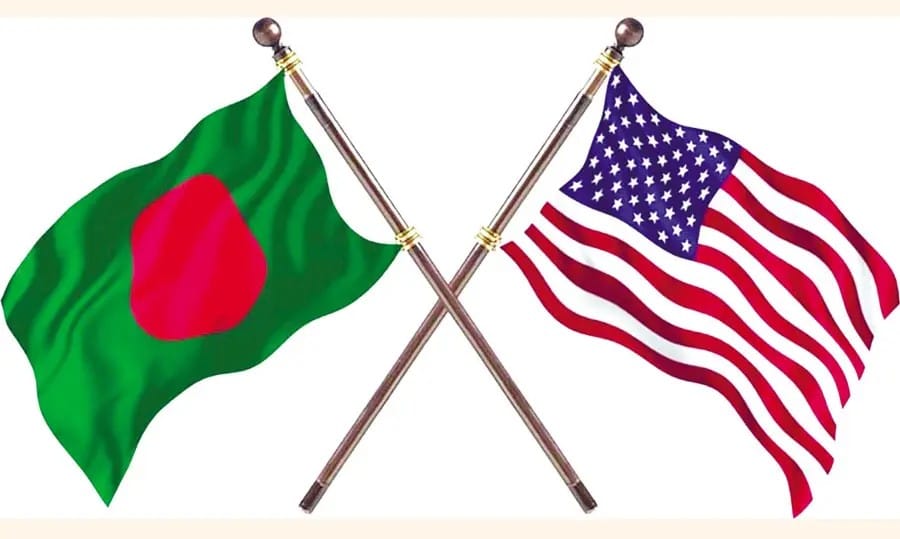
Bangladesh and the United States are preparing to establish a new framework for strategic civil nuclear cooperation, with a draft memorandum of understanding proposing collaboration across nuclear power, advanced reactor technology, safety, regulation, research and a range of non-power applications.
The proposed Strategic Civil-Nuclear Cooperation MoU, reviewed by Just Energy News, describes civil nuclear cooperation as an important component of the wider bilateral strategic relationship between Washington and Dhaka.
Government documents show that the draft was discussed by senior Bangladeshi officials at a meeting in Dhaka on 9 August 2026, chaired by Md Anwar Hossain, secretary of the Ministry of Science and Technology.
The meeting brought together officials from the Ministry of Science and Technology, Ministry of Foreign Affairs, Ministry of Power, Energy and Mineral Resources, Bangladesh Atomic Energy Regulatory Authority (BAERA), Bangladesh Atomic Energy Commission and other government agencies.
The draft says the two governments recognise the strategic implications of their diplomatic relationship, including energy security, and intend to deepen cooperation in the peaceful use of nuclear technology.
US expertise sought as Bangladesh expands nuclear programme
The proposed agreement comes as Bangladesh prepares to expand its civilian nuclear programme following the development of the 2,400MW Rooppur Nuclear Power Plant, being built with Russian assistance.
The draft MoU states that the two sides are considering the expansion of nuclear power, including small modular reactors (SMRs), while stressing that any expansion should be undertaken responsibly and according to the highest standards of safety, security and nuclear non-proliferation.
It also expresses an intention to work together to develop solutions to Bangladesh’s nuclear energy needs in line with the countries’ respective security interests.
The agreement would provide a framework for cooperation between government departments, ministries, regulators and agencies, as well as scientific, academic and research communities.
According to the draft, Washington and Dhaka intend to explore cooperation across existing and future US civil nuclear technologies, fuel, equipment and services, where appropriate.
SMRs and future nuclear technologies
One of the potentially significant elements of the proposed agreement is its reference to advanced and small modular reactors.
The draft says the two countries intend to support future developments in Bangladesh’s civil nuclear programme, including new technologies such as advanced reactors and SMRs.
It also identifies several commercial and regulatory challenges that could arise from the deployment of new nuclear technologies, including:
financing; localisation and development of domestic capability; nuclear liability; and regulatory requirements associated with emerging technologies.
The language suggests that the proposed US-Bangladesh partnership could extend beyond the immediate needs of the Rooppur project towards Bangladesh’s longer-term nuclear-energy strategy.
Cooperation to extend beyond electricity
The proposed agreement is not limited to nuclear power generation.
The draft identifies potential cooperation in both power and non-power applications of nuclear energy, including spent-fuel and radioactive-waste management, nuclear medicine, nutrition, agriculture, mining and associated research and development.
It also proposes cooperation in the development, operation and utilisation of nuclear research reactors.
Another area identified is the peaceful use of radioisotopes and other relevant isotopes in sectors including water-resource management, industry, healthcare and agriculture.
Such cooperation could broaden the practical application of nuclear technology in Bangladesh beyond electricity generation.
Greater focus on nuclear safety and independent regulation
Nuclear safety and security feature prominently throughout the proposed agreement.
The draft says all civil nuclear cooperation should comply with the highest standards of nuclear safety, security, safeguards and non-proliferation.
It also calls for cooperation between the two countries’ nuclear regulatory authorities to develop, maintain and implement regulatory frameworks and infrastructure, including building capacity for effective independent oversight.
Officials from Bangladesh’s Nuclear Safety and Physical Protection Cell also raised the need to ensure that Bangladesh’s requirements for nuclear safety, security and physical protection were adequately reflected in the draft.
The draft further notes that a comprehensive safeguards agreement together with an Additional Protocol represents the international standard for providing assurance about the absence of undeclared nuclear material and activities.
Both sides would also commit to complying with relevant international agreements covering civilian nuclear applications and adopting high export-control standards.
US-backed training and technical capacity
The draft places considerable emphasis on developing Bangladesh’s nuclear workforce.
It proposes cooperation in human-capital and workforce development, education, training, public acceptance and assistance programmes.
The meeting documents also refer to Bangladesh’s participation in the US State Department’s International Visitor Leadership Program (IVLP).
Officials said such programmes had provided opportunities to exchange experience on nuclear safety, economic development, climate issues and other areas.
The proposed MoU would seek to build on such exchanges by strengthening relationships between scientific, academic and research communities in the two countries.
Washington and Dhaka seek closer strategic ties
The draft agreement goes beyond technical nuclear cooperation by explicitly linking civilian nuclear energy to the broader strategic relationship between Bangladesh and the United States.
It states that civil nuclear cooperation can act as a catalyst for further cooperation on matters of national importance, including national security, energy security and cyber security.
The document also says the two sides share a desire for a deeper bilateral strategic relationship that would enhance their respective security and prosperity, as well as their political and economic ties.
It recognises nuclear cooperation as potentially important to the security of Bangladesh’s energy supply while also providing ancillary benefits to US energy security.
Existing nuclear agreement recalled
The draft MoU would build on an existing legal framework for US-Bangladesh nuclear cooperation.
The draft specifically recalls the 1981 Agreement for Cooperation between the United States of America and the People’s Republic of Bangladesh Concerning Peaceful Uses of Nuclear Energy, signed in Dhaka on 17 September 1981.
It also refers to the extension of that agreement through an exchange of notes in 1993.
The new MoU would therefore provide a broader strategic framework for cooperation while remaining subject to the respective national laws and regulations of the two countries.
Five-year term with automatic renewal
Under the draft, the MoU would enter into effect upon signature and remain valid for five years.
It would then be automatically extended for additional five-year periods unless either participant notified the other in writing of its intention to terminate the agreement.
Either side could discontinue the MoU, with the draft stating that written notice should normally be provided at least six months before the effective date of termination.
The agreement would not create legally binding rights or obligations under domestic or international law. Activities undertaken under the MoU would remain subject to the respective national laws, regulations and export-control requirements of the two countries.
The participants would generally bear their own costs, subject to the availability of funds.
Information-sharing safeguards
The draft contains provisions intended to restrict the disclosure of information obtained through cooperation.
Except where required by national laws or regulations, the participants would not disclose the provisions of the MoU or information and documents obtained through its implementation to third parties without the written consent of the other participant.
The draft also states that each participant intends to continue protecting information received from the other side even after the MoU is discontinued.
US Special Envoy involved in discussions
The meeting papers also refer to discussions involving US Special Envoy to South and Central Asia Sergio Gor.
According to the documents, the US ambassador had discussed the proposed civil-nuclear cooperation with Bangladesh’s senior leadership.
Bangladesh’s Foreign Ministry was subsequently asked to coordinate with the US side and communicate the country’s position before the draft was finalised.
The documents indicate that the proposed MoU forms part of a broader effort to strengthen Bangladesh-US strategic ties through cooperation in civilian nuclear technology.
Draft remains subject to approval
The meeting agreed that the draft should be examined further and sent through the relevant government channels before finalisation.
The Ministry of Foreign Affairs and Ministry of Science and Technology were identified as key agencies in taking the process forward.
The Bangladesh Investment Development Authority (BIDA) indicated that it had no proposed amendment to the draft, according to the meeting documents.
“We are reviewing the progress of small modular reactors (SMRs), but it is still at a preliminary stage for cooperation on a strategic civil nuclear pact with the US,” Science and Technology Minister Faqir Mahbub Anam told Just Energy News on Thursday on the sidelines of a press conference.