


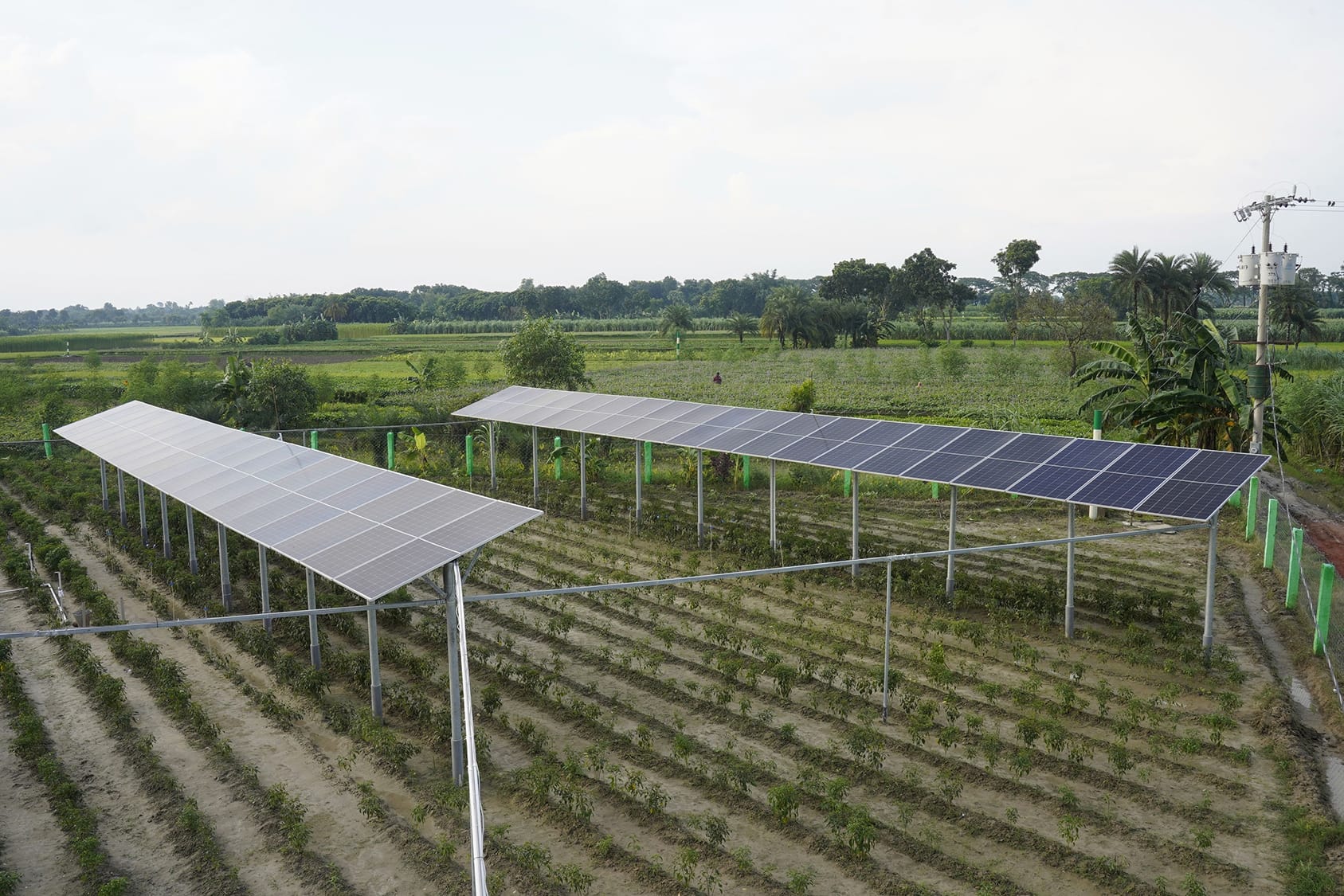
The government has taken up a nearly Tk7,000 crore project to reduce Bangladesh’s dependence on imported diesel for irrigation by converting around 51,000 diesel-powered irrigation pumps to solar energy.
The four-year project, titled “Conversion of Existing Diesel-Powered Irrigation Pumps to Solar Energy,” will be implemented by the Bangladesh Agricultural Development Corporation (BADC)
The cost of the Ministry of Agriculture proposed project will be entirely borne from the state coffere, with completion targeted for June 2030, according to Planning Commission sources.
The project has been included in the list of unapproved new projects under the current Annual Development Programme (ADP).
Diesel dependence
About 71 percent of the country’s irrigation pumps run on diesel, mainly because many irrigation areas lack access to the national grid.
There are around 1.22 million diesel-powered irrigation machines in operation across the country, according to the project proposal.
Irrigation pumps consume around 20 percent of the electricity generated in the country, while diesel-powered pumps put additional pressure on fuel imports and foreign exchange reserves.
The proposed project aims to bring 17,160 irrigation sites in 349 upazilas across 56 districts under solar power.
It plans to convert 50,000 shallow tube wells, 250 diesel-powered low-lift pumps with a capacity of two cusecs each, 550 low-lift pumps with a capacity of one cusec each, and 100 electric deep tube wells to solar power.
The converted irrigation facilities are expected to provide irrigation to 262,500 hectares of farmland annually and help increase foodgrain production by an estimated 459,375 tonnes.
Tk361cr foreign exchange savings
The project proposal estimates that replacing diesel-powered irrigation equipment with solar systems will save around 26,711 tonnes of diesel annually.
This would save an estimated Tk361.41 crore in foreign exchange each year, according to BADC.
The project also plans to install net-metering systems at 25,000 solar-powered irrigation sites so that surplus electricity generated by solar panels can be fed into the national grid.
The solar systems could generate additional electricity outside the irrigation season, when the pumps are not in operation.
BADC estimates that selling the surplus electricity to the grid could generate around Tk176 crore in annual revenue.
Concerns over maintenance
The project also includes training for farmers and irrigation-sector engineers to improve the operation and maintenance of solar-powered irrigation systems.
A total of 480 batches of farmers, with 30 participants in each batch, will receive training. Separate training programmes are also proposed for sub-assistant, assistant, executive and supervisory engineers.
Agricultural economist Professor Jahangir Alam Khan welcomed the move but said successful implementation would require more than installing solar pumps.
“The use of solar power in agriculture should be increased, particularly given uncertainty over oil prices and supply,” he said.
However, farmers should be provided with incentives and subsidies, while reliable after-sales services for solar irrigation equipment must be ensured, he added.
Some solar pumps already in use have experienced technical problems, Khan said, stressing the need to develop skilled technicians and provide farmers with adequate training in operation and maintenance.
The project has been classified as a “Green-C” project under the environmental regulations, reflecting its expected contribution to reducing fossil-fuel use and carbon emissions.
BADC said the initiative is also consistent with the National Renewable Energy Development Strategy 2026–2030, which prioritises the gradual conversion of diesel-powered irrigation equipment to solar power.
The project is expected to contribute to the government’s target of generating 10,000MW of electricity from renewable sources by 2030 while reducing irrigation-sector dependence on fossil fuels.