


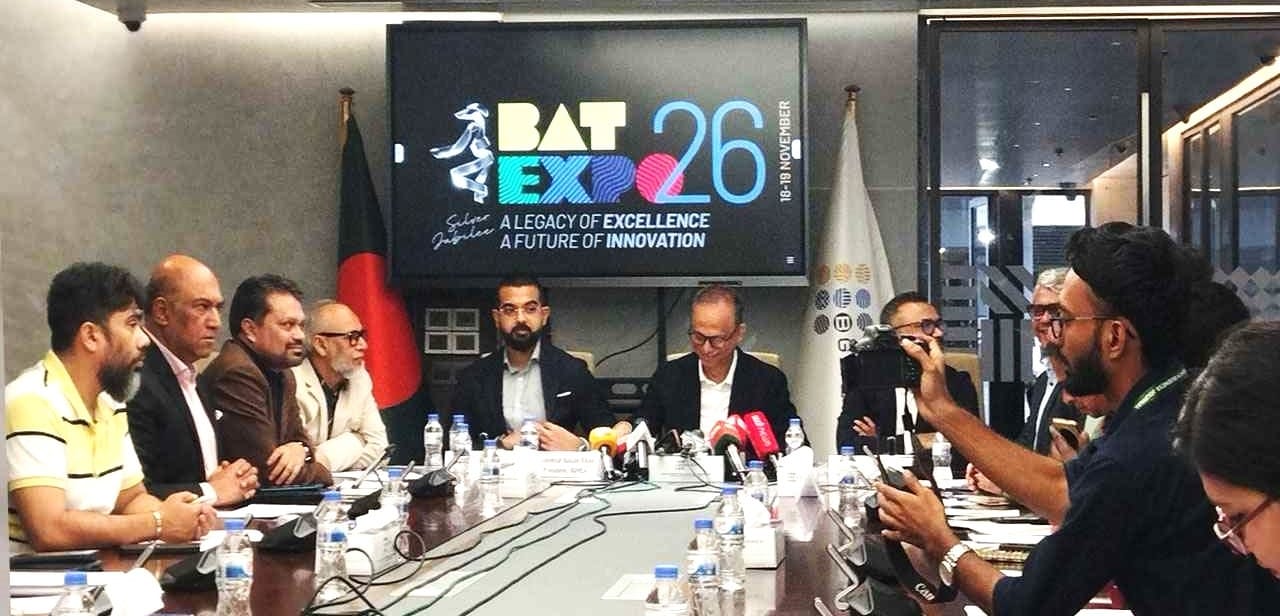
Bangladesh’s recent energy crisis has disrupted production and increased operating costs in the garment sector, but no apparel factory has so far closed because of the shortages, the Bangladesh Garment Manufacturers and Exporters Association (BGMEA) said on Thursday.
BGMEA President Mahmud Hasan Khan said gas supplies had improved in recent days, providing some relief to factories, particularly dyeing, washing and other backward-linkage units that had been badly affected by low gas pressure.
“Gas supply has improved compared with the past few days,” he told a press conference at the BGMEA complex in Uttara. He said the full impact of the energy crisis would become clearer over the next three to four months.
According to BGMEA data, no factory had closed because of the energy crisis during the past two months. Mahmud said a factory could not normally be shut down immediately after an energy shock because of outstanding orders, workers’ compensation and bank obligations.
A closure generally requires about six months of planning, he said.
Under normal conditions, garment factories operate for eight to 10 hours a day. During the recent fuel shortages, many had to spend an additional five hours completing production and use alternative fuels, increasing operating costs. Despite this, exporters have sought to maintain shipment schedules.
Energy security and solar investment
BGMEA has called for short-, medium- and long-term measures to ensure stable energy supplies to industry. The association has submitted a proposal to the Energy Ministry and believes the problem could be substantially addressed within two years if the plan is implemented.
It wants two additional floating storage and regasification units (FSRUs), alongside land-based LNG storage facilities as a longer-term solution.
Bangladesh has already signed a government-to-government agreement with China for an FSRU. However, Mahmud said adding several floating terminals would not be enough unless the gas distribution network was upgraded at the same time.
BGMEA has also sought priority gas supplies for SMEs and factories using 100-500 PSI boilers, low-interest green loans for renewable-energy investment and faster gas exploration in coastal areas. It has proposed increasing oil-fired power generation to save gas and divert more of the available supply to industrial users.
The garment sector is also turning to rooftop solar to reduce dependence on conventional energy. Mahmud said his businesses had been using rooftop solar since 2019, with around 14MW currently installed.
BGMEA said member factories have significant potential for solar generation, but high financing costs and long payback periods remain major barriers. The association has discussed low-cost green financing with Bangladesh Bank to encourage renewable-energy investment.
BATEXPO returns after more than 12 years
After more than 12 years, BGMEA is bringing back its flagship apparel exhibition, BATEXPO, with its silver jubilee edition scheduled for Nov 18-19 at the Bangladesh-China Friendship Conference Centre in Dhaka.
The event will seek to attract new buyers and showcase the transformation of Bangladesh’s garment industry, including its capabilities in higher-value, technology-driven and environmentally sustainable production.
The 2026 edition will feature a Global Apparel Expo, Global Apparel Summit, AI and Innovation Hub, Sustainability and Circularity Exhibition, fashion runway and Sustainability Leadership Awards.
BGMEA said the prime minister has been invited to the opening ceremony and the president to the closing ceremony. International buyers, fashion representatives and influencers are also expected to attend. PDSI, a global apparel sourcing company, will be the title sponsor.
New markets in focus
Bangladesh currently exports garments to 167 countries. Of roughly $40 billion in garment exports, about $8 billion comes from markets outside the US, EU and Canada, according to Mahmud.
BGMEA is seeking to expand those markets while increasing exports of higher-value products.
As part of the initiative, BGMEA and HSBC Bangladesh will jointly organise the Bangladesh Apparel Road Show 2026 in Hong Kong on Oct 28-29, targeting international buyers, brands and institutional investors, particularly those that do not currently source from Bangladesh.
Japan is another target market. BGMEA is establishing a Japan Desk to improve communication between Japanese buyers and Bangladeshi manufacturers. Japan’s ambassador to Bangladesh is scheduled to inaugurate the desk on Sept 23.
Bangladesh’s garment exports to Japan, currently around $500 million, are targeted to rise to $2 billion-$2.5 billion.
LDC transition and EU trade
On Bangladesh’s graduation from the least developed country category, Mahmud said the government’s initiative to seek a three-year extension was important for businesses and expressed hope that it would be approved by the UN General Assembly this month.
He said the additional time would help businesses prepare for post-LDC challenges, with private-sector representatives participating in a government committee led by the Economic Relations Division.
For the apparel sector, securing a free trade agreement with the European Union is a priority.
“Our most important task is to secure an FTA with the European Union, not GSP Plus,” Mahmud said, adding that discussions had progressed.
BGMEA also wants modernised company and customs laws, faster FTAs and EPAs, and at least five years of policy and tariff continuity after graduation.
Customs and worker welfare
BGMEA has called for simpler customs and bonded-warehouse procedures, saying delays increase business costs. It has proposed involving professional audit firms in bond audits and sought a modern permanent cargo shed at Hazrat Shahjalal International Airport.
The association has also sought government land for modern hospitals in the Gazipur and Ashulia industrial zones. Work is under way to fully open a nearly 100-bed hospital in Mirpur early next year.
To ease exporters’ liquidity pressures, BGMEA has demanded withdrawal of the 5% withholding tax applied in place of cash incentives, or that it be treated as a final tax liability.