


Bangladesh’s apparel industry must ensure that its shift towards renewable energy, automation and greener production does not come at the expense of workers’ jobs, rights and livelihoods, speakers at a multi-stakeholder dialogue in Gazipur said on Tuesday.
They called for a worker-centred just energy transition, backed by reskilling and retraining, stronger workplace safety, social protection, green financing and greater policy accountability.
The speakers said the industry would need to invest in clean energy, reduce energy waste and adopt new technologies to remain competitive as global markets increasingly demand low-carbon production. But they warned that workers displaced by automation or technological change should receive training and income support rather than being left without employment.
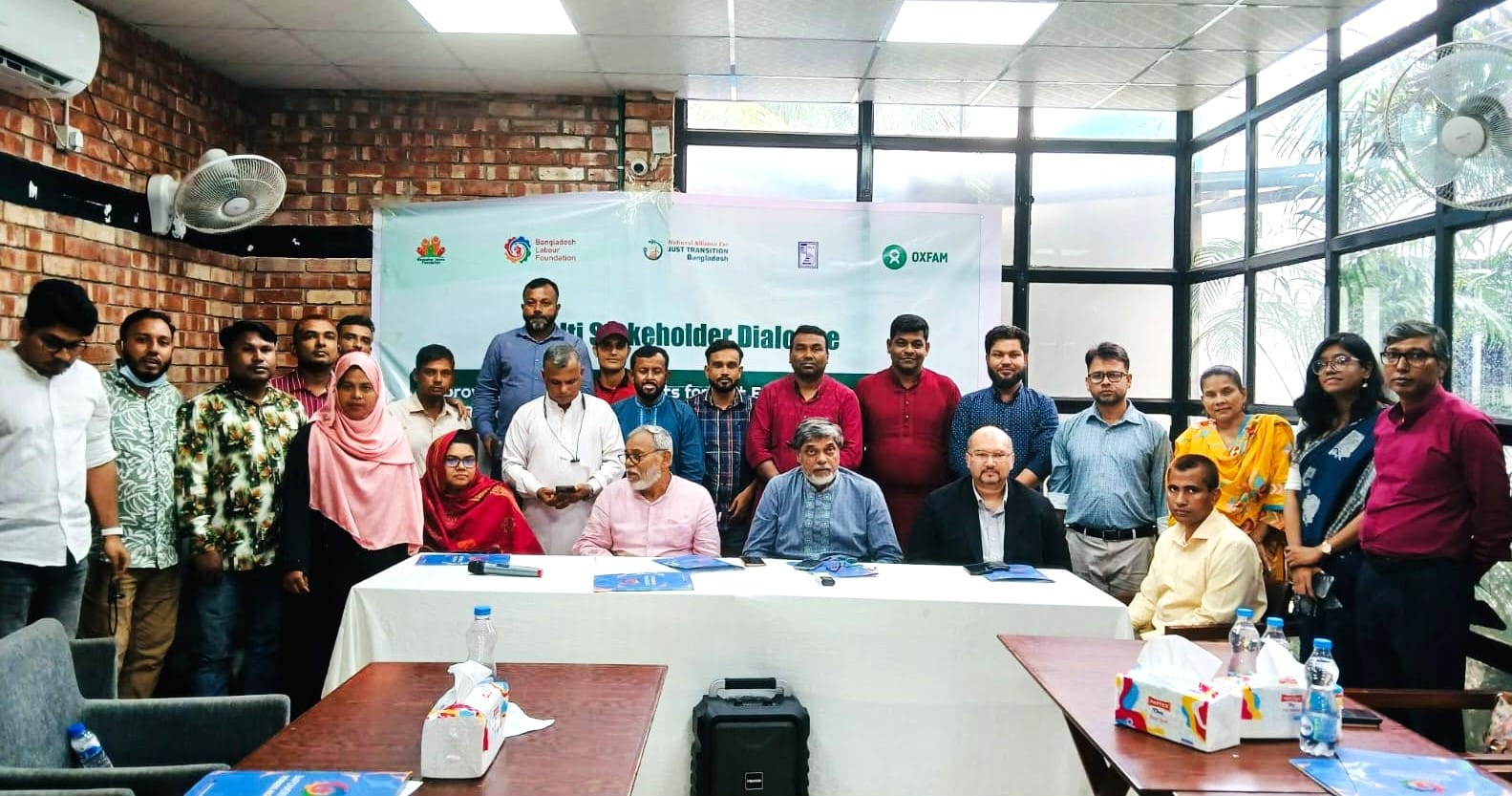
The dialogue, titled “Improving Policy Arrangements for Just Energy Transition (JET) in Bangladesh’s Apparel Sector from a Labour Perspective”, was held at 90’s Lounge in Gazipur. It was jointly organised by the National Alliance for Just Transition Bangladesh (NAJTB), Bangladesh Labour Foundation (BLF), Bangladesh Institute of Labour Studies (BILS) and Manusher Jonno Foundation (MJF), with support from Oxfam in Bangladesh.
The event was part of MJF’s Fashion Forward project, which seeks to promote a fair and inclusive transition in the apparel industry while addressing workers’ rights, livelihoods and workplace realities.
Amer Salim, chairman of the BGMEA Standing Committee on Just Transition, said the garment sector, which employs nearly 4 million workers and contributes significantly to Bangladesh’s economy, needed to prepare its workforce for rapid changes in technology and the global labour market.
He called for greater investment in upskilling and reskilling, digital learning and “intelligent factory engineering”, while stressing the need to preserve the dignity of labour.
Md Anowar Hossen, chief coordinator of NAJTB, said a sustainable industrial transition required technical reskilling, workplace safety and stronger environmental accountability.
He called for modern training programmes, improved industrial practices and wider adoption of green standards to ensure that economic growth did not undermine workers’ safety and wellbeing.
Asaduzzaman, assistant inspector general (health) at the Department of Inspection for Factories and Establishments (DIFE), urged the industry to reduce its dependence on non-renewable fuels.
He called on factory owners to install rooftop solar systems at factories and warehouses, reduce energy wastage and promote energy conservation across industrial facilities.
Tania Tabassum, additional deputy commissioner of Gazipur, said automation and technological change should not be used to make workers “disposable”.
Factory owners and industry associations should provide structured training when new technologies are introduced, she said, calling also for government incentives, lower import tariffs on renewable-energy equipment and greater access to green finance.
Trade union leader Noimul Ahsan Juwel proposed establishing a dedicated RMG Just Transition Fund, financed by factory owners, international buyers and development partners.
Workers displaced by automation should receive at least a three-month stipend along with targeted reskilling support, he said. He also called for the formalisation of Bangladesh’s large informal workforce to improve job security, occupational safety and access to social protection.
Pablo Neruda, deputy programme manager at MJF, said automation should not undermine workers’ fundamental rights or livelihoods.
Where automation reduces the number of workers required on a production line, factory owners should take responsibility for reskilling those affected, he said.
Through the Fashion Forward initiative, MJF would seek to bring workers’ experiences and concerns from Gazipur into national-level policy discussions, he added.
Sherena Akter, deputy director (additional) of the Department of Women Affairs in Gazipur, Fahad Bin Siddique, senior research officer at BLAST, trade union leaders and representatives of various stakeholder groups also attended the dialogue.