


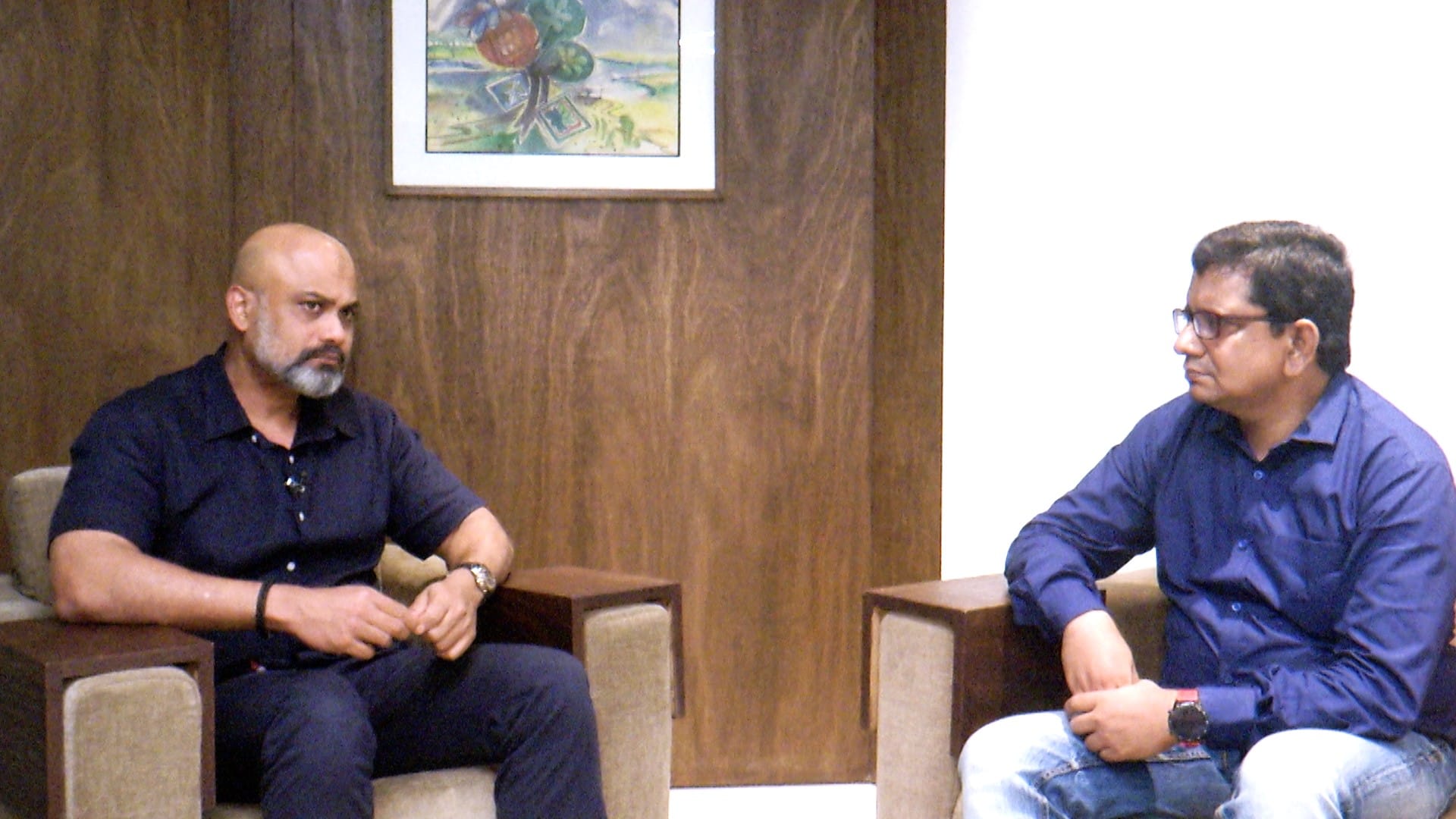
In an exclusive interview with Just Energy News Editor Md Shamim Jahangir, Confidence Group Chairman Imran Karim discusses Bangladesh’s investment climate, energy security, gas shortages, the cost of power generation, domestic investment and the need for greater policy stability. The full text of the interview is given below:
Md Shamim Jahangir: Imran Karim Bhai, welcome to Just Energy News. You have been involved in business for more than two decades. Could you tell us how you started and how your business has evolved?
Imran Karim: Thank you. I would not describe myself as a particularly successful person. In 2003, after completing my studies, my parents brought me back to Bangladesh from abroad, quite literally with all my bags and baggage. I joined our family business around June or July that year.
Initially, there were many challenges. Doing business in Bangladesh has never been easy. But from around 2003-04, we gradually moved forward.
When I returned, our group had a cement factory, several manufacturing businesses and a joint-venture paint company with Asian Paints. By the grace of Allah, we now have around 18 to 20 manufacturing businesses, power plants and a range of service-sector operations.
We are continuing to operate despite the difficult economic conditions in Bangladesh and elsewhere in the world.
Md Shamim Jahangir: You are involved in several manufacturing businesses. Which sectors are you currently operating in?
Imran Karim: People probably know us best for cement. We have one cement factory in Dhaka and another in Chittagong, with a combined annual production capacity of around three million tonnes.
We also have two joint-venture paint factories with Asian Paints, one in Gazipur and the other in Chittagong.
Apart from that, we manufacture batteries and have a large battery manufacturing facility towards Narayanganj. We have a large steel fabrication facility, a plant producing pre-stressed concrete products, a transformer manufacturing facility and a geotextile manufacturing operation.
We are also involved in steel forging and galvanising.
On the energy side, we have four power plants in Rangpur, in northern Bangladesh, and in Chittagong.
We have a tower company that builds telecommunications towers and leases them to mobile-phone operators. We also have an ICT company involved in a range of technology-related businesses.
Overall, our businesses currently employ around 5,000 to 5,500 people, with annual revenue of roughly Tk600 crore.
Md Shamim Jahangir: Bangladesh, like much of the world, is facing a difficult economic environment. In this situation, what areas should the government focus on to help major businesses and entrepreneurs overcome the challenges?
Imran Karim: I would say there is a global recession, but at the same time there is not a conventional recession everywhere. We are living through a rather unusual economic period.
After the pandemic, economic conditions have become much more unpredictable. At the same time, many countries are performing very strongly, particularly because of developments in artificial intelligence.
Major Western economies, including the United States, and countries in the Far East such as South Korea, Taiwan and Malaysia are doing well. Their economies are not necessarily stagnant and their capital markets are performing strongly.
The major area of stagnation in Bangladesh has been public and private investment. Since the pandemic and the post-pandemic period, investment has remained subdued, and that stagnation has increased over time.
To overcome this, we need greater circulation of money in the economy. We need to fix the capital market and the debt market.
Demand will not increase unless there is sufficient liquidity in people’s hands. The government needs to create the economic conditions necessary to restore liquidity.
Whichever government is in power, these issues have to be addressed. Other countries are also taking measures to support their economies.
Md Shamim Jahangir: Many entrepreneurs are now saying that energy availability has become a major constraint, particularly because industries are not receiving gas according to their requirements. How do you assess the situation?
Imran Karim: The fact that gas availability would decline in Bangladesh was not unexpected. As entrepreneurs, we study the country’s future energy situation, and the current position did not come as a surprise to me.
Our domestic gas production reached a peak of around 2,700 million cubic feet per day (mmcfd). In recent years, average domestic production has been around 2,500-2,700 mmcfd, while around 800-900 mmcfd is now being supplied through imports.
Domestic production peaked around 2018-19. Since then, production has been declining every year — initially by around 100 mmcfd and now by roughly 200 mmcfd annually.
At the same time, our LNG import infrastructure remains limited, with two floating storage and regasification units, or FSRUs.
We have entered a global era in which artificial intelligence is increasing demand for electricity and energy. At the same time, our domestic gas production is falling and our dependence on imports is increasing.
We therefore have to compete in the international market to secure energy supplies. That means we will have to pay considerably more per unit of energy than we did in the past.
For Bangladesh’s export industries and domestic businesses, which benefited from relatively cheap gas for a long time, this is a major challenge. Energy costs will increasingly become market-driven.
If we are not careful, the cost of energy could undermine our competitiveness both domestically and internationally.
There is another issue: energy imports require dollars. We are fortunate that remittances are currently strong. But our future purchasing capacity will depend on what happens to remittances, exports and the overall balance of payments.
So, overall, Bangladesh’s energy situation is not very encouraging and requires extremely efficient management.
I believe public-private partnerships can play an important role. But by public-private partnership, I do not simply mean occasional meetings or exchanging ideas.
In Bangladesh, the public and private sectors do not engage with each other as effectively as they do in many established economies. Those platforms for meaningful dialogue are not sufficiently active. Without that engagement, it will be difficult to achieve good outcomes in the future.
Md Shamim Jahangir: You mentioned the need for more energy infrastructure. As I understand it, one of Summit’s FSRUs was cancelled, while an FSRU proposed by your company was also cancelled by the previous interim government. If those projects had been completed on time, would Bangladesh’s energy situation be less difficult today?
Imran Karim: Summit’s project had reached a much more mature stage than ours. Our project was not at the same stage.
But yes, we are interested in gas importation and related infrastructure, and I believe several other major companies in the energy sector are also interested.
The broader problem is that investment appetite in Bangladesh has been declining, both in the private and public sectors.
One important reason is investment security. If policy continuity is not firmly established, it becomes difficult to attract investors.
And if domestic entrepreneurs are reluctant to invest, why would foreign investors come?
Everything in business is ultimately about returns. You are an entrepreneur yourself and run a news organisation. If your revenue is insufficient, you cannot pay your employees’ salaries. Your own time also has a value.
After paying salaries and other expenses, there must be a return for the entrepreneur. Otherwise, why would anyone take the risk?
In established Western economies, investors can obtain dollar returns of around 17-20 per cent from certain index funds. Bangladesh has to compete with that global investment environment.
So the first requirement for attracting foreign investment is to ensure the security of the investment itself.
There must be physical security, a stable law-and-order environment, reliable electricity and energy supplies, and a predictable regulatory system.
If an investor comes to Bangladesh to serve the domestic market, purchasing power also needs to increase. That means inflation must come down and liquidity must improve. Access to credit also needs to increase.
I often ask: why do people keep asking domestic investors how to bring in foreign investors? Are we dead?
Md Shamim Jahangir: I asked because you have experience with international joint-venture partners.
Imran Karim: Domestic and foreign investors should be integrated much more effectively.
Look at India. Foreign investors often come as part of a broader ecosystem involving domestic businesses. In the UAE, foreign investors frequently work with local partners.
Domestic investment must therefore be promoted alongside foreign investment.
Foreign investors will look at what is happening to local investors. Domestic entrepreneurs understand the country’s rules, practices and business environment better than anyone else.
If domestic investors are not sufficiently protected or confident, how can foreign investors be expected to come?
Domestic investors should be able to tell international investors: “I am investing in Bangladesh and I consider my investment sufficiently secure. You can come too.”
Today, the electricity and energy situation is known globally. Nothing can remain hidden for long.
So why would an investor come at this particular moment?
If an investor can put money into a global index fund and potentially receive a substantial dollar return, Bangladesh has to offer a sufficiently attractive and secure environment to compete for that capital.
We have to be ready.
That means ensuring physical security, maintaining law and order, improving energy supplies, controlling inflation and creating a predictable investment environment.
Domestic investors should also be able to advocate confidently for Bangladesh in international markets.
Md Shamim Jahangir: You have raised the issue of investor security. You were previously president of the Bangladesh Independent Power Producers Association. Your group is also one of the major investors in the power sector. Is policy uncertainty discouraging domestic investors?
Imran Karim: Compared with many others, I would say we are continuing to invest quite bravely.
We have taken initiatives to develop around 400MW of solar power projects. We signed those contracts during the interim government period after winning tenders as the lowest bidders.
So we are not withdrawing from investment. We are looking strategically at where opportunities exist and investing accordingly.
But the available space for investment is limited.
One major reason is that the domestic economy is not sufficiently vibrant. Inflation is high and people’s purchasing power is weak. That inevitably affects investment.
If people are buying less chanachur, for example, why would anyone build a new chanachur factory?
The capital market is another major problem.
Large companies in Bangladesh do not want to enter the capital market. For a long time, policymakers and governments have not given sufficient attention to developing it.
I recently attended a meeting at the Dhaka Chamber of Commerce. Investment and the capital market were major topics.
I asked why wealthy Bangladeshis do not invest in the stock market in the same way wealthy people do in countries such as the United States or India.
I pointed out that those of us attending the meeting were probably among the top one per cent of the country’s wealthiest people. I asked about the size of our stock-market portfolios.
Almost nobody had significant investment in the local stock exchange unless they owned a publicly listed company.
That tells you something about the level of trust in the market.
The stock exchange needs to be improved because otherwise businesses have to rely on bank financing at high interest rates.
Interest rates are now around 12-13 per cent. Previously, good companies could obtain financing at around 7 per cent.
So the cost has almost doubled.
It is extremely difficult to run businesses sustainably when the cost of finance is around 14 per cent.
If the capital market does not improve, the cost of finance will not come down.
There are many things Bangladesh needs to do to make investment sustainable and profitable over the long term.
We also need more open and constructive dialogue between the public and private sectors.
Businesspeople should not be involved in politics, and politicians should not be involved in business. But there must be a platform where both sides can exchange ideas freely.
Otherwise, the country loses the best ideas from both sides.
Md Shamim Jahangir: The government has recently decided to increase furnace-oil-based power generation, arguing that it can be cheaper than some alternatives under current conditions. The Prime Minister has also issued directives on the matter. How do you see this move?
Imran Karim: I think it is a timely initiative.
Our domestic gas supply is declining and LNG import infrastructure cannot be expanded overnight. So we have to find ways of managing the transition.
Electricity demand is growing by around 6-7 per cent a year.
There is also an issue concerning taxation. For a long time, LNG carried an import duty of around 22 per cent. About a year ago, that was reduced to around 5 per cent or 2.5 per cent.
But the import duty on heavy furnace oil remains around 30 per cent.
At first sight, that makes HFO-based electricity appear more expensive.
If the HFO import duty were reduced to around 5 per cent, similar to coal or LNG, the economics would look very different.
It appears to me that the high tax on HFO makes furnace-oil-based power appear more expensive than it actually is.
Coal and LNG used for power generation are imported at much lower rates. Why should HFO be treated differently?
If you remove that tax distortion, HFO-based generation could be cheaper than LNG-based generation.
Professor Tamim recently made a similar point. He is a very knowledgeable person in this area.
When I was president of BIPPA, I also argued that countries relying on imported fuels for power generation generally do not impose such heavy taxation on those fuels.
It makes little economic sense to impose high taxes on imported fuel and then provide large subsidies elsewhere.
The tax treatment should be broadly comparable and kept at a low level where possible.
If you look at countries such as India, Pakistan, Sri Lanka and Vietnam, fuel taxation for power generation is generally much lower.
Bangladesh has reduced the tax burden on LNG but has retained a high tax on HFO.
I believe the HFO tax should also be reduced. Then the actual cost of generation would become clearer.
At present, the economics can be distorted by the tax structure.
Md Shamim Jahangir: Do you think there were efforts during the previous interim administration to discourage domestic entrepreneurs?
Imran Karim: I have been in business in Bangladesh since 2003 — around 23 years. From 2003 until the pandemic, the business environment was not bad.
There were difficulties in 2007-08, but it was not like this.
The pandemic caused economic stagnation across the world, and Bangladesh was no exception.
Since then, however, we have become increasingly silo-driven. In some cases, decisions have been taken without sufficient consideration of economic realities.
Over the past two or three years, I believe there has been an increase in decisions that are not sufficiently pragmatic.
At a meeting last year, one businessman said that being a businessman in Bangladesh had almost become synonymous with being a thief or a cheat.
That is unfortunate.
People who invest thousands of crores of taka should not be treated in that way.
You asked about my expectations from the government.
My first expectation is that companies that took money from banks and disappeared should not simply be allowed to re-establish themselves without accountability.
Otherwise, why should legitimate businesses continue to operate properly?
There was relative economic stability from 2003 until the Covid period. I cannot comment on the period before that because I was not in business then.
We need to identify what has changed.
We can offer many theoretical solutions to reduce inflation and increase liquidity, but some factors are beyond our control.
What we can improve is within our control — including managerial capacity, institutional efficiency and communication between the private and public sectors.
Foreign investment is important, but should domestic investors simply be ignored?
Why should there be what I would describe as a second-class treatment of domestic investors?
In 2025, I experienced something that concerned me.
Sometimes, if a foreign embassy made a call on my behalf, things moved faster. I was awarded work after being the lowest bidder; I was not asking for preferential treatment.
I have two major joint-venture partners — Asian Paints, an Indian company, and American Tower, an American company.
At times, I felt that when they made a call, things moved faster than when I made one myself.
I do not want to feel like a subordinate in my own country.
My message to the current elected government is simple: domestic entrepreneurs do not want to feel like subjects.
If the government wants to promote foreign investment, that is perfectly understandable. But domestic investors should not be overlooked.
They should receive the same facilities — and, where appropriate, even greater support — because they are already investing their capital, creating employment and taking risks in Bangladesh.
Md Shamim Jahangir: Imran Bhai, thank you very much for joining Just Energy News and sharing your views with us.
Imran Karim: Thank you very much.