


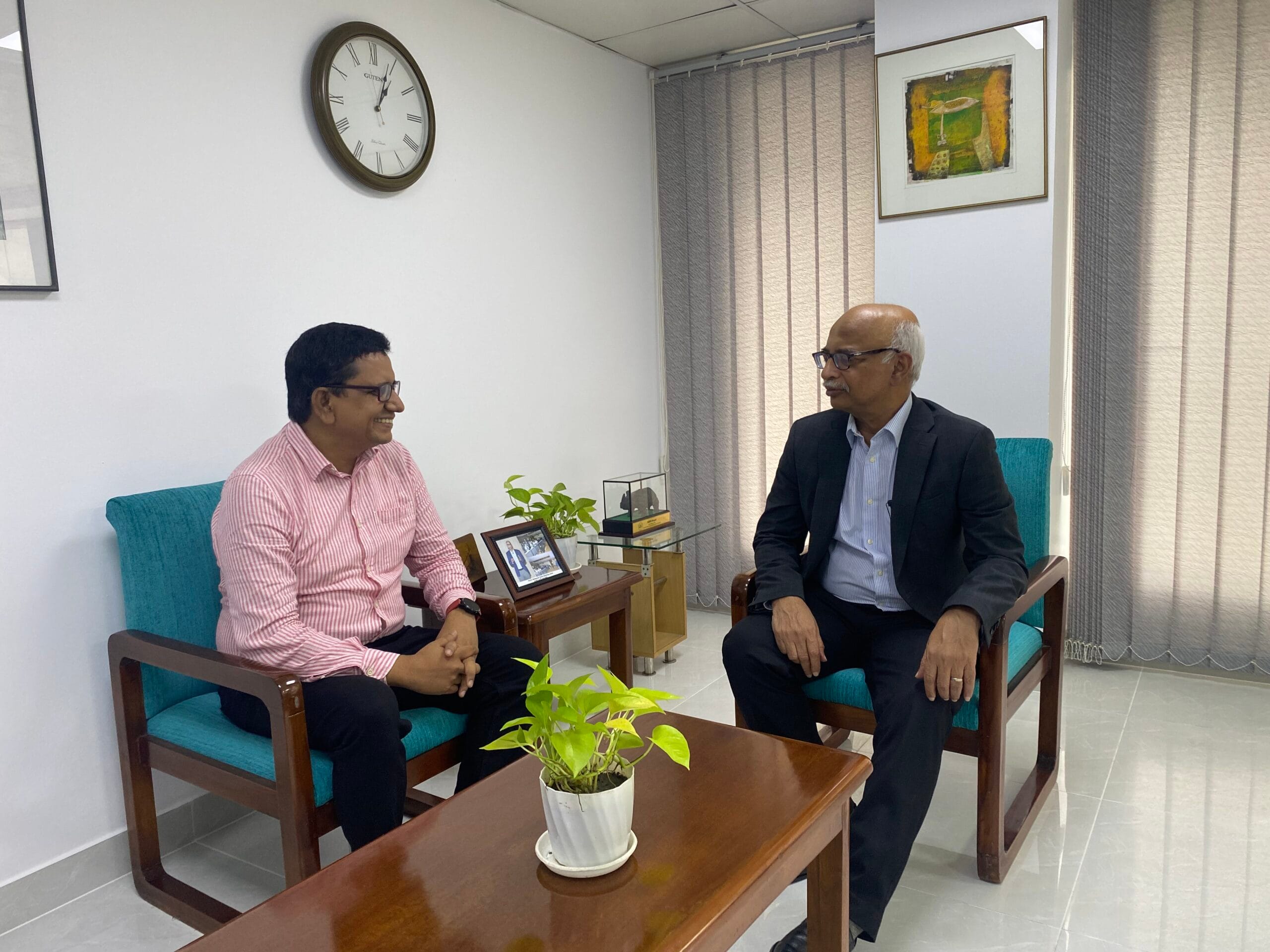
Bangladesh’s energy crisis is rooted not in a shortage of power plants but in decades of weak planning, inadequate primary energy supply, and growing dependence on imported fuel, says Professor M. Tamim, vice chancellor of Independent University, Bangladesh (IUB), and one of the country’s leading energy experts.
In an exclusive interview with Just Energy News, Prof. Tamim argues that successive governments focused heavily on expanding electricity generation while neglecting domestic energy development.
The result, he says, has been fuel shortages, underutilised power plants, rising generation costs, and mounting capacity payments.
He calls for integrated energy planning, improved operational efficiency, stronger institutions, and faster renewable energy deployment to ensure long-term energy security and affordable electricity.
Bangladesh has invested billions of dollars in the power and energy sector over the past two decades. Yet the country continues to struggle with electricity shortages, fuel supply constraints, rising generation costs, and increasing dependence on imported energy.
To discuss the causes of these challenges and the path forward, Just Energy News spoke with Professor M. Tamim.
On the Root Cause of Bangladesh’s Energy Crisis
Shamim Jahangir:
Despite massive investments over the years, Bangladesh continues to face electricity shortages and an energy crisis. In your view, what has been the biggest failure in the country’s energy policymaking?
Professor M. Tamim:
From the outset, we placed too much emphasis on electricity generation. Whenever shortages appeared, the response was simply to build more power plants.
But electricity generation depends on the availability of primary energy. We failed to ensure an adequate fuel supply and did too little to develop domestic energy resources. Instead, Bangladesh became increasingly dependent on imported fuel.
That strategy might have worked if the economy had remained strong enough to sustain rising import costs. But much of our economic growth was driven by large infrastructure projects that did not generate sufficient employment or strengthen the productive economy.
As foreign exchange reserves came under pressure, our ability to import fuel declined. Since we had become heavily dependent on imported energy, the shortage of foreign currency quickly translated into fuel shortages.
That is one of the principal reasons behind today’s energy crisis. At the same time, we failed to strengthen domestic energy production.
Was Excess Generation Capacity a Policy Mistake?
Shamim Jahangir:
Bangladesh’s installed generation capacity is significantly higher than actual electricity demand. Was this a planning mistake?
Professor M. Tamim:
I would not say the installed capacity itself is excessive. The real problem is that we cannot operate much of it because there is not enough fuel.
Building power plants was not the mistake. The mistake was continuing to add new capacity when existing plants could not operate due to fuel shortages.
The priority should have been securing adequate fuel supplies so that existing plants could run efficiently before investing in additional generation.
In fact, the capacity we have today is largely necessary. Even if every plant were operating, we might still face a modest supply gap.
The Role of the Rooppur Nuclear Power Plant
Shamim Jahangir:
Will that still be the case once the Rooppur Nuclear Power Plant begins commercial operation?
Professor M. Tamim:
Yes.
The shortage today is primarily one of fuel, not generation capacity.
If existing power plants receive adequate fuel, Bangladesh should be able to meet electricity demand until around 2027. Beyond that, additional generation capacity, including Rooppur, will become increasingly important.
However, even after Rooppur comes online, electricity shortages will persist if other plants cannot obtain fuel.
This year, for example, electricity shortages worsened because one or two coal-fired power plants remained shut due to fuel shortages.
So regardless of how much generation capacity we build, the power crisis will continue unless we ensure a reliable supply of primary energy.
Meanwhile, idle power plants continue to receive capacity payments, meaning Bangladesh pays for generation assets that produce little or no electricity.
Coordination Failures in Energy Planning
Shamim Jahangir:
Would you say this reflects a broader planning failure?
Professor M. Tamim:
Yes. There was clearly a lack of coordination across the sector.
In some cases, power plants were completed before the necessary transmission infrastructure was ready. Rather than ensuring transmission lines were in place first, the plants were commissioned and declared commercially operational.
As a result, they remained idle while the government continued paying capacity charges.
The Payra Power Plant is a notable example. Around Tk4,500-5,000 crore was reportedly paid in capacity payments while one of its units remained underutilised because transmission lines were delayed.
This illustrates why Bangladesh needs genuine Integrated Resource Planning (IRP).
An effective IRP should integrate primary energy supply, electricity generation, renewable energy, transmission, demand forecasting, energy efficiency, conservation, and demand-side management. Only by considering all these elements together can the system be optimised.
Capacity Payments: Necessary or Wasteful?
Shamim Jahangir:
Capacity payments became one of the most debated issues under the interim government. Many now see them as a major economic burden. How do you view the issue?
Professor M. Tamim:
Capacity payments have become something of a villain in public debate.
But capacity payments themselves are not unusual. Bangladesh, like many other countries, uses capacity contracts under which power plants are paid to remain available whenever electricity is needed.
Keeping a plant ready involves costs even if it is not dispatched.
If Bangladesh had a competitive wholesale electricity market with multiple buyers, energy-only contracts might be feasible. But under the current market structure, capacity contracts are largely unavoidable.
The real problem is poor utilisation of installed capacity.
Power plants are generally designed to operate at around 80% utilisation. If they run at only 30%, their fixed costs remain the same, making electricity significantly more expensive.
The issue becomes even more pronounced when oil-fired plants, intended mainly for peak demand, operate for 12 to 15 hours a day while still receiving full capacity payments.
In my view, those contracts were not properly designed. Plants intended for peak demand should have contracts that reflect their limited operating role.
The Cost of Different Fuels
Shamim Jahangir:
You have often spoken about least-cost electricity generation. How should Bangladesh prioritise different fuel sources?
Professor M. Tamim:
Domestic natural gas remains the least-cost option because locally produced gas is still relatively inexpensive.
Coal is generally the next most economical source.
Bangladesh also imports about 1,160 megawatts of electricity through India’s power exchange, which is among the country’s cheaper sources after domestic gas.
India has substantial renewable energy resources, and importing more renewable electricity could further reduce costs.
The Rooppur Nuclear Power Plant will also diversify Bangladesh’s energy mix.
However, diversification alone is not enough. We remain heavily dependent on imported energy, and reducing that dependence must become a national priority.
Renewable energy has an important role to play. I do not believe Bangladesh can meet all of its electricity demand through renewables alone, but generating 30% to 40% of electricity from renewable sources would be a remarkable achievement and would substantially reduce import dependence.
Why Are Electricity Prices Still Rising?
Shamim Jahangir:
Consumers continue to face higher electricity prices. Are these increases inevitable, or are inefficiency and waste significant factors?
Professor M. Tamim:
I believe inefficiency is a major factor.
Coal-fired power is among the cheapest generation options, yet we recently experienced coal shortages. That should not happen.
Power plants should generally be dispatched according to the merit order, with lower-cost plants operating first.
But optimising the entire system is even more important than minimising the cost of individual plants.
Sometimes operators simply cannot optimise because fuel shortages or technical constraints prevent plants from operating as planned.
Clearly, there are operational inefficiencies that need to be addressed.
The Need for an Independent System Operator
Shamim Jahangir:
What institutional reforms are needed to improve operational efficiency?
Professor M. Tamim:
One important reform is establishing a truly independent system operator.
The National Load Dispatch Centre (NLDC) manages Bangladesh’s electricity system by deciding which power plants operate, how much electricity they generate, and how power flows through the grid.
However, the NLDC is not institutionally independent.
Successive national plans recommended making it independent, but that has yet to happen.
Today, it operates under the Power Grid Company of Bangladesh, which ultimately remains under government oversight through the Bangladesh Power Development Board.
A genuinely independent system operator would improve transparency, optimise dispatch decisions, and reduce inefficiencies, including situations where technically capable private plants remain idle while still receiving capacity payments.
Can One Reform Solve Everything?
Shamim Jahangir:
If you could recommend just one reform to improve affordability, reliability, and energy security, what would it be?
Professor M. Tamim:
There is no magic solution.
If one reform could solve every challenge — and if I knew exactly what it was — I might have won the Nobel Prize.
Bangladesh’s energy challenges require a comprehensive approach.
We need integrated planning that simultaneously addresses fuel supply, electricity generation, transmission infrastructure, renewable energy, energy efficiency, market design, and system operation.
Only by optimizing the entire energy system can we achieve long-term energy security.
Assessing the Current Government
Shamim Jahangir:
Finally, how would you assess the current government’s energy policy, even though it has been in office for a relatively short period?
Professor M. Tamim:
From what I have seen, the current government has shown a genuine commitment to renewable energy.
The initiatives already taken in this area are encouraging, and I believe they point in a positive direction for Bangladesh’s future energy policy.
Shamim Jahangir:
Professor Tamim, thank you. We appreciate your time and hope to have you back on Just Energy News.
Professor M. Tamim:
Thank you. It was a pleasure speaking with you.