


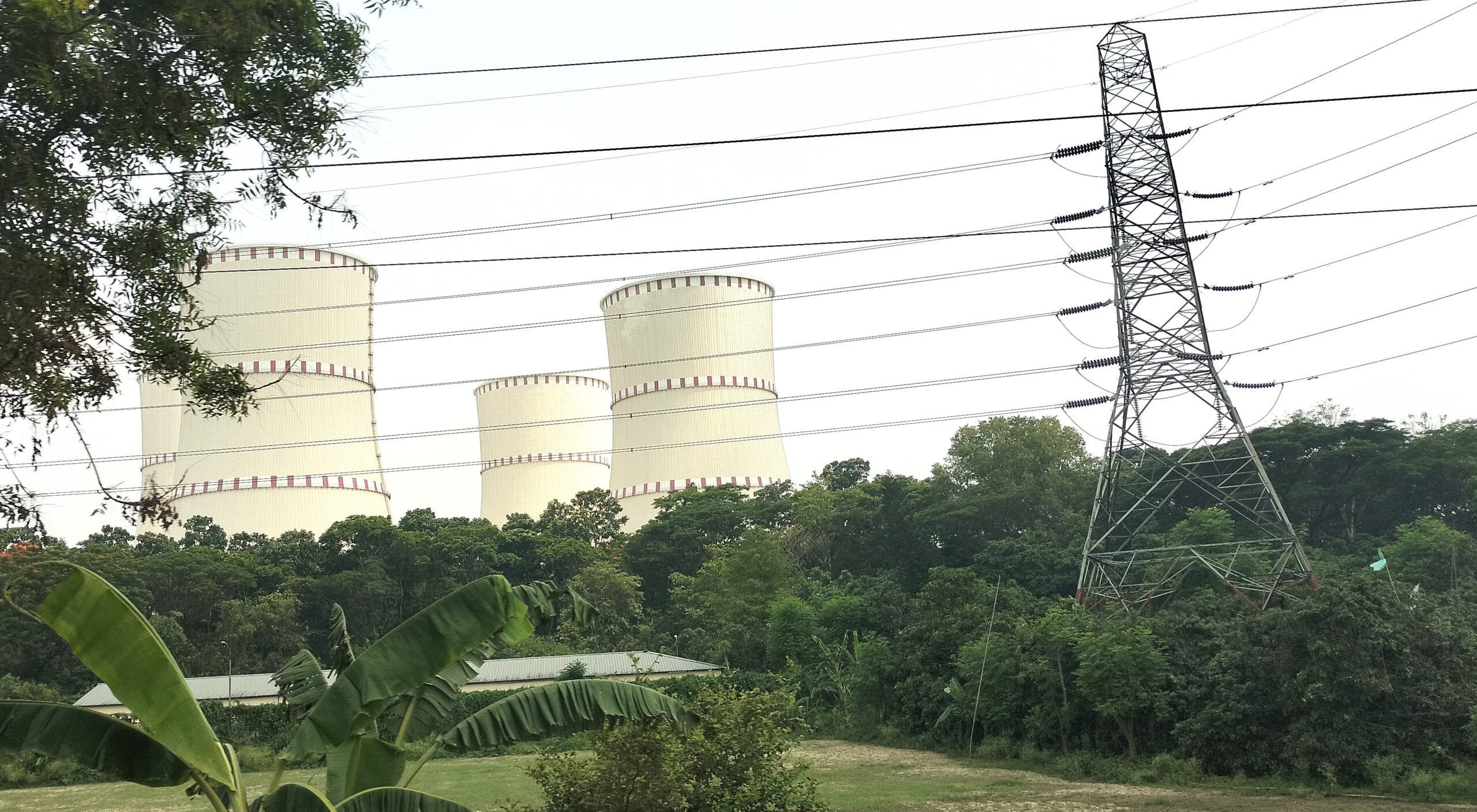
Russia’s state nuclear corporation Rosatom has pledged to connect the first unit of Bangladesh’s Rooppur Nuclear Power Plant to the national electricity grid at the earliest possible opportunity, even as Dhaka presses Moscow to resolve outstanding concerns over the project’s timetable and trial-operation arrangements.
Rosatom director general Alexey Likhachev gave the commitment during a meeting with Bangladesh’s science and technology minister, Faqir Mahbub Anam, in Moscow on Friday. The discussions focused on the progress of the country’s first nuclear power station and preparations for electricity generation from its first reactor.
Likhachev said the first unit, equipped with a Russian-designed VVER-1200 reactor, could be connected to the national grid for trial electricity supply as soon as possible. He described the project as important to Bangladesh’s energy security, adding that nuclear power could provide a reliable, lower-carbon and cost-effective source of electricity.
Anam said the 2,400-megawatt plant was expected to meet about 11 per cent of Bangladesh’s total electricity demand when fully operational. Likhachev also said commissioning and initial start-up activities for the second unit were expected to begin next year.
The meeting included discussions on expanding Bangladesh’s nuclear energy programme and strengthening bilateral cooperation based on experience gained during the Rooppur project.
Dhaka raises concerns over delays
The latest commitment comes against the backdrop of concerns raised by Bangladesh over delays in finalising the project’s construction and financial schedules, as well as proposed changes to the period allocated for testing the reactors before their provisional handover.
In a letter dated 29 September 2026, Bangladesh’s Economic Relations Division (ERD), under the Ministry of Finance, urged Russia’s deputy finance minister, Vladimir Kolychev, to help resolve the outstanding issues concerning the Level-1 Schedule and Financial Schedule under the construction contract.
The letter said Russian state-owned engineering company Atomstroyexport (JSC ASE), the project contractor, had yet to update the schedules in accordance with the general contract.
One of Dhaka’s principal concerns is the proposed reduction in the trial-operation period for the two units. The original contract stipulated 10 months of trial operation before the provisional takeover of each unit.
However, a revised Level-1 Schedule and roadmap submitted by JSC ASE in June 2026 reportedly shortened that period.
The ERD warned that reducing the time available for trial operations could restrict Bangladesh’s ability to verify the contractor’s performance and ensure that the plant meets the required safety standards.
It called for the matter to be resolved in accordance with the contractual provisions, noting that several rounds of negotiations with the contractor and discussions at Joint Coordination Committee meetings had failed to settle the issue.
Project timeline extends to 2027
The Rooppur project is being implemented under an engineering, procurement and construction contract signed between Bangladesh and JSC ASE on 25 December 2015.
According to the ERD’s letter, delays and other unavoidable circumstances led to an extension of the 2016 Intergovernmental Credit Agreement until December 2027 under Protocol 2. The general contract was subsequently extended to the same date.
Additional Agreement 327 established provisional takeover targets for the two units in 2026 and 2027, respectively.
Despite the extensions, the ERD said the contractor had not updated the principal construction and financial schedules to reflect the contractual requirements.
The letter was copied to Denis Mamonov, director of Russia’s Department of Public Debt and Sovereign Financing. It also acknowledged Moscow’s continued support for the project while seeking action to resolve the outstanding contractual matters.
No formal Russian response to the concerns was identified in the correspondence.
Balancing speed with safety
Rooppur, located in Pabna district, is a flagship project in Bangladesh’s efforts to diversify its electricity generation sources and reduce reliance on conventional fuels.
Its two units are designed to provide a combined capacity of 2,400MW. Once operational, the plant is expected to make a substantial contribution to the national grid, although its actual contribution will depend on commissioning, testing and sustained operation.
The latest discussions highlight the challenge facing Dhaka and Moscow: bringing the first reactor online promptly while preserving sufficient time for testing, verification and contractual compliance.
Rosatom’s pledge signals an intention to accelerate progress towards initial electricity generation. However, the outstanding questions over trial operations and the revised project schedules remain important to the safe and orderly handover of the plant.