


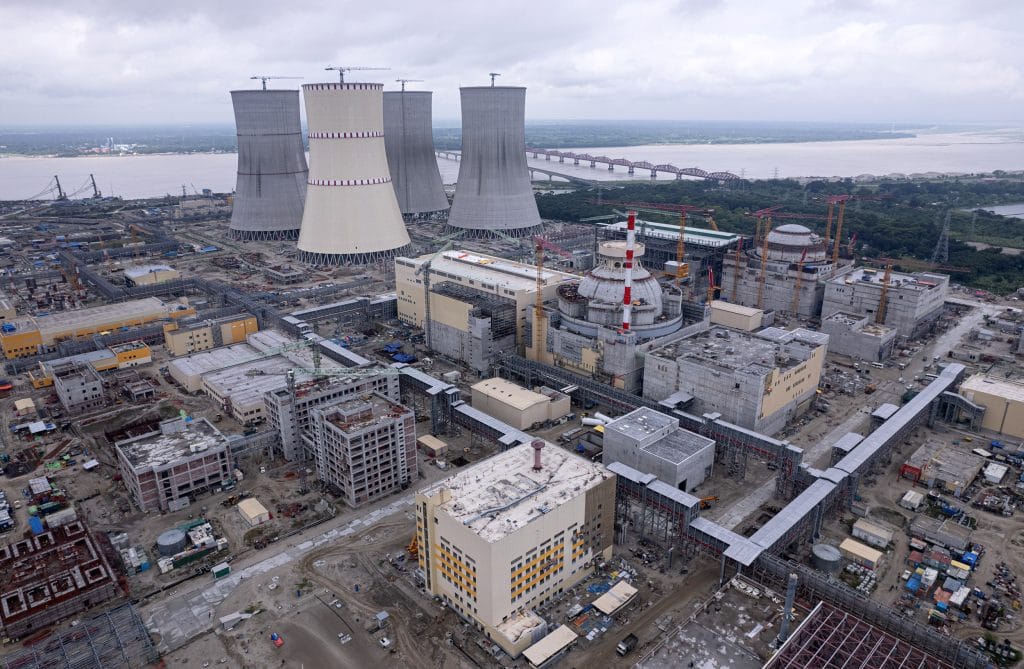
Bangladesh is moving closer to generating electricity from its maiden Rooppur Nuclear Power Plant (PP) after five Russian nuclear experts resolved a major technical problem that had delayed commissioning of the under-construction facility.
The experts worked for more than a month to fix the complex equipment-related problem, paving the way for the first unit to enter the criticality stage and subsequently supply electricity to the national grid.
The Bangladesh Atomic Energy Regulatory Authority (BAERA) has already granted permission for the first unit to achieve “first criticality” — a key stage at which a controlled nuclear chain reaction begins inside the reactor.
Nuclear Power Plant Company Bangladesh Ltd (NPCBL) Managing Director Dr Md Zahidul Hasan confirmed the development, saying the unit could start supplying electricity to the national grid within six to 10 weeks, subject to completion of the required procedures and regulatory approvals.
“From tonight, Unit-1 will take 50 to 70 hours for preparation and then start physical start-up. The plant will be able to start supplying electricity to the grid within six to 10 weeks after completing the procedures,” he said.
Dr Zahidul said five Russian nuclear experts had worked relentlessly for more than a month to make the plant reliable after repairing the complex equipment.
The authority had lost about two months because of the technical problem, he added.
Project officials said commissioning had been held up by a problem with a key valve in the first unit’s safety system. The valve is designed to automatically reduce pressure in the reactor system, making it an important component of the plant’s safety arrangements.
Following the repair work, the relevant equipment underwent a series of tests before BAERA gave permission to proceed with first criticality.
During the first-criticality process, the reactor will initially operate at very low power under tightly controlled conditions. Engineers will test the reactor’s systems, safety equipment and control mechanisms to ensure they are operating as designed.
The process is expected to take around 30 to 40 days, after which the reactor’s power level will gradually be increased if all tests are satisfactory.
In the next phase, reactor power will be raised further and the turbine will be brought into operation. The generator will then be synchronised with the national grid and electricity supplied on a trial basis.
The plant operator will require another operating approval from BAERA before the unit can be connected to the grid.
Officials said the reactor would initially operate at about 3% of its capacity, with output gradually increased to 20–30% as testing progresses.
If the commissioning and safety tests proceed as planned, trial electricity generation and grid connection could begin within the projected six-to-10-week period.
The Rooppur project in Pabna is being built with Russian technology and financing and comprises two units, each with a capacity of 1,200MW.
Once the first unit is connected to the national grid, Bangladesh is expected to become the 33rd country in the world to generate nuclear electricity, marking a major milestone in the country’s power-generation history.