


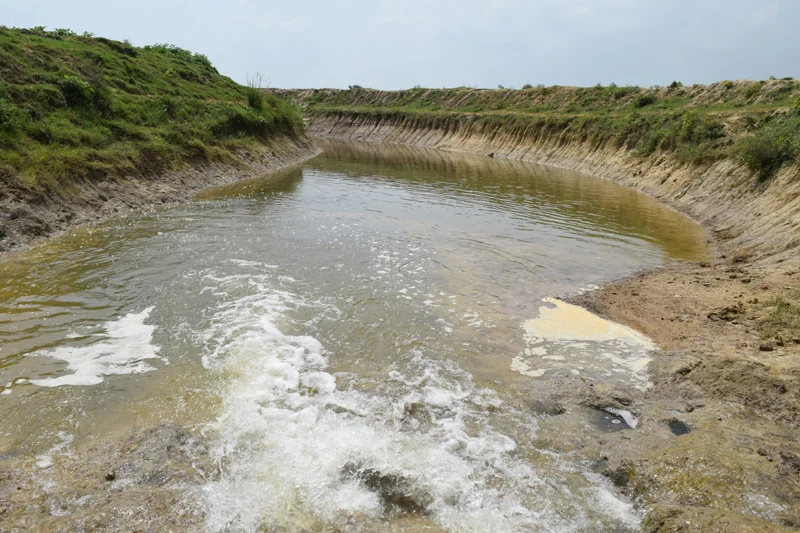
The government is set to launch a Tk1,203.73 crore project to expand safe drinking water and sanitation facilities in the drought-prone Barind region, where groundwater depletion and inadequate sanitation continue to threaten public health and livelihoods.
The four-year scheme aims to install nearly 5,000 deep tube wells, more than 22,000 shallow tube wells and almost 60,000 improved toilets for poor households across 123 upazilas in 16 districts under Rajshahi and Rangpur divisions.
The project is scheduled to be placed before the Executive Committee of the National Economic Council (Ecnec) on October 25 for approval. If approved, it will be implemented from October 2026 to March 2030 with full government funding.
The initiative comes as the Barind region faces mounting pressure on its water resources due to excessive groundwater extraction, declining recharge and the effects of climate change. Water levels fall during the dry season, making access to drinking water increasingly difficult in some areas.
According to the project proposal, 36.4 percent of the population in the region remains outside basic sanitation coverage, highlighting the scale of the infrastructure deficit.
Under the proposed scheme, 59,778 improved latrines will be installed for poor households, alongside 125 public toilets. The plan also includes 4,394 community-based water supply units to widen access to safe drinking water.
To expand water sources, the project proposes 4,829 deep tube wells and 22,176 shallow tube wells. Another 1,113 deep tube wells and 1,399 shallow tube wells will be installed with submersible pumps and reservoirs.
The scheme also includes 1,068 ring wells, 1,797 rainwater harvesting systems and 16 pond-based sand filtration systems to be developed through pond re-excavation.
However, the effectiveness of the initiative will depend on whether the new infrastructure can provide reliable water supplies in an area where groundwater levels are falling. Simply installing more tube wells may not ensure sustainable access if water extraction continues to outpace natural replenishment.
Experts said the region urgently needed alternatives to groundwater, including greater use of surface water and measures to retain rainwater.
They also said canals and ponds should be excavated or re-excavated to capture rainfall, while cross-dams could be built across canals to prevent water from draining away quickly from the elevated Barind landscape.
Even during the monsoon, drought can affect the region during the Aman rice-growing season, They said, underscoring the need to manage available water resources more effectively.
The experts suggest using river water wherever possible and drawing on pond and canal water at the beginning of the Boro cultivation season before turning to groundwater as needed.
They also cal for treating rainwater and directing it underground to replenish depleted aquifers, alongside wider use of surface water sources.
The Planning Commission’s Physical Infrastructure Division held a Project Evaluation Committee meeting on January 26 and recommended implementation of the scheme.
According to the commission’s assessment, the project is expected to improve public health and living standards by expanding safe water supplies and sanitation services across the greater Barind region.
The proposal also aligns with the government’s 2026 election manifesto commitment to develop modern, safe settlements through improved access to safe water and better waste management.