


Garment workers’ representatives have proposed raising the minimum monthly wage in the apparel sector to Tk32,000, arguing that workers need significantly higher pay to cope with the rising costs of food, housing, healthcare and education.
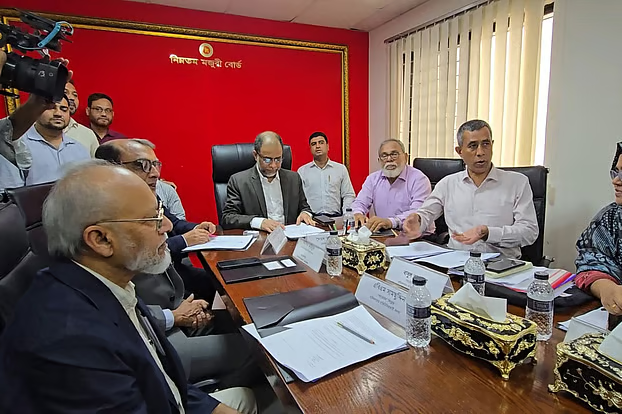
The proposal, placed at the second meeting of the Minimum Wage Board in Dhaka on Monday, also seeks a minimum monthly wage of Tk30,000 for newly recruited and trainee workers.
Explaining the demand, worker representative Babul Akhter said a four-member family needs between Tk45,000 and Tk60,000 a month to meet basic nutritional requirements and cover essential living expenses.
The workers’ representatives, however, considered the industry’s capacity and the prevailing economic situation in proposing Tk32,000 as the minimum wage for the fourth grade, he told a joint briefing after the three-hour meeting.
The employers’ side failed to submit its proposed wage structure at the meeting, despite being scheduled to do so.
ABM Shamsuddin, the employers’ representative and a director of the Bangladesh Garment Manufacturers and Exporters Association (BGMEA), said factory owners needed more time to prepare their proposal as they were busy managing operations amid unrest in industrial areas around Dhaka.
The employers sought seven working days to submit their proposal. The board, however, granted them four working days.
Board chairman Syed Azad Subhani warned that the wage-setting process would not be held up if the employers failed to submit their proposal at the next meeting.
“We will move forward with the decision-making process even if the employers fail to submit their proposal. We will not wait for them,” he said.
Meanwhile, the board decided to visit garment factories in major industrial areas this week to assess workers’ actual living conditions and expectations across different categories of factories.
It also assigned its independent member, University of Dhaka professor Mosleh Uddin Ahmed, to examine international benchmarks and indicators used in fixing minimum wages.
He may consult the university’s Institute of Business Administration (IBA), economists and other experts as part of the exercise.
The board expects to complete the process of determining the new wage structure by December, with the revised rates scheduled to take effect that month.
Workers are expected to receive their increased salaries in the first week of January, according to the board chairman and representatives of both sides.