


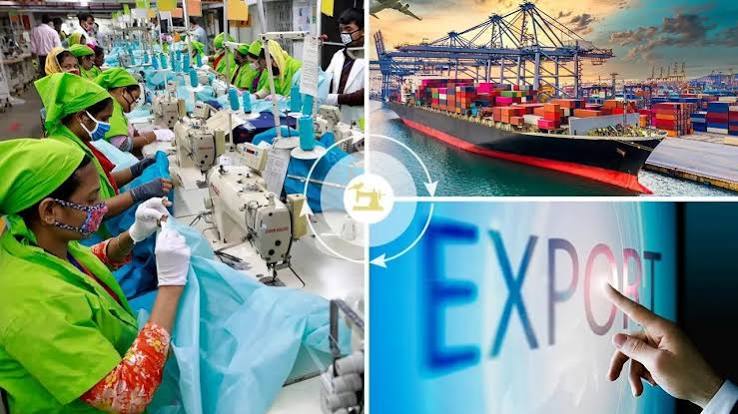
Bangladesh’s apparel exports to the European Union (EU) grew by 2.79 percent in the first four months of the current fiscal year, with Spain emerging as the largest destination after overtaking Germany.
The country shipped garment products worth $6.43 billion to the 27-nation bloc during July-October, up from $6.26 billion in the same period last fiscal year, according to an analysis of Export Promotion Bureau (EPB) data.
The growth, however, was heavily concentrated in Spain, which accounted for nearly 98 percent of the increase in Bangladesh’s total apparel exports to the EU during the period.
Exports to Spain rose 13.36 percent year-on-year to $1.448 billion, an increase of $170.6 million.
Spain now accounts for 22.51 percent of Bangladesh’s total apparel exports to the EU, narrowly ahead of Germany, which had long been the country’s largest market in the bloc.
Shipments to Germany remained virtually stagnant at $1.439 billion, posting a marginal growth of just 0.01 percent. Its share of Bangladesh’s EU apparel exports stood at 22.37 percent.
Among other major destinations, exports to the Netherlands increased 8.68 percent to $784.6 million, while those to Poland rose 2.85 percent to $545.9 million.
However, shipments to France fell 7.87 percent to $611.1 million. Exports to the remaining EU countries collectively declined 1.34 percent to around $1.6 billion.
The five largest EU markets — Spain, Germany, the Netherlands, France and Poland — accounted for 75.1 percent of Bangladesh’s total apparel exports to the bloc during the four-month period.
The growth momentum continued in October, when Bangladesh’s garment shipments to the EU rose 1.10 percent year-on-year to $1.53 billion.
Germany was the largest single destination that month, with exports worth $315.7 million, up 0.59 percent from a year earlier.
Shipments to Spain increased 11.95 percent to $299.2 million, while exports to the Netherlands rose 7.62 percent to $187.1 million.
In contrast, exports to France declined 15.22 percent to $161.7 million, while those to Poland fell 4.49 percent to $144 million.
Mohiuddin Rubel, a former director of the Bangladesh Garment Manufacturers and Exporters Association (BGMEA), said the growth in apparel exports to Europe was encouraging despite the region’s economic difficulties and uncertainty in the global market.
Although the growth rate was slightly below the country’s overall export growth, the positive trend reflected the sector’s resilience and capacity to withstand external pressures, he said.
However, frequent disruptions in electricity and energy supplies were holding back the industry’s export potential, Rubel said.
Uninterrupted power and energy supplies are essential to maintaining production capacity, ensuring timely shipment of goods and sustaining competitiveness in international markets, he added.