


Bangladesh has unveiled a long-term Energy and Power Sector Master Plan for 2026–2050, projecting electricity demand to rise to 59 gigawatts by mid-century from around 17 gigawatts at present, a surge expected to intensify environmental and social pressures.
The plan was presented on Wednesday to Chief Adviser Professor Muhammad Yunus, outlining a roadmap to secure reliable, affordable and sustainable energy to support the country’s expanding economy.
The strategy will be implemented in three phases—2026–2030, 2030–2040 and 2040–2050—and will require an estimated $70–85 billion in investment in the primary energy sector and $107.25 billion in the power sector over the period. This brings total projected investment needs to between $177.25 billion and $192.25 billion by 2050.
While overall emissions are expected to rise as power generation expands, the plan envisages a sharp improvement in efficiency. Emissions per unit of electricity are projected to fall from 0.62 to 0.35 tonnes of CO₂ per megawatt-hour through the adoption of cleaner and more efficient technologies.
Through climate-related initiatives, Bangladesh expects to cut carbon dioxide emissions by 64.5 million tonnes annually by 2050, with cumulative reductions estimated at around 1.6 billion tonnes.
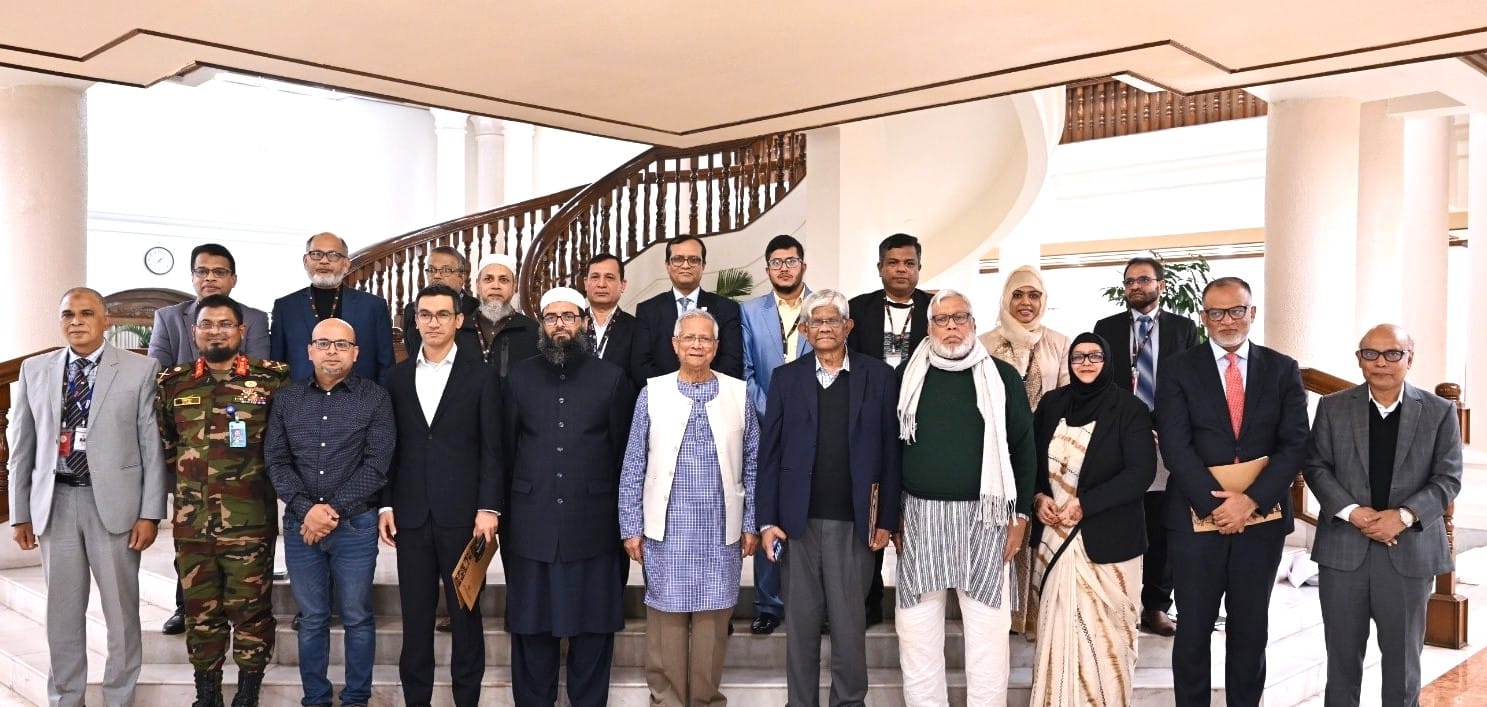
The plan was discussed at a meeting chaired by Professor Yunus at the state guest house Jamuna. Participants included Power and Energy Adviser Muhammad Fouzul Kabir Khan, Finance Adviser Dr Salehuddin Ahmed, Commerce Adviser Sheikh Bashir Uddin, Industries Adviser Adilur Rahman Khan, Bangladesh Investment Development Authority (BIDA) Executive Chairman Chowdhury Ashik Mahmud Bin Harun, and senior officials from relevant ministries.
According to the Ministry of Power, Energy and Mineral Resources, the master plan aims to optimise the use of domestic resources, strengthen energy security, improve efficiency and ensure environmental responsibility, ensuring access to affordable and sustainable primary energy and electricity for all citizens.
Officials also reviewed policy gaps in Bangladesh’s previous three energy master plans.
Under the first phase (2026–2030), priority projects will include an offshore exploration round, boosting domestic gas production, ensuring liquefied natural gas (LNG) supply security, expanding refinery capacity and increasing strategic fuel storage.
Longer-term strategic initiatives include offshore gas development, large-scale expansion of refining and petrochemical industries, development of hydrogen and ammonia infrastructure, geothermal energy projects, and tidal and ocean wave-based power generation.
“This sector is the lifeblood of Bangladesh’s economy,” Professor Yunus said. “If it is strong, the economy will stand firm. The lives of every citizen are affected by it.”
He instructed the government to establish an independent research and development institution dedicated to the power and energy sectors, stressing that it should operate outside ministerial control and maintain links with international research bodies to support evidence-based policymaking.
Criticising what he described as fragmented planning in the past, the chief adviser said previous projects had often been developed in inappropriate locations and structures. “We must rethink everything from the beginning and ensure a proper framework and rules so that such mistakes are not repeated,” he said, also calling for research into alternative energy sources.
The ministry said the master plan demonstrates how Bangladesh can limit climate impacts by improving efficiency and increasing the use of cleaner fuels, while continuing to expand energy supply and create economic opportunities.
Several reforms linked to the plan have already been implemented, including the repeal of the 2010 Speedy Supply of Power and Energy (Special Provisions) Act—commonly known as the quick rental law—and the adoption of the Merchant Power Policy 2025, Renewable Energy Policy 2025, Rooftop Solar Programme 2025 and Net Metering Guideline 2025.
The meeting also reviewed recommendations covering power generation, transmission and distribution, environmental and economic sustainability, and institutional reform, with the stated goal of making Bangladesh’s primary energy sector more secure, efficient, less import-dependent and financially sustainable by 2050.