


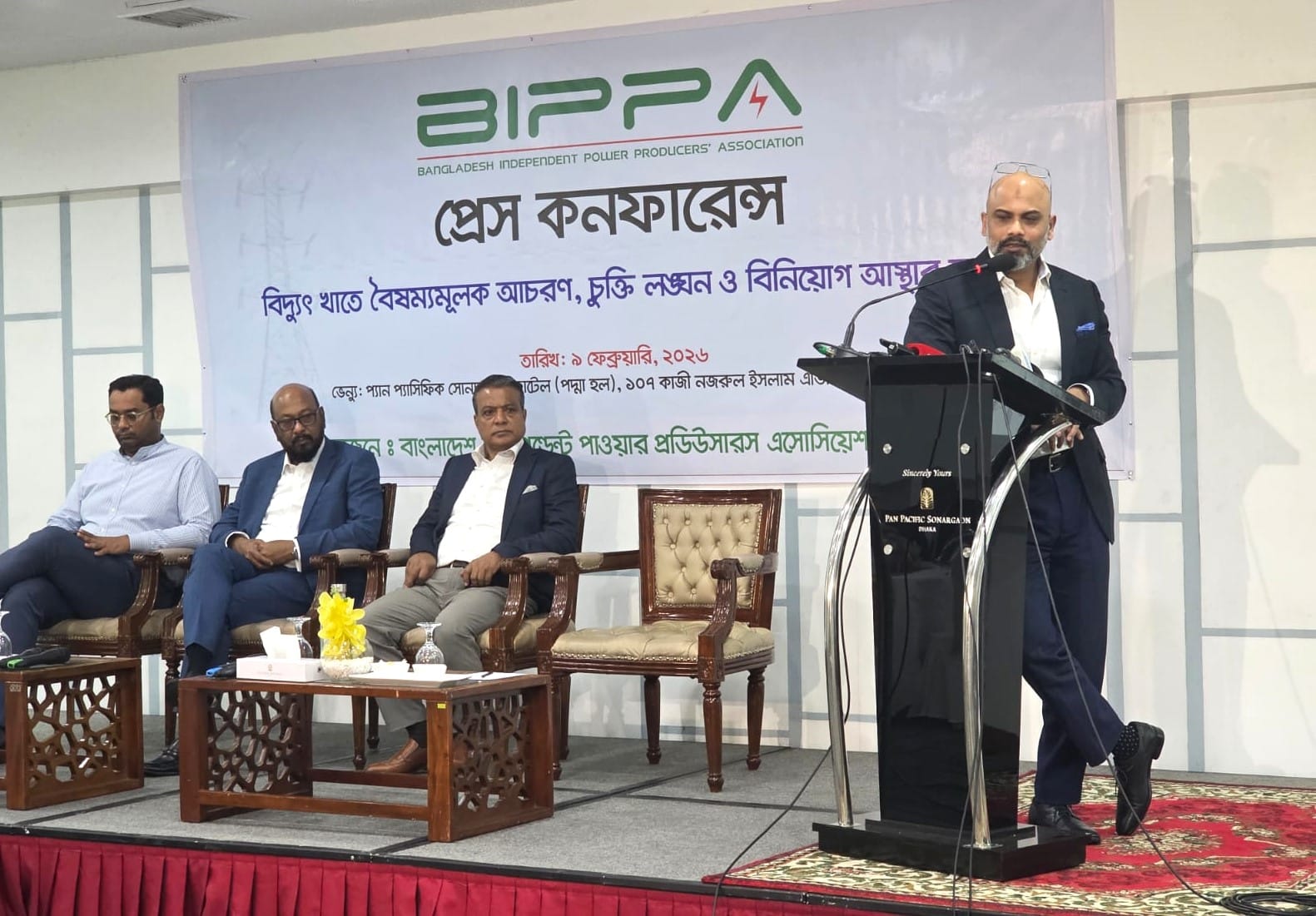
Bangladesh’s independent power producers have urged the government to release at least 60 per cent of outstanding payments owed by the state-run Bangladesh Power Development Board (BPDB), warning that prolonged delays risk triggering widespread electricity shortages ahead of peak summer demand and Ramadan.
At a press conference in Dhaka on Monday, the Bangladesh Independent Power Producers’ Association (BIPPA) said furnace oil–based plants are owed around Tk 14,000 crore (approximately $1.3bn), with some bills unpaid for eight to ten months. When coal-fired and other privately operated plants are included, total arrears across the sector amount to nearly Tk 30,000 crore, the association said.
BIPPA President David Hasnat said producers had continued to generate electricity despite extended non-payment, but cautioned that the situation was becoming untenable.
“If at least 60 per cent of the arrears is not paid immediately, it will be extremely difficult to keep power plants running,” he said. “Without payments, fuel imports will be disrupted and electricity generation will suffer.”
The association warned that large-scale load-shedding could become unavoidable in the coming months if the cash-flow crisis persists. Electricity demand is expected to exceed 18,500 megawatts during the summer peak, coinciding with the irrigation season.
Industry representatives said delayed payments, combined with currency volatility and high borrowing costs, have already resulted in financial losses estimated at Tk 8,000 crore for domestic producers. Many operators are reportedly struggling to service loans, purchase spare parts and finance fuel imports, relying on costly short-term borrowing to remain operational.
Under the terms of standard Power Purchase Agreements (PPAs), producers are entitled to suspend supply in the event of non-payment. However, BIPPA leaders said local companies had refrained from doing so in the national interest, continuing generation to stabilise the grid.
Producers also accused BPDB of imposing so-called liquidated damages when output falls due to fuel shortages stemming from unpaid bills. They alleged that such penalties have been deducted from outstanding invoices, even as review petitions remain pending before the Bangladesh Energy Regulatory Commission (BERC).
BIPPA further claimed there was unequal treatment between domestic and foreign-owned plants. It cited instances where penalties were withdrawn following legal review in some cases, while other local operators continued to face deductions under similar contractual conditions. The association also referred to India’s Adani Power, alleging that no comparable penalties had been imposed despite reduced supply linked to payment issues.
Former BIPPA chairman Imran Karim warned that sustained non-payment and unilateral deductions could increase loan defaults, strain the banking sector and undermine investor confidence in Bangladesh’s power industry.
The association called on the government to honour contractual obligations, immediately clear at least 60 per cent of outstanding dues and adopt a uniform policy for both local and foreign producers, arguing that timely settlement is essential to safeguarding energy security and maintaining uninterrupted supply.