


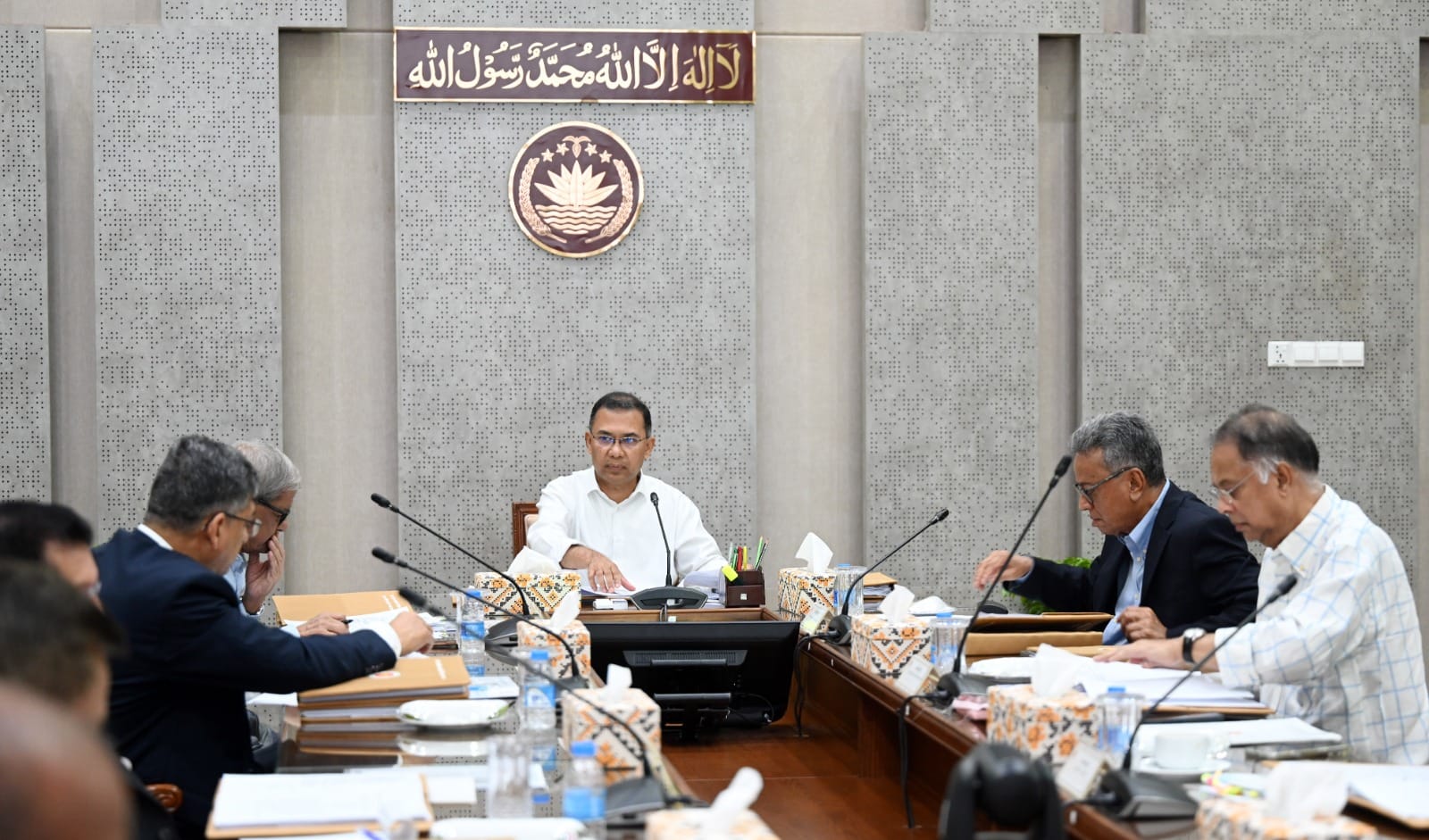
The Executive Committee of the National Economic Council (ECNEC) has declined a proposal to construct a 21-storey modern building at the Bangladesh Secretariat, even as it approved 14 development projects involving a total estimated cost of Tk 13,445.41 crore.
The decision came at the 10th ECNEC meeting of the 2025–26 fiscal year, chaired by Prime Minister and ECNEC Chairperson Tarique Rahman at the Cabinet Division conference room in the capital.
The rejected project, proposed by the Public Works Department, aimed to ease acute space constraints at the Secretariat by constructing a 21-storey building with four basements at a cost of Tk 649.25 crore.
The project was designed to accommodate more ministries and government offices while improving the working environment for officials.
According to planning officials, the Secretariat’s existing infrastructure has long struggled to cope with the growing number of personnel and visitors, including government officials, public representatives, development partners, and citizens.
The proposed high-rise building was expected to add around 287,636 square feet of usable space—meeting roughly 42.3 percent of current demand.
The design included modern facilities such as internal water supply and sewerage systems, advanced electrical and gas connections, underground water reservoirs, and enhanced safety features.
Plans also featured two substations, generator systems, central air conditioning, and multiple elevators—including six passenger lifts, six fire lifts, and two bed lifts.
Additionally, the project included provisions for 20 modern conference rooms and upgraded fire safety and communication systems.
Despite these planned benefits, the project did not receive ECNEC approval, effectively putting the construction initiative on hold for now.
In contrast, the committee approved 14 projects spanning infrastructure, healthcare, transport, and economic resilience.
Of the total approved outlay, Tk 8,089.56 crore will be financed from government funds, Tk 5,340.26 crore through project loans, and Tk 15.59 crore from the concerned organizations’ own resources.
Key approvals include projects to expand urban healthcare access, modernize customs infrastructure, and control livestock diseases.
The transport sector received significant attention, with multiple road and bridge development projects, alongside two railway initiatives aimed at improving connectivity and maintenance.
Local government projects also featured prominently, focusing on urban infrastructure, sanitation worker housing, and emergency water supply in Dhaka.
Officials said the approved projects reflect the government’s continued focus on strengthening infrastructure and public service delivery, although the shelving of the Secretariat building highlights ongoing scrutiny over large-scale administrative expenditures.