


As global tensions continue to rise following the Iran-Israel conflict and intensifying strategic competition among the United States, China and other regional powers, Bangladesh finds itself navigating an increasingly complex geopolitical and energy landscape.
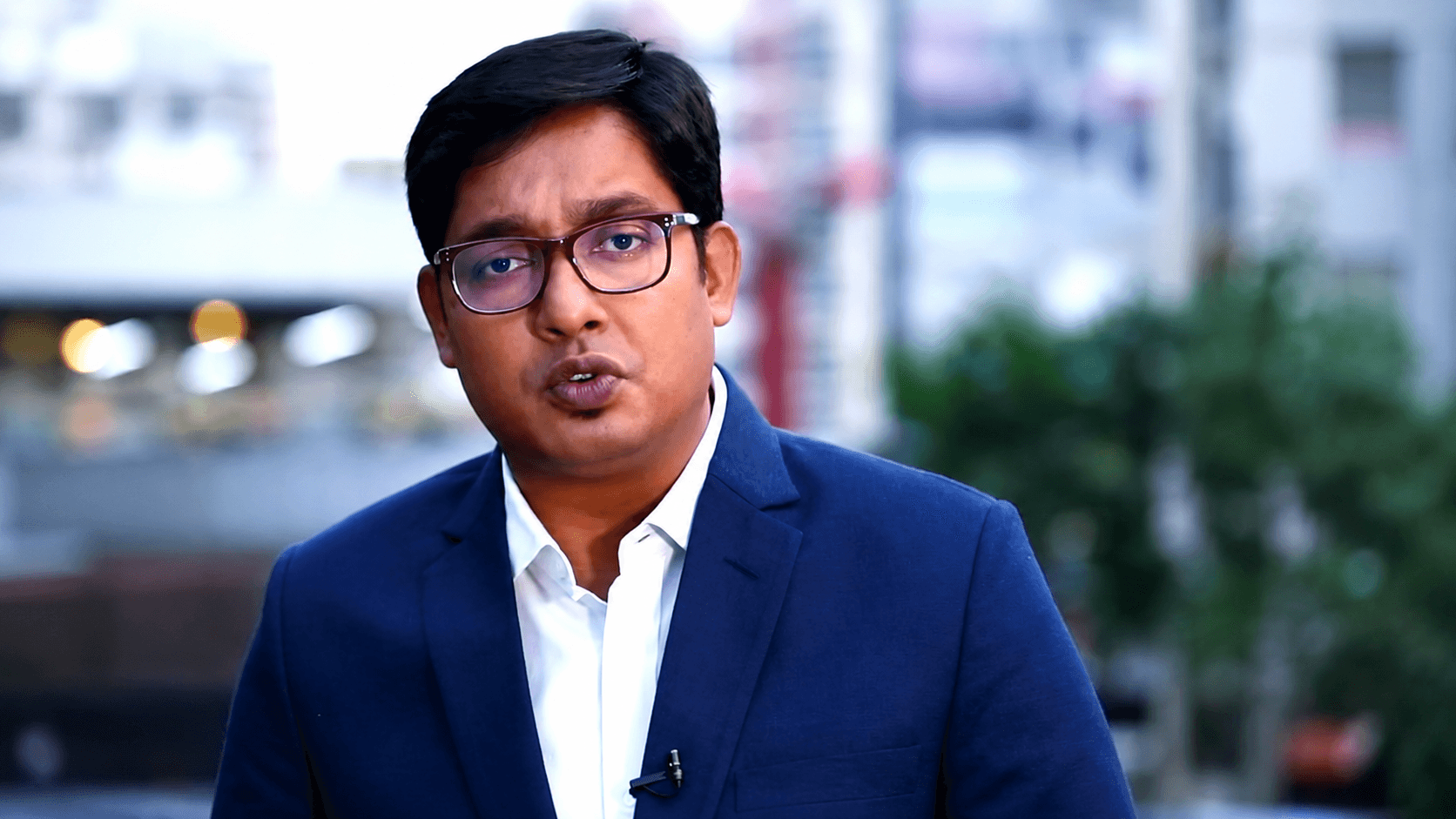
In this exclusive interview with Just Energy News Editor Md Shamim Jahangir, Mahfuz Mishu, Foreign Affairs Editor of Jamuna TV, discusses the long-term impact of the Middle East crisis on Bangladesh’s economy, the future of energy diplomacy, the strategic interests of major powers in the Bay of Bengal region, and the importance of prioritising Bangladesh’s national interest above all else.
Mishu, who has reported extensively on diplomacy, politics, power and energy issues for nearly two decades, argues that Bangladesh must strengthen its negotiating capacity, diversify its energy sources, modernise its power grid and avoid overdependence on any single global power.
Md Shamim Jahangir: Assalamu Alaikum and welcome to Just Energy News. As we can see, the world is passing through an extremely unstable geopolitical moment. Bangladesh is also facing the consequences of that instability. The Iran-Israel conflict, alongside the involvement of the United States, has triggered new political and economic alignments globally. Energy diplomacy has now become a major issue in international relations.
Do you believe Bangladesh’s diplomacy is currently strong enough to deal with this crisis? And how significantly has the Iran-Israel conflict affected Bangladesh’s economy?
Mahfuz Mishu: Wa Alaikum Assalam. Thank you for having me.
First of all, I think it would be more accurate to describe the current situation not merely as an Iran-Israel conflict, but rather as a broader Iran-Israel-United States confrontation. This conflict has not only affected Bangladesh; it has shaken the global economy as a whole.
The most immediate impact has been on the global energy market. We witnessed attacks affecting critical regional energy infrastructure, disruptions in shipping through the Strait of Hormuz, and a sharp rise in uncertainty surrounding oil supplies. Although active hostilities may appear to have eased temporarily, the market still remains extremely fragile.
Energy analysts across the world are warning that even if the conflict fully de-escalates, the global economy may require until at least 2027 to absorb the damage already caused. Oil prices are unlikely to return quickly to previous levels. Whether crude prices can sustainably fall below three-digit figures remains uncertain.
For Bangladesh, the consequences are severe because we are heavily dependent on imported fuel. Rising global oil prices automatically increase our domestic energy costs. The government initially tried to avoid raising fuel prices under the monthly adjustment formula, but eventually there was no alternative.
Bangladesh is already under pressure from IMF-related fiscal conditions. The current government inherited a difficult economic situation after the interim administration, and this external shock has made matters even worse.
Now the impact is spreading throughout the economy. Transportation costs have increased. Bus fares have risen. Farmers are paying more for irrigation. LPG prices are hurting ordinary families. Electricity tariffs are also under pressure.
Without clear policy planning and long-term energy reforms, these pressures could create lasting economic damage.
Md Shamim Jahangir: Bangladesh has recently signed an energy cooperation agreement with the United States at a time when a new geopolitical alignment appears to be emerging globally. Do you see this agreement as positive for Bangladesh?
Mahfuz Mishu: At this stage, I do not think anyone can honestly describe the agreement as entirely positive or entirely negative because the details are still not fully transparent.
What we do know is that Bangladesh has struggled for years to attract meaningful international investment into offshore oil and gas exploration, despite resolving maritime disputes with both India and Myanmar more than a decade ago.
From 2013 onward, Bangladesh repeatedly attempted to attract international oil companies through Production Sharing Contracts (PSCs), but there was limited response. One major reason was insufficient geological data regarding our offshore reserves.
Now, after recent diplomatic developments with Washington, it appears that deep-sea exploration may finally begin with stronger international participation, potentially involving American companies or a US-led consortium.
However, the larger issue is this: Bangladesh failed for many years to prioritise its own domestic energy capacity. We neglected onshore exploration. We remained dependent on international companies for gas production. Even today, a single foreign company supplies more than half of Bangladesh’s gas output.
At the same time, we also failed to seriously invest in renewable energy and domestic resource development.
Now the government has announced ambitious solar targets, including plans to generate 10,000 megawatts from solar power by 2030. But achieving that target is extraordinarily difficult in a densely populated country like Bangladesh.
Where will the land come from? How will these projects connect to the national grid? How will transmission infrastructure be upgraded?
These are enormous challenges.
The key issue is not whether the agreement is with the United States, China, Europe or India. The key issue is whether Bangladesh has properly evaluated feasibility, technology transfer, land acquisition requirements, financing structures and long-term national benefit.
Md Shamim Jahangir: You suggested earlier that American companies could play a larger role in Bangladesh’s energy sector in the future. Why do you think that is happening?
Mahfuz Mishu: This is directly connected to geopolitics.
Bangladesh’s geographical position has become increasingly important due to the growing strategic competition between the United States and China. The Bay of Bengal region is now viewed as a highly sensitive geopolitical space.
The United States has its Indo-Pacific Strategy. China has the Belt and Road Initiative. India also has its own strategic interests in the region.
Bangladesh sits at the centre of these competing interests.
China has already played a dominant role in many major infrastructure and energy projects in Bangladesh. Naturally, Washington is closely observing that expansion of Chinese influence.
At the same time, Bangladesh’s maritime location, trade routes and proximity to Myanmar have increased its strategic importance.
The Rohingya crisis also contributes to this reality. Instability in Myanmar creates regional security risks involving trafficking, transnational crime and geopolitical competition. Therefore, Bangladesh has become strategically significant not only economically, but also from a broader security perspective.
As a result, global powers want influence here.
The danger for Bangladesh is that we may become merely a geopolitical playground for larger powers unless we negotiate carefully and prioritise our own national interests.
Md Shamim Jahangir: If Bangladesh becomes too closely aligned with Washington, could that negatively affect relations with China and India?
Mahfuz Mishu: In diplomacy, no country acts out of charity or emotion. Every country protects its own interests.
China invests in Bangladesh because it serves China’s interests. India invests because it serves India’s interests. The United States will do the same.
Therefore, Bangladesh’s responsibility is not to become loyal to any particular power bloc. Our responsibility is to protect Bangladesh’s interests through balanced diplomacy.
This is why the current government’s slogan of “Bangladesh First” is extremely important.
If a foreign country invests here, Bangladesh must ask: What are we receiving in return? What are the risks? Are our long-term economic and strategic interests protected?
This requires strong negotiators, skilled diplomats and technically competent policymakers.
Unfortunately, many concerns remain regarding whether Bangladesh always negotiates from a position of strength. Sometimes there are fears that bureaucratic weakness, political pressure or corruption reduce our bargaining capacity.
That is where the real challenge lies.
Md Shamim Jahangir: Do you think Bangladesh is currently protecting its interests effectively.
Mahfuz Mishu: It is still too early to make a definitive judgment about the current government because it has only recently taken office.
However, there must be greater parliamentary oversight regarding international agreements, especially in the energy sector.
Large-scale agreements involving foreign companies should not remain opaque. They should be discussed openly in Parliament and reviewed carefully through parliamentary committees.
Bangladesh cannot afford to sign strategic energy deals without transparency and accountability.
At the same time, we also need realism. Bangladesh remains heavily dependent on imported energy and lacks sufficient domestic extraction capacity. Therefore, complete disengagement from foreign partnerships is impossible.
The objective should not be isolation. The objective should be smarter negotiation.
Md Shamim Jahangir: What lessons should Bangladesh learn from the Iran-Israel conflict?
Mahfuz Mishu: The biggest lesson is that Bangladesh must strengthen its own energy security.
The COVID-19 pandemic taught us that depending entirely on foreign healthcare systems was dangerous. Yet after the pandemic, we still failed to build a sufficiently strong domestic healthcare infrastructure.
Similarly, this energy crisis should teach us the importance of domestic energy resilience.
We must strengthen BAPEX. We must expand fuel storage capacity. We must modernise transmission infrastructure. We must diversify energy sources.
Bangladesh also urgently needs to complete strategic projects such as the second refinery and fully operationalise the Single Point Mooring system.
At present, if global fuel supplies were disrupted for several months, Bangladesh would face enormous pressure.
That is a national security concern.
Energy security is not only about importing fuel. It is about ensuring stability, affordability and resilience.
Md Shamim Jahangir: There are allegations that local state-owned companies are being neglected while subsidies continue flowing to large foreign-linked projects. Is Bangladesh weakening its own capabilities?
Mahfuz Mishu: This is one of the most important questions.
BAPEX has repeatedly demonstrated that it is capable of conducting many onshore exploration activities successfully and at relatively low cost.
Yet historically, there has often been greater enthusiasm among sections of policymakers and bureaucrats to involve foreign companies rather than strengthening national institutions.
Why does this happen? Many people believe that foreign-linked projects create larger financial opportunities for influential groups.
As massive investments entered Bangladesh’s power and energy sector over the past decade, an oligarchic business structure also emerged around those investments.
These interest groups have not disappeared.
As a result, local companies frequently face bureaucratic obstacles while foreign projects move forward rapidly.
This creates long-term structural weakness within the national energy sector.
Md Shamim Jahangir: So are ordinary citizens effectively paying the price for policy failures?
Mahfuz Mishu: Absolutely.
The true meaning of energy security is that energy remains affordable and accessible for ordinary people.
Today, low-income and middle-income families are under severe pressure. LPG prices have increased. Transport costs have risen. Household expenses continue climbing.
Yet people remember that when global oil prices were low for several years, domestic prices in Bangladesh did not decrease proportionately. State-owned corporations made enormous profits during those years, but consumers did not receive equivalent relief.
Now, whenever global prices rise, automatic adjustment formulas are suddenly enforced.
That creates frustration.
The question ordinary citizens ask is very simple: if the state earned large profits during good years, why is the burden placed entirely on consumers during difficult years?
Md Shamim Jahangir: How would you describe Bangladesh’s current diplomatic relationship with India?
Mahfuz Mishu: Bangladesh-India relations are always emotionally and politically sensitive.
India is our largest neighbour. Geography makes cooperation unavoidable. At the same time, relationships with neighbours are naturally complicated everywhere in the world.
Bangladesh must maintain constructive relations with India, but those relations must be based on dignity, equality and mutual respect — not dependency.
We should remember that Bangabandhu Sheikh Mujibur Rahman moved quickly after independence to ensure that Bangladesh remained fully sovereign in administration and governance, despite India’s crucial support during the Liberation War.
That historical lesson remains important today.
Bangladesh should neither engage in blind anti-India rhetoric nor unquestioning appeasement. Both extremes are harmful.
Instead, Bangladesh must negotiate with India pragmatically on issues such as water sharing, border management, electricity imports, regional connectivity and trade.
The same principle applies to all major powers: the United States, China, India or anyone else.
No foreign power is our permanent “friend.” They are strategic partners pursuing their own interests.
Our responsibility is to protect Bangladesh’s interests with confidence and self-respect.
Md Shamim Jahangir: Finally, do you remain optimistic about Bangladesh’s future energy diplomacy?
Mahfuz Mishu: Yes, I remain cautiously optimistic.
Bangladesh has repeatedly demonstrated resilience during difficult periods in history.
The country survived enormous challenges after independence. It adapted after the Rana Plaza tragedy. It expanded economically despite multiple crises.
Now the challenge is whether policymakers can learn from the present energy crisis and adopt long-term, realistic and nationally focused strategies.
Energy security should no longer be treated as a short-term political issue. It must become part of Bangladesh’s broader national security and economic planning.
If Bangladesh can modernise its energy infrastructure, strengthen domestic capacity, diversify partnerships, reduce corruption and negotiate intelligently with global powers, then the country can emerge stronger from this period of instability.
But everything depends on one principle: Bangladesh must always place its own state interest first.