


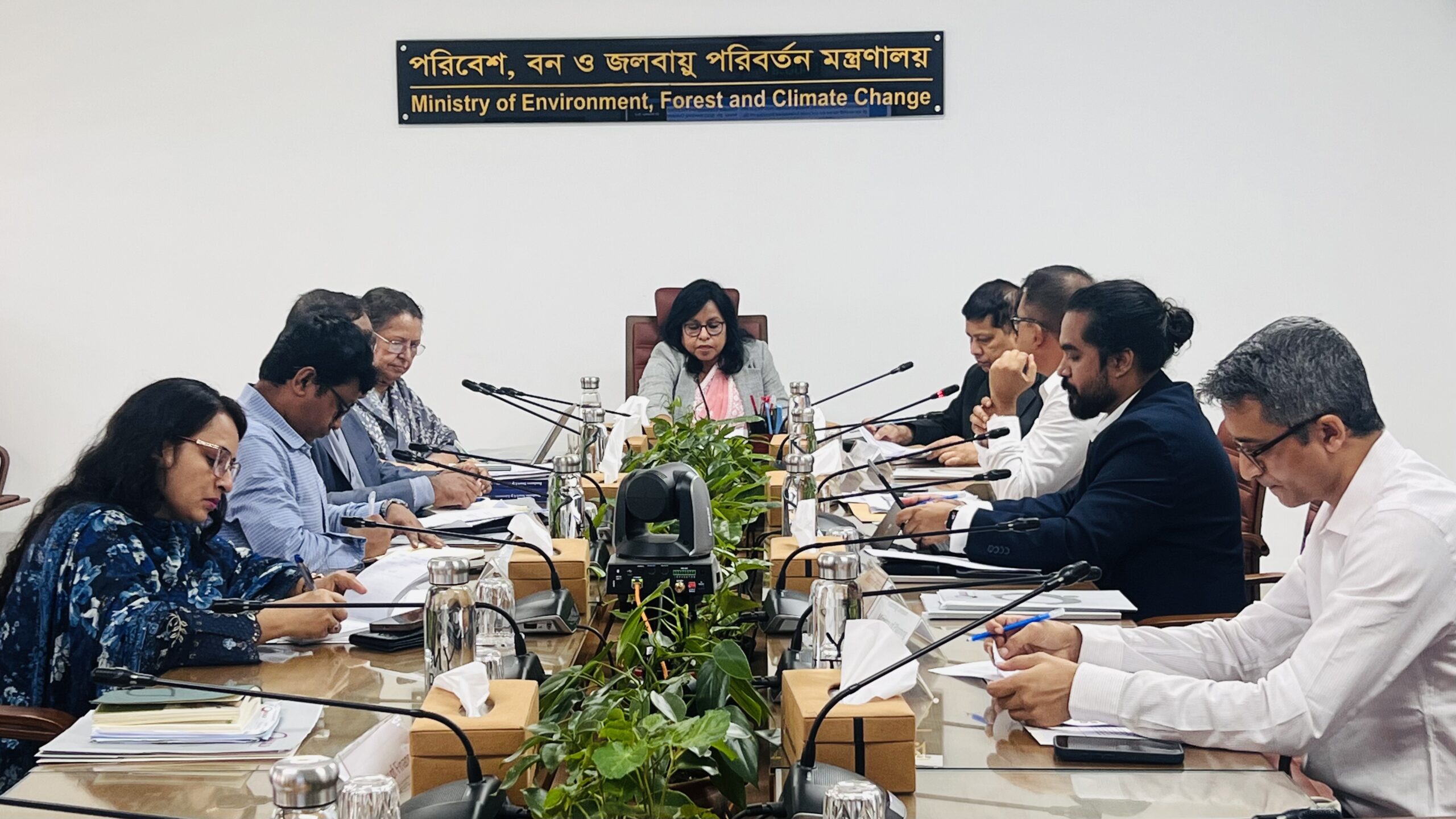
Bangladesh is stepping up efforts to transform plastic waste into a valuable industrial resource, with government officials and business leaders calling for a national circular economy framework to boost recycling, support the country’s garment sector and meet increasingly stringent European sustainability requirements.
The proposals emerged during the fifth Sustainability & Green Growth Working Committee meeting, organised by Business Initiative Leading Development (BUILD) in collaboration with the Ministry of Environment, Forest and Climate Change (MoEFCC). The meeting brought together senior government officials, industry representatives and development partners to discuss policy reforms aimed at strengthening Bangladesh’s plastic recycling sector.
Dr Fahmida Khanam, Secretary in Charge at the MoEFCC, said Bangladesh’s commitments under international environmental agreements, including the UN Framework Convention on Climate Change (UNFCCC) and the UN Environment Programme (UNEP), require the country to accelerate the implementation of a circular economy. She added that compliance with European Union circularity standards is becoming increasingly important for Bangladesh’s export-oriented industries.
“The government’s priority is to promote green business and sustainable economic growth,” she said, urging closer cooperation between policymakers and the private sector.
The ministry also confirmed plans to phase out selected single-use plastic products, beginning with plastic-stick cotton buds, drink stirrers and straws. Officials acknowledged that manufacturers would require a transition period to adapt production and called for further consultation with affected industries.
Md Rezaul Karim, Joint Secretary at the ministry, said Extended Producer Responsibility (EPR) measures would be introduced soon, while work continues to establish standards for recycled PET (rPET). Officials also indicated a preference for compostable plastics over biodegradable alternatives, citing concerns that some biodegradable materials could contribute to microplastic pollution.
During the meeting, BUILD Chief Executive Ferdaus Ara Begum presented a policy paper highlighting the economic potential of expanding plastic-to-textile recycling. The study estimated that Bangladesh generates more than 821,000 metric tonnes of plastic waste annually, yet only 36% is recycled, with much of the sector operating informally.
According to the report, developing a formal circular plastic-to-textile economy could generate an additional US$4-5 billion in garment exports, reduce reliance on imported man-made fibres and strengthen Bangladesh’s compliance with the EU Green Deal and emerging sustainability regulations.
The report recommended the creation of a National Circular Economy Policy, supported by a dedicated Circular Economy Council to coordinate government agencies and industry stakeholders. It also called for improved waste collection systems, greater traceability, national recycling standards and ISO 15270 pre-shipment certification for imported PET scrap.
Representing the Bangladesh Garment Manufacturers and Exporters Association (BGMEA), Director Sheikh Hossain Mohammad Mustafiz stressed the importance of establishing an organised waste collection network, including designated collection centres and standardised pricing mechanisms. He also argued that businesses involved in waste collection should be formally licensed to strengthen supply chains for recycling industries and attract foreign investment.
Representatives from other ministries and organisations raised additional concerns, including the need to prevent hazardous waste imports, improve industrial water management and coordinate sustainability initiatives across government agencies.
Closing the meeting, Additional Secretary Navid Shafiullah called for each ministry and participating organisation to appoint a dedicated focal point to improve coordination and ensure the continuity of Bangladesh’s sustainability agenda.
The meeting was attended by representatives from several government departments, including the Ministries of Commerce and Industries, the National Board of Revenue, the Department of Environment and other public agencies, alongside private sector stakeholders and development partners.