


The government has moved to introduce a new policy framework for development project implementation and revise the existing cost structure, aiming to address long-standing delays and cost escalations.
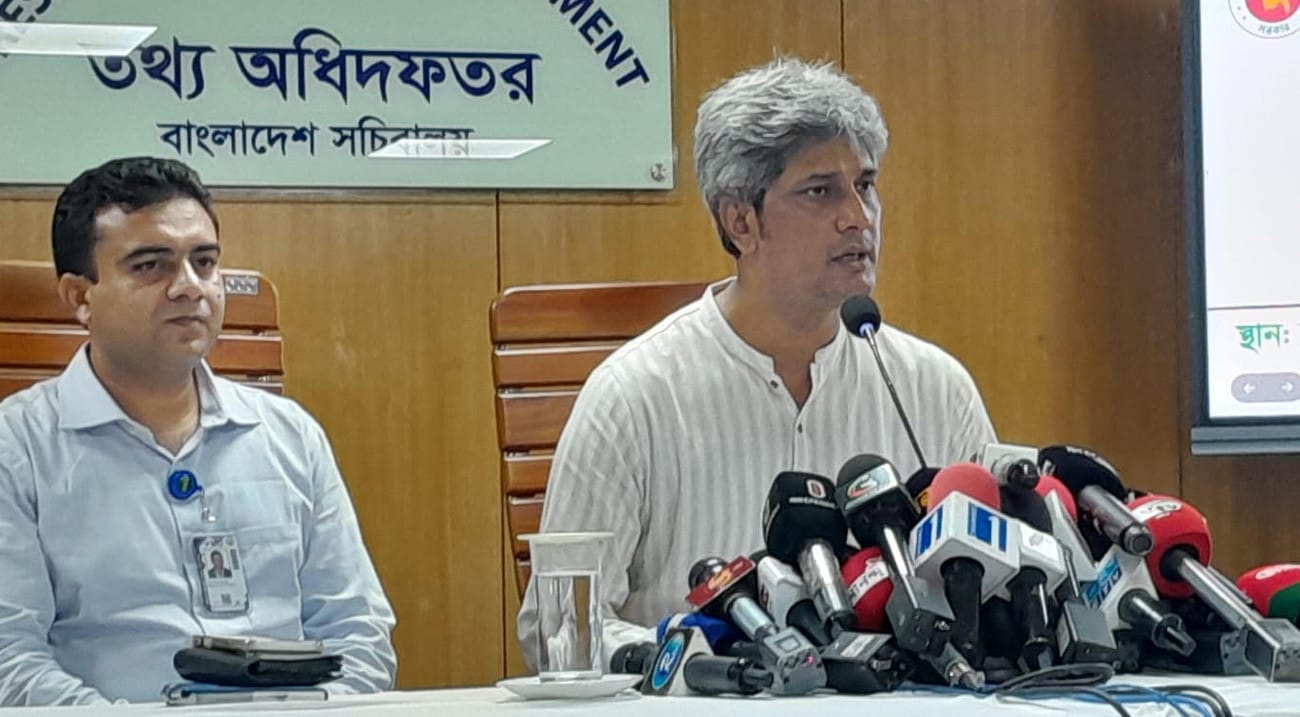
State Minister for Planning Zonayed Saki announced the initiatives on Wednesday at a press briefing after the ECNEC meeting at the Secretariat, held under the chairmanship of Prime Minister Tarique Rahman.
He said the reforms follow directives to make the project cycle more time-bound and rational, with updated implementation guidelines now being finalised. A review of the current rate schedule used for cost estimation is also underway to ensure greater transparency and consistency.
Saki noted that differing rate schedules across ministries have created inconsistencies in project costing. A high-level committee is expected to recommend a unified structure, with standard rates for general works and separate provisions for specialised tasks.
He said the government has also prepared a draft policy for appointing project directors, alongside plans for training and capacity development, based on recommendations from the Implementation Monitoring and Evaluation Division (IMED).
Highlighting procedural bottlenecks, Saki said it currently takes up to two years to complete approvals and tendering, while field-level work often starts after three to four years, slowing ADP implementation and delaying economic returns.
The government has also signalled possible action following investigation reports into delays, repeated cost revisions and weak accountability in several mega projects.
Saki attributed cost increases in projects like the Dhaka-Ashulia Elevated Expressway to exchange rate volatility, tax adjustments, design changes and utility relocation expenses.
To improve oversight, the government plans to roll out a digital dashboard for real-time monitoring of project progress and spending. A five-year strategic development framework has already been approved and will be made public soon, while ongoing and proposed projects are being reviewed to align with national priorities and avoid duplication.
Efforts are also underway to integrate digital systems of key agencies—including the planning, procurement, revenue, ICT and central bank authorities—into a single platform to enhance transparency and efficiency.
Saki said further policy decisions on project delays, cost determination and accountability will follow based on ongoing reviews and committee recommendations.