


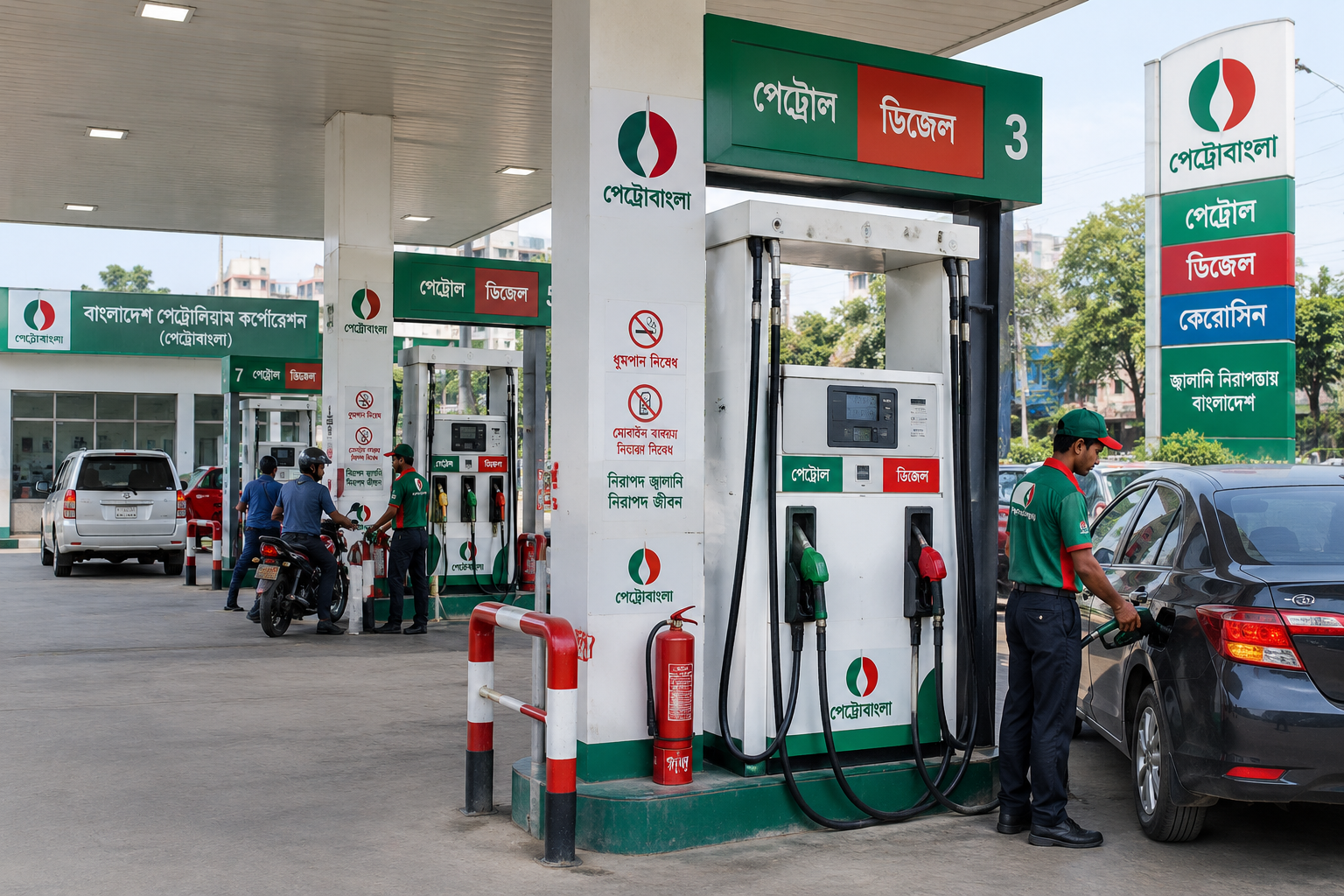
Bangladesh will keep retail prices of diesel, petrol, octane and kerosene unchanged throughout November, according to an official government notification issued ahead of the new month.
The decision, approved by the relevant authorities following a recommendation from the Bangladesh Petroleum Corporation (BPC), means the prices introduced on 20 September will remain in force from 1 November 2026.
Under the existing pricing structure, diesel will continue to sell for Tk135 a litre, octane for Tk165, petrol for Tk160 and kerosene for Tk155.
The Energy and Mineral Resources Division confirmed the decision in a notification dated 26 October, referring to a previous directive issued on 20 September.
Fuel prices remain elevated after September increase
Bangladesh raised the prices of all four major petroleum products by Tk20 a litre in September, citing a sharp rise in international fuel prices and freight costs associated with the ongoing conflict in the Middle East.
The increase took diesel from Tk115 to Tk135 a litre, octane from Tk145 to Tk165, petrol from Tk140 to Tk160 and kerosene from Tk135 to Tk155.
The government said international fuel prices had more than doubled since March, while domestic prices had been kept largely unchanged in the public interest. This had placed considerable financial pressure on the BPC.
According to a government statement issued at the time, the corporation incurred losses of about Tk228.76 billion between March and August.
Government cites financial pressure on state fuel supplier
The government previously said the BPC was losing approximately Tk89 on every litre of diesel at prevailing international prices, contributing to daily losses of around Tk1.09 billion.
It estimated that, without adjustments to domestic prices, losses on diesel alone could reach about Tk400 billion annually.
The September increase was intended to reduce the corporation’s financial burden, conserve foreign currency and limit the risk of fuel smuggling across Bangladesh’s borders.
Officials also highlighted the pressure on public finances from subsidies needed to maintain electricity and gas supplies as liquefied natural gas costs rose amid the regional conflict.
November decision maintains existing rates
The latest notification makes no further changes to retail fuel prices for November. Motorists, transport operators and other fuel consumers will therefore continue to pay the rates established in September.
The decision provides short-term price stability for consumers, although the financial implications for the state-owned fuel supplier will continue to depend on international market prices, import costs and exchange-rate movements.