


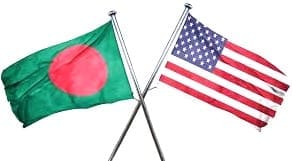
The Ministry of Commerce will sit in an important meeting on Wednesday to determine Bangladesh’s next course of action regarding its trade engagement with the United States, amid growing uncertainty over new tariff measures announced by Donald Trump.
The development follows a recent ruling by the Supreme Court of the United States, which declared retaliatory tariffs imposed under Trump’s authority illegal. In response, Trump has moved to introduce a new round of global tariffs, further complicating trade dynamics.
The meeting, scheduled to be held at the Commerce Ministry, will be attended by the commerce minister, state minister, senior government officials, and representatives from the business community. The discussion will focus on evaluating recent developments and setting Bangladesh’s strategic response.
Commerce Secretary Mahbubur Rahman confirmed the meeting on Tuesday, stating that the legal basis under which the United States had earlier imposed reciprocal tariffs on Bangladesh has now been invalidated by its own court. “The US is now considering new tariff measures in phases, but the situation is still unclear. That is why we are unable to take any final decision yet,” he said.
He added that Bangladesh is closely monitoring the situation and remains in regular communication with US authorities. “We have called the meeting to assess the issues currently on the table and determine our next steps,” he noted.
According to officials, the United States is now shifting its tariff framework from the World Trade Organisation provisions—specifically Article 21—to domestic legal instruments such as Sections 122 and 301 of US trade law. However, questions remain over the status of tariffs already collected under the previous regime.
Meanwhile, a new baseline tariff of 10 percent on global imports into the United States came into effect from Tuesday. Although Trump had initially hinted at raising the rate to 15 percent shortly after the court ruling, no formal order has yet been issued to enforce the higher rate.
In a further escalation, Trump on Monday warned of imposing even higher tariffs on countries that he accused of “delaying” trade agreements with the United States, adding pressure on ongoing negotiations.
Officials in Dhaka say the evolving situation requires careful assessment, as any abrupt changes in US tariff policy could have significant implications for Bangladesh’s export sector, particularly garments, which heavily depend on the American market.