


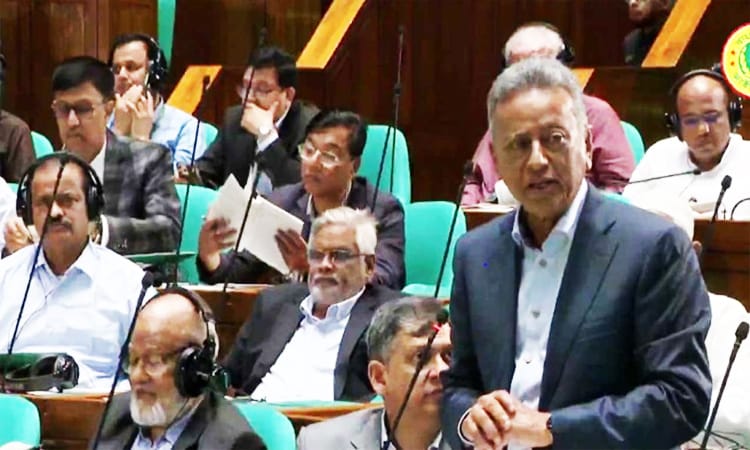
The government disclosed the country’s top 20 loan defaulters in parliament, as defaulted loans rose to Tk 5.45 lakh crore by the end of December 2025.
Finance Minister Amir Khosru Mahmud Chowdhury presented the list in a written response to a question from Cumilla-4 MP Md Abul Hasnat, also known as Hasnat Abdullah, on Monday. The submission also outlined measures to recover mounting non-performing loans (NPLs).
According to the minister, major defaulters include S Alam Super Edible Oil Ltd, S Alam Vegetable Oil Mills Ltd, S Alam Refined Sugar Industries Ltd, S Alam Cold Rolled Steels Ltd, Sonali Traders, Bangladesh Export-Import Company Ltd (Beximco), Global Trading Corporation Ltd, Chemon Ispat Ltd, S Alam Trading Company (Pvt) Ltd, and Infinite CR Strips Industries Ltd.
Other entities named are Keya Cosmetics Ltd, Deshbandhu Sugar Mills Ltd, PowerPac Mutiara Keraniganj Power Plant Ltd, PowerPac Mutiara Jamalpur Power Plant Ltd, Pacific Bangladesh Telecom Ltd, Karnafuly Food Products Ltd, Murad Enterprise, CLC Power Company Ltd, Beximco Communications Ltd, and Rongdhanu Builders (Pvt) Ltd.
Nine of the top 10 defaulters are linked to the S Alam Group, highlighting a high concentration of large-scale defaults within a single conglomerate.
To address the growing NPL burden, the government has stepped up monitoring and recovery efforts. Banks with more than 10% classified loans are now required to attend quarterly review meetings to assess progress and identify bottlenecks.
Recovery performance of major defaulters is also being reviewed regularly in meetings convened by Bangladesh Bank.
The central bank has issued guidelines for resolving classified loans, particularly targeting banks with high default rates, and introduced measures to identify and act against wilful defaulters.
Banks have been instructed to recover at least 1% of defaulted loans in cash by 30 June through alternative dispute resolution mechanisms, while also strengthening their legal capacity.
The government has updated credit risk management guidelines and is working to improve lending governance by aligning with international standards, including expected credit loss-based provisioning.
Efforts are also underway to improve collateral valuation by involving approved third-party firms alongside banks’ internal assessments.
Khosru said broader reforms are in progress, including amendments to key laws such as the Bank Company Act, 1991; the Negotiable Instruments Act, 1881; the Artha Rin Adalat Act, 2003; and the Bankruptcy Act, 1997.
Authorities are also reviewing policies on agricultural loan rescheduling and considering publishing lists of defaulters and wilful defaulters.
Additional measures under consideration include revising incentives for regular borrowers, setting single-borrower exposure limits, and introducing legal safeguards to prevent misuse of court processes that delay loan recovery.
The government is also weighing the creation of private sector asset management companies to help resolve bad loans and ease pressure on the banking sector.