


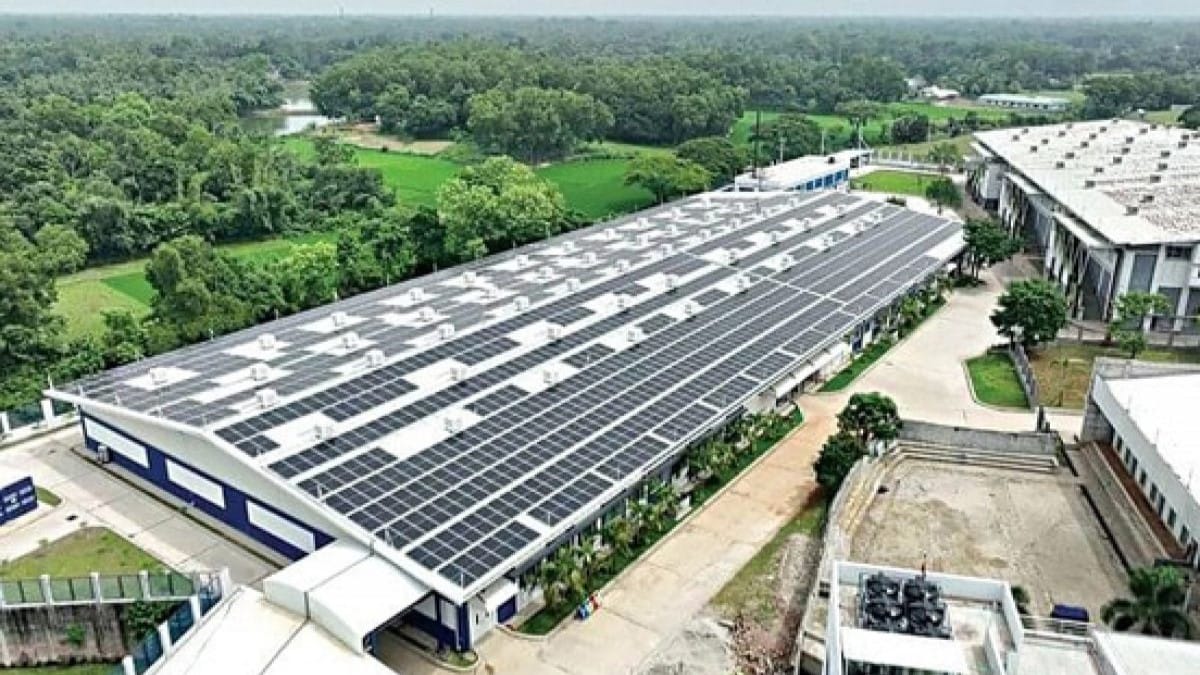
Bangladesh is planning to generate at least 500MW of electricity from rooftop solar installations within four months in a bid to reduce pressure on fuel imports as global energy markets tighten due to the Iran–Israel conflict.
The country’s Power Division has requested Tk 2,000 crore from the Finance Division to roll out grid-connected rooftop solar systems within four months, according to a strategic paper prepared to address the ongoing strain in the power sector.
Officials say the target is achievable. “Generating 500MW from rooftops is possible, as power utilities have already compiled lists of prospective solar expansion projects at upazila level,” one senior official said. The rollout, however, remains contingent on swift approval of funds.
Bangladesh currently has 1,059MW of renewable energy capacity out of a total installed capacity of 28,504MW. Solar accounts for 829MW, highlighting the limited contribution of renewables to the national grid.
Power Generation Under Strain
The country’s electricity system is already under pressure due to declining gas supplies. According to Bangladesh Power Development Board chairman Rezaul Karim, gas-fired generation has dropped significantly.
“Gas-fired output has fallen to around 4,500MW, against an installed capacity of 12,204MW,” he said. Average gas supply has declined to 820 million cubic feet per day (mmcfd), down from 1,012 mmcfd a year earlier.
Coal-fired plants have partially offset the shortfall, currently producing about 4,700MW, compared with 3,200–3,500MW during the same period last year. Even so, officials warn that up to 800MW of load-shedding may be required if gas supply drops further by around 1,000 mmcfd.
“Bold But Time-Sensitive” Plan
Energy analysts say the rooftop solar initiative could significantly reduce Bangladesh’s reliance on imported fuel if implemented quickly.
Zakir Hossain Khan, chief executive of Change Initiative, described the plan as “bold and necessary”, but cautioned that its success depends on rapid execution rather than funding alone.
“If the Finance Division releases funds promptly and the Power Division cuts red tape, this could save the country more than $200 million annually in fuel import costs,” he said.
However, he warned that delays could derail the effort. “If the four-month window is bogged down by bureaucracy, it will remain a paper target while the energy crisis deepens.”
Khan urged the government to adopt what he called a “war-footing execution model”, noting that procurement and grid integration have historically been major bottlenecks.
“Bangladesh is finally treating its rooftops like oil fields,” he said. “This 500MW target isn’t just about electricity; it’s about reducing economic dependence on an increasingly volatile Middle East. If implementation hurdles can be overcome, this could be the most significant energy intervention in a decade.”